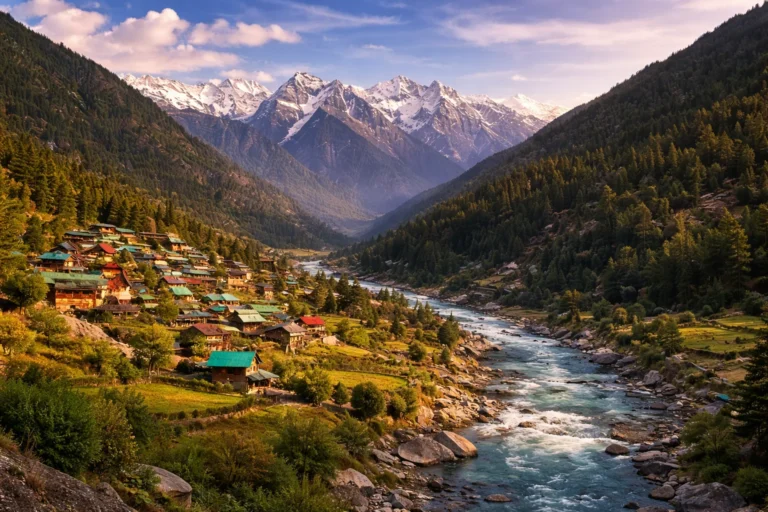
Short answer: Himachal Pradesh is the Indian Himalayan state directly north of Delhi, from the foothills at 500 m to passes above 4,500 m. For international travellers it splits into seven regions with different characters: Shimla’s colonial hills, the Kullu Valley and Manali, Dharamshala and the Kangra Valley, the Parvati Valley, Chamba and Dalhousie, Kinnaur and Spiti, and Lahaul. Fly into Delhi (or Amritsar or Chandigarh), take a private car or overnight bus into the hills, and plan 7 days for one region, 10 for two, 14 for three or for Spiti. March–June and September–November are the main seasons; winter is for snow; July–August is monsoon.
Quick answer (checked 30 October 2026)
- Gateways: Delhi (international hub, 8–14 h by road to the hills), Amritsar (international flights, 5–6 h to Dharamshala), Chandigarh (3 h to Shimla, 7–9 h to Manali; limited Gulf flights).
- Visa: most nationalities use the Indian e-Visa; no extra state permit for Himachal except Inner Line Permits on the Kinnaur–Spiti border road.
- One week: Shimla + Manali, or Amritsar + Dharamshala. Ten days: Shimla + Manali + a side valley, or Dharamshala + Manali. Two weeks: Kinnaur + Spiti, or a grand loop.
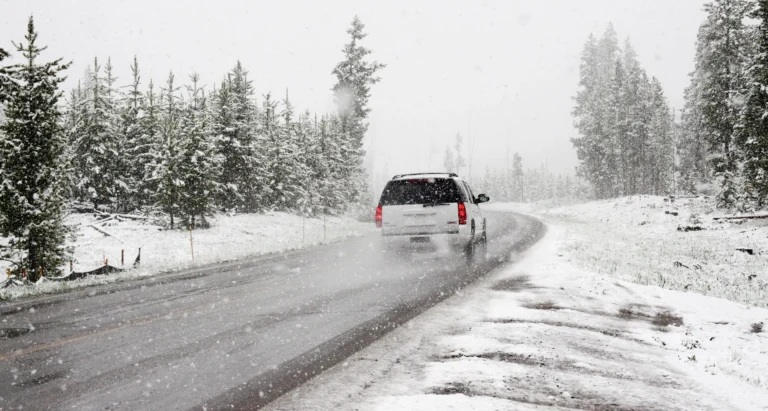
- Winter facts: Manali–Leh and Manali–Kaza roads shut since 15 Oct 2026; Spiti only via Shimla–Kinnaur; Rohtang closed; Atal Tunnel open; toy train Dharampur–Shimla only till 30 Nov 2026.
- Costs: our Himachal packages run from ₹12,499 (about US$132) per person for 5 nights Shimla–Manali to ₹32,500 (about US$342) for Kinnaur–Spiti, Deluxe tier, off-season.
- Transport: private car with driver is the practical choice; no trains beyond Shimla, Kalka and Pathankot; small, weather-dependent airports at Shimla, Kullu and Kangra.
- Altitude: only Spiti, Lahaul and the high passes need acclimatisation; Shimla, Manali and Dharamshala do not.
Plan this trip with a local operator
We are a local operator, registered with HP Tourism (see our certificates). Tell us your dates and which regions interest you and we will build a Himachal itinerary with a private car and English-speaking driver; our Himachal packages for international travellers page lists the fixed tours with US$ prices. WhatsApp +91 70874 88961 (WhatsApp works internationally) · info@suzutravels.com
What is Himachal Pradesh like for a first-time international visitor?
Himachal is the hill state that Delhi goes to for its holidays, which means two things for an overseas visitor. The infrastructure is better than in most of the Indian Himalaya: paved roads to every major town, hotels of every grade, reliable buses, mobile data in the valleys. And the famous spots are busy in Indian holiday periods: Shimla’s Mall and Manali’s Solang Valley in May–June and over Christmas can feel like a resort anywhere in the world. Step one valley sideways, to Tirthan, Kinnaur, the upper Kangra Valley or Spiti, and you are back in villages where the arrival of a foreign visitor is still an event.
The state is roughly 55,000 square kilometres, about the size of Croatia, with its people concentrated in the lower valleys. Hindi and the local Pahari dialects are spoken; English is understood in hotels, by trek guides and by the drivers who work with international guests. It is safe by Indian standards, vegetarian-friendly, and the cuisine (siddu, madra, dham feasts, trout in the Kullu and Tirthan valleys, Tibetan food in McLeod Ganj) is worth seeking out. We have been operating here since 2019 from Bilaspur, in the centre of the state, and this guide is built from what we tell guests on the phone before they book.
Which regions of Himachal should you choose?
| Region | Base and altitude | Why go | Nights | Our guide |
|---|---|---|---|---|
| Shimla hills | Shimla, 2,200 m; Narkanda, Chail, Mashobra | Raj-era architecture, toy train, easy walking, apple country | 2–3 | Shimla guide |
| Kullu Valley and Manali | Manali, 2,050 m; Naggar, Kullu | Snow, Solang, Atal Tunnel, treks, the road to Leh | 3–4 | Manali guide, Kullu Valley guide, Solang Valley guide |
| Kangra Valley and Dharamshala | McLeod Ganj, 1,750–2,000 m; Palampur, Bir | Tibetan culture, Kangra Fort, tea gardens, paragliding at Bir, Triund hike | 3–5 | Dharamshala guide, McLeod Ganj |
| Parvati Valley | Kasol, 1,600 m; Tosh, Manikaran | Backpacker villages, hot springs, Kheerganga trek | 2–4 | Parvati Valley guide |
| Chamba and Dalhousie | Dalhousie, 2,000 m; Khajjiar, Chamba | Quiet colonial town, Khajjiar meadow, Chamba’s temples | 2–3 | Dalhousie guide |
| Kinnaur and Spiti | Kalpa, 2,960 m; Kaza, 3,650 m | Kinnaur Kailash, Sangla–Chitkul, Buddhist monasteries, high desert | 7–9 | Spiti guide, Kinnaur guide |
| Lahaul | Sissu and Keylong, 3,100 m | Through the Atal Tunnel: snow day trips, Chandratal, the Leh road in summer | 1–2 (from Manali) | Atal Tunnel and Sissu |
| Tirthan and Jibhi | Jibhi, 1,600 m; Gushaini | Great Himalayan National Park, trout, wooden villages, quiet | 2–3 | Jibhi and Tirthan itinerary |
How do you get into Himachal from abroad?
There are no international flights into Himachal, and only three small airports (Shimla, Kullu–Bhuntar, Kangra–Gaggal) with weather-dependent domestic services. The practical gateways are:
- Delhi (DEL): the main hub. Shimla is 8–9 hours by road, Dharamshala 10–12, Manali 12–14. Most guests take a night in Delhi, then a private car (breaking the trip in Chandigarh or Amritsar) or an overnight HRTC Volvo. Our guides to Delhi to Shimla, Delhi to Manali and Delhi to Dharamshala compare car, bus, train and flight for each.
- Amritsar (ATQ): direct flights from London, Birmingham, the Gulf and south-east Asia. The Golden Temple is reason enough to land here, and Dharamshala is 5–6 hours away; see Amritsar to Dharamshala.
- Chandigarh (IXC): IndiGo flies from Dubai and Abu Dhabi (Wikipedia airport listing, checked 30 Oct 2026), and there are frequent domestic connections. From here Shimla is 3–3.5 hours and Manali 7–9 hours; our Chandigarh guide covers the Le Corbusier capital and the onward roads.
Rail reaches the edge of the hills: Delhi–Kalka (for Shimla) and Delhi–Pathankot (for Dharamshala and Dalhousie). The Kalka–Shimla narrow-gauge line is a UNESCO World Heritage railway; at the moment it runs only between Dharampur and Shimla, with the Kalka section closed until 30 November 2026. Alliance Air flies Delhi–Shimla six days a week (since May 2026) and Delhi–Kullu on selected days, but we never build an itinerary that depends on these flights. The e-Visa and arrival process is covered in our India e-Visa guide.
When should you visit Himachal: a season table
| Months | Shimla / Dharamshala / Manali | Kinnaur / Spiti / Lahaul | Verdict |
|---|---|---|---|
| Mar–Apr | 10–22°C, blossom, snow still on high slopes, few crowds | Kinnaur open; Spiti via Shimla only; cold | Excellent for the hill towns; prices rise from 15 March |
| May–Jun | 15–30°C, Indian peak season, Rohtang opens | Kunzum and the Leh road open in June; full Spiti loop from mid-June | Good for Spiti and treks; crowded in Shimla and Manali |
| Jul–Aug | Monsoon; landslides, road closures, leeches on trails | Spiti and Lahaul are in the rain shadow and stay dry; Kinnaur road prone to slides | Only Spiti or Lahaul; avoid the rest |
| Sep–Nov | 12–25°C, clearest skies, apple harvest, Kullu Dussehra in October | Best colours; Manali–Kaza and Manali–Leh close mid-October | Our favourite season for everything |
| Dec–Feb | -5 to 12°C; snow at Kufri, Narkanda, Solang, Sissu; Shimla ice rink | Winter Spiti via Shimla; snow leopards Feb–Mar; -20°C nights | Snow trips; peak prices 20 Dec–5 Jan |
Our best time to visit Himachal page breaks this down month by month, and the winter 2026-27 snowfall page tracks where the snow is right now.
How much time do you need: 7, 10 and 14-day sketches
7 days, the classic: Delhi → Shimla (2 nights) → Manali via Bilaspur and Mandi (3 nights, with Solang and the Atal Tunnel) → Chandigarh or Delhi. This is our Shimla–Manali package from Chandigarh (5 nights/6 days, from ₹12,499, about US$132 per person) or the same tour from Delhi (₹14,999, about US$158).
7 days, the western alternative: Amritsar (2 nights: Golden Temple, Wagah) → Dharamshala (3 nights) → Dalhousie and Khajjiar (2 nights) → Pathankot or Amritsar. Our Dharamshala–Dalhousie package from Delhi (4 nights/5 days, from ₹16,499, about US$174) is the core of it.
10 days: add a side valley to the classic (Tirthan and Jibhi, or Kasol and Tosh in the Parvati Valley) between Shimla and Manali, or run Amritsar → Dharamshala → Bir → Mandi → Manali. Our Incredible Himachal package from Delhi (from ₹18,999, about US$200) covers Shimla, Manali and Dharamshala in one loop.
14 days: Shimla → Sarahan → Sangla and Chitkul → Kalpa → Nako → Tabo → Kaza (3 nights) → Chandratal → Manali (June to mid-October), which is our Kinnaur–Kaza tour with Chandratal (from ₹32,500, about US$342); or Kinnaur alone on the Eccentric Kinnaur tour from Chandigarh (6 nights, from ₹24,999, about US$263) plus a Manali extension. All prices are per person, Deluxe tier, in the off-season band (1 November–19 December and 6 January–14 March); peak dates are about 25% more. The full list with US$ conversions is on our Himachal packages for international travellers page, and the domestic catalogue is at Himachal tour packages.
How do you travel around Himachal?
Private car with driver is what almost all our international guests use, and it is the honest recommendation. Distances are short on the map and long on the clock: Shimla to Manali is 250 km and 7–8 hours. A driver who knows the road, the roadworks, the lunch stops and the police checkpoints turns that into a comfortable day with stops at Tattapani or Mandi. An SUV (Innova or similar) is worth the extra for Kinnaur and Spiti; a sedan is fine for Shimla, Manali and Dharamshala. We do not recommend self-drive hire for the hills.
HRTC buses are extensive, cheap and reasonably safe; the Volvo and Himsuta services between Delhi, Chandigarh, Shimla, Manali and Dharamshala are fine for solo travellers. Local ordinary buses go everywhere, slowly. Taxis are available in every town at union rates for day trips. Motorcycle hire is popular in Manali for Spiti and Leh, for experienced riders with an international permit. Entry taxes for taxis and the Rohtang permit are explained on our Himachal entry tax and permits page.
Practical notes for overseas visitors
- Permits: none for most of the state. Foreigners need an Inner Line Permit for the Jangi–Sumdo stretch between Kinnaur and Spiti (₹200 plus agency fee, groups of two or more); everyone needs a vehicle permit for Rohtang Pass.
- Money: ATMs in every town; cards and UPI in hotels and cafes; cash for villages, taxis and temples. Carry more cash in Kinnaur and Spiti.
- Connectivity: Jio and Airtel in the main valleys; BSNL only in Spiti. Buy a SIM in Delhi; see our tourist SIM guide.
- Health: altitude matters only above about 3,000 m; carry your own basic medicines; tap water is not for drinking anywhere.
- Clothing: layers in every month; evenings at 2,000 m are cold even in June. Trek boots for Triund and Kheerganga.
- Temples and monasteries: shoes off, shoulders and knees covered, no photography inside shrine rooms unless invited.
- Booking with us: 20% token confirms a Himachal package, fully refundable within 48 hours of payment, balance before travel; international cards via Razorpay and PayPal. We are registered with HP Tourism (DTO-MND-11-243/2022) and hold ISO 9001, renewed in October 2026.
Frequently asked questions
Is Himachal Pradesh worth visiting for international tourists?
Yes, if you want the Himalaya with good roads, hotels at every price and no permit hassle. It offers colonial Shimla, snow and treks around Manali, Tibetan culture at Dharamshala and a high desert in Spiti within one state. It is less dramatic than Ladakh and less remote than Nepal, which is exactly why it suits a first Himalayan trip.
How many days do you need in Himachal Pradesh?
Seven days covers one pairing, usually Shimla and Manali or Amritsar and Dharamshala. Ten days lets you add a quieter side valley such as Tirthan, Jibhi or the Parvati Valley. Fourteen days is right for Kinnaur and Spiti, or for a loop through Shimla, Manali and Dharamshala. Build in the long road days; nothing in Himachal is close.
Which airport do you fly into for Himachal Pradesh?
Delhi for most visitors, then road or an overnight bus. Amritsar has direct flights from the UK and the Gulf and is 5–6 hours from Dharamshala. Chandigarh has IndiGo flights from Dubai and Abu Dhabi and is 3 hours from Shimla. The three airports inside Himachal (Shimla, Kullu, Kangra) are small and weather-dependent; do not build a trip around them.
Do foreigners need a permit for Himachal Pradesh?
Not for Shimla, Manali, Dharamshala, Dalhousie, the Parvati Valley, Lahaul or Spiti itself. The one exception is the Kinnaur border road between Jangi and Sumdo on the way from Shimla to Spiti, which needs an Inner Line Permit for foreign nationals (₹200 plus an agency fee, groups of two or more). Rohtang Pass needs a vehicle permit for everyone.
What is the best month to visit Himachal Pradesh?
October, for clear skies, autumn colour, open roads to Spiti until mid-month and the Kullu Dussehra festival. March–April and May–June are good for the hill towns and treks, with crowds in May–June. January and February are for snow at Solang, Narkanda and Kufri and for winter Spiti. Avoid July and August unless you are going only to Spiti or Lahaul.
Is it safe to travel in Himachal Pradesh?
Himachal is one of the safer Indian states for visitors, including solo women. The real risks are on the road: landslides in the monsoon, fog on the plains in winter, and night driving on hill roads. Use a professional driver, avoid river banks during rain, respect warning signs in the Parvati Valley and take altitude seriously in Spiti. Emergency number is 112.
Plan this trip with a local operator
We are a local operator, registered with HP Tourism (see our certificates). Tell us your dates and which regions interest you and we will build a Himachal itinerary with a private car and English-speaking driver; our Himachal packages for international travellers page lists the fixed tours with US$ prices. WhatsApp +91 70874 88961 (WhatsApp works internationally) · info@suzutravels.com