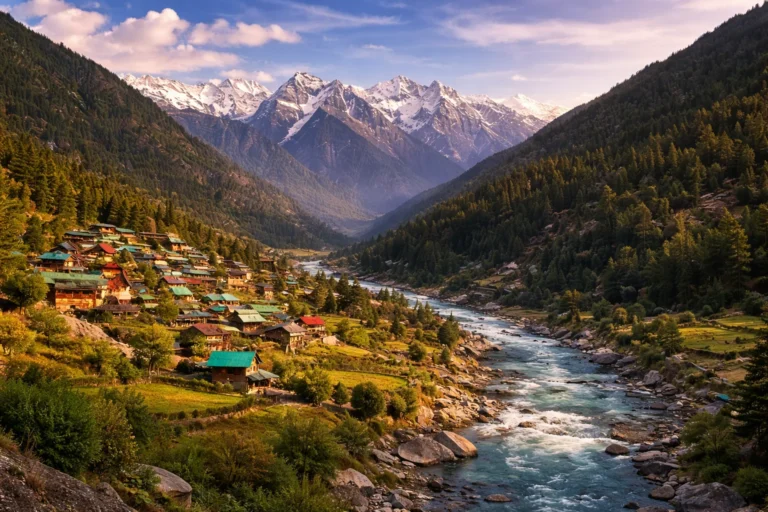
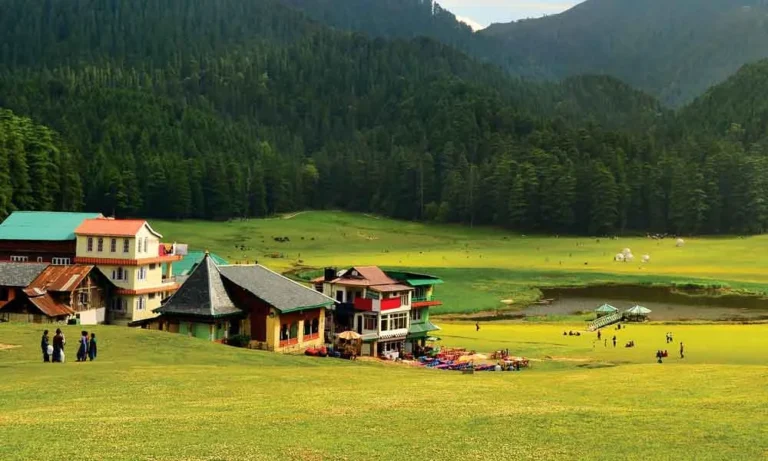
Short answer: Jibhi is a small riverside village in the Banjar valley of Kullu district, Himachal Pradesh, at about 1,600 m. It is roughly 500 km from Delhi by road (about 12 hours), with Bhuntar as the nearest airport. Come for the waterfall walk, the 300-year-old Chehni Kothi tower, Jalori Pass (3,120 m) with the Serolsar Lake and Raghupur Fort trails, trout meals and wooden cottages. Best months: March to June and September to November; Jalori usually shuts under snow from late December to March.
Quick answer (checked 23 October 2026)
- Where: Banjar valley, Kullu district, Himachal Pradesh, about 1,600 m; 8 km from Banjar town, 28 km from Aut on the Delhi–Manali highway.
- How to reach: Delhi–Aut–Banjar–Jibhi about 495–500 km; HRTC overnight buses from ISBT Kashmere Gate to Aut or Bhuntar, then local bus or taxi. Nearest airport Bhuntar (about 50–60 km).
- Top sights: Jibhi waterfall, Chehni Kothi, Jalori Pass (3,120 m), Serolsar Lake, Raghupur Fort, Shoja, Ghiyagi, “Mini Thailand” river pools.
- Best time: March–June and September–November. Jalori Pass road typically closes after snowfall from late December and reopens around March–April.
- Stay: Wooden cottages, treehouses, homestays and hostels; ₹800–3,500 per night is the usual band outside peak weekends.
- Budget: A 4-day trip from Delhi by bus and homestay costs ₹7,000–12,000 per person; a private cab from Delhi changes the arithmetic (see our Himachal trip cost guide).
Plan this trip with a local operator
We are a Himachal-based operator, registered with HP Tourism (see our certificates). Jibhi fits well inside our Himachal tour packages or as a quiet add-on to a Manali trip with a Delhi to Manali taxi. Tell us your dates and we will plan the stay type, the Jalori day and the transfers. WhatsApp +91 70874 88961 · call +91 70874 88961 · info@suzutravels.com
Where exactly is Jibhi, and why do people go there?
Jibhi sits on the Jibhi khad, a stream that joins the Tirthan river a few kilometres downstream, inside the Banjar valley of Kullu district. The village is at about 1,600 m, which is lower than Manali and similar to Kasol, so winters are cold but not brutal and summers stay pleasant.
People go for a slow trip: no mall road, no ropeway, no queue for snow points. A typical day is a forest walk, a drive to Jalori Pass, a trout lunch and an evening in a wooden cottage. If you have done the usual Shimla and Manali circuit, Jibhi is one of the places we list in our guide to offbeat Himachal beyond Shimla and Manali. This post is a destination guide; for a day-by-day plan use our Jibhi and Tirthan Valley 4-day itinerary.
What are the things to do in Jibhi?
Most sights are within 15 km of the market. Distances are the figures local hosts use, cross-checked against published trail guides (checked 23 October 2026); treat them as approximate.
- Jibhi waterfall: About 1 km from the main village, the last stretch on foot through deodar forest with small wooden bridges. Easy, 30–45 minutes return, fine for children and grandparents.
- “Mini Thailand”: A stretch of river a short walk beyond the waterfall trail where the water pools between smooth white boulders. There is no signboard, so ask your host for directions. Do not swim after rain; the current is stronger than it looks.
- Chehni Kothi: A stone-and-timber tower in Chehni village, about 7 km from Jibhi by road to the trailhead near Shringa Rishi temple, then a steep 45–60 minute climb. The tower is more than 300 years old and lost its top two storeys in the 1905 Kangra earthquake. Entry inside is not allowed; the village and the views are the reward.
- Jalori Pass (3,120 m): About 12 km from Jibhi via Shoja, 40 minutes by car on a narrow road. A temple, a few dhabas and the start of two trails.
- Serolsar Lake: A 4–5 km one-way forest walk from Jalori Pass, 1.5–2 hours each way, to a small lake with the Budhi Nagin temple. Easy to moderate.
- Raghupur Fort: About 3 km one way from Jalori, steeper than Serolsar, ending on a grassy ridge with ruined walls and 360-degree views. Both trails in one day is possible for fit walkers.
- Shoja and Ghiyagi: Two villages on the Jibhi–Jalori road. Shoja (about 2,700 m) gets more snow than Jibhi and has its own sunset point; Ghiyagi is where the road to Jalori starts climbing and has a few quiet stays.
- Trout: Rainbow and brown trout are farmed and fished in the Tirthan belt. Most cafés and homestays serve it grilled or in a light curry.
For bigger walks (Lambhri Top, Bashleo Pass) you need a guide and a full day or two; see our adventure pages for what we can arrange, including camping in Himachal.
Which month should you visit? A month-by-month table
| Month | Jibhi weather (approx.) | Jalori Pass road | Crowd and cost level |
|---|---|---|---|
| Dec–Feb | Day 8–14°C, nights near or below 0°C; light snow possible in Jibhi, heavy at Shoja and Jalori | Usually closed to vehicles after the first heavy snow (most years late December) until March–April | Low, except 24 Dec–2 Jan when rates rise |
| Mar–Apr | Day 15–22°C; rhododendron bloom, snow still on Jalori trails in March | Reopens once cleared, often by late March or April; confirm locally | Low to medium |
| May–Jun | Day 22–28°C, cool nights; the busiest season | Open | High on weekends; book stays ahead |
| Jul–Aug | Monsoon; landslides on the Aut–Banjar and Mandi roads are common | Open but slushy near the top | Low; we do not recommend it for first-timers |
| Sep–Nov | Clear skies, day 15–24°C, nights cold by November | Open; best trail conditions for Serolsar and Raghupur | Medium in October, low in November |
Temperatures are indicative ranges for the valley floor at about 1,600 m, compiled from published climate averages for the Banjar–Tirthan belt; the Jalori closure pattern is from HP road-status reports and trail guides, checked 23 October 2026. There is no IMD station in Jibhi, so confirm the forecast for Banjar or Kullu before you travel. For the regional snow picture read our Himachal snowfall guide for winter 2026-27.
How do you reach Jibhi from Delhi, Chandigarh and Bhuntar?
By road from Delhi (about 495–500 km, 11–13 hours): NH44 to Chandigarh, then the Kiratpur–Nerchowk four-lane into Himachal, past Mandi and Pandoh to the Aut tunnel. Do not enter the tunnel; take the Larji turn just before it, cross the bridge and follow the Banjar road for 20 km, then 8 km to Jibhi. A hired cab from Delhi usually makes it in one long day with a breakfast and lunch stop; the Delhi to Manali taxi route shares the road until Aut, so a Jibhi drop is a normal detour for our drivers.
By bus: HRTC runs overnight services from ISBT Kashmere Gate towards Kullu and Manali that stop at Aut; Himsuta Volvo fares to Bhuntar were listed at about ₹1,520–1,550 and ordinary buses at about ₹770–790 on 24 October 2026 (HRTC fares via AbhiBus, checked 23 October 2026). Ask for Aut when booking. From Aut, local HRTC buses to Banjar run from about 6:30 am every 30–45 minutes (₹35–50), then a Banjar–Jibhi bus (₹20) or a taxi for ₹400–600. HRTC also runs a few ordinary direct Delhi–Banjar buses that take 14–16 hours. Fares change with fuel prices, so confirm on the HRTC site before travel.
By air: Bhuntar (Kullu–Manali airport) is about 50–60 km away, 1.5–2 hours by taxi via Aut. Flights are weather-dependent and often expensive; Chandigarh (about 270 km, 7–8 hours) is the reliable alternative and the nearest major railhead too.
From Shimla side: The Shimla–Anni–Jalori road (about 150 km) works only when Jalori is open, roughly April to mid-December.
Himachal has no separate tourist permit for Jibhi. Taxis from outside the state pay the entry tax at the border; see our note on Himachal entry tax and permits.
What types of stay does Jibhi have?
Jibhi’s appeal is the stay itself, so choose the type before you choose the property. We do not name properties here; tell us your dates and group and we will match one.
- Wooden cottages: Traditional kath-kuni style or modern pine cabins along the stream, usually with a balcony and a wood stove. ₹2,000–4,500 per night for two, more on long weekends.
- Treehouses: A few raised cabins between Jibhi and Ghiyagi. Fun for a night; cold in winter.
- Homestays: Family-run rooms in Jibhi, Ghiyagi and Shoja with home-cooked siddu, rajma and trout. ₹800–2,000 per night. The best value and the best food.
- Hostels and camps: Dorm beds from about ₹500–800 for solo travellers; seasonal riverside tents near Banjar from April to June and September to November. Do not count on fast Wi-Fi anywhere in the valley.
Price bands are indicative from our 2026 bookings, not fixed quotes. Expect a 20–40% jump over Christmas–New Year and on holiday weekends in May and June.
How much does a Jibhi trip cost?
A sensible per-person estimate for four days from Delhi: ₹1,500–3,100 for bus travel both ways, ₹2,400–6,000 for three nights in a homestay or shared cottage, ₹1,500–2,500 for food and ₹800–1,500 for a shared taxi to Jalori and Chehni. That is roughly ₹7,000–12,000 per person on public transport. A private cab from Delhi for a family of four adds comfort and flexibility but is the largest single line item.
If you want Jibhi inside a longer circuit, our Incredible Himachal 7N/8D package starts from ₹18,999 per person (indicative, confirmed on quote) and can be routed Shimla–Jibhi–Manali instead of the standard loop. For a first trip with children who want December snow, Manali is the safer base because Solang stays reachable while Jalori is shut; many guests do two nights in Jibhi, then Aut to Manali in two hours. The plan-your-trip form is the fastest way to get a real quote.
Do’s and don’ts for Jibhi and the Tirthan ecozone
The upper Tirthan and Sainj valleys fall inside the Great Himalayan National Park, a UNESCO World Heritage Site since 2014, and the villages around Jibhi lie in its ecozone. The park’s own rules (greathimalayannationalpark.org, updated 10 September 2026) apply in spirit to the whole valley.
- Carry back all non-biodegradable waste; bring a cloth bag and a refillable bottle. Himachal bans single-use plastic carry bags statewide.
- No open fires in the forest. Bonfires at your stay are fine if the host arranges them.
- Do not enter Chehni Kothi or climb on its walls; the structure is fragile and the village treats it as sacred.
- Do not fish without a licence from the Fisheries Department; trout angling is closed every year from 1 November to end February.
- Drive slowly on the Shoja–Jalori stretch; it is single-lane with no barriers, and black ice forms from late November.
- Carry cash (ATMs are in Banjar, not Jibhi) and download offline maps before Aut; networks are patchy.
A simple 3-day plan
| Day | Plan |
|---|---|
| Day 1 | Arrive from the overnight bus at Aut by 7 am; reach Jibhi by 9. Rest, then the waterfall walk and Mini Thailand after lunch. Evening in the market cafés. |
| Day 2 | Leave by 7:30 am for Jalori Pass via Shoja. Walk to Serolsar Lake (2 hours each way), dhaba lunch at the pass, Raghupur Fort if energy allows. Back by sunset. |
| Day 3 | Morning climb to Chehni Kothi, trout lunch in Banjar or Gushaini, then depart: evening bus from Aut, or continue to Manali or Tirthan. |
The full four-day version with Tirthan valley is in our Jibhi and Tirthan itinerary.
Frequently asked questions
Is Jibhi worth visiting in winter?
Yes, if you want quiet and do not need Jalori Pass. December to February brings cold nights near 0°C, occasional light snow in the village and heavy snow at Shoja. Jalori road is usually shut from late December to March, so the Serolsar and Raghupur walks are off. Cottages with wood stoves make it cosy; book one with a heater and confirm road conditions before leaving Aut.
How far is Jibhi from Manali and from Kasol?
Jibhi to Manali is about 95–100 km, roughly 3 hours via Aut and the Kullu bypass. Jibhi to Kasol is about 80 km, around 3 hours via Aut and Bhuntar. Both routes share the Aut junction, so combining Jibhi with Manali or the Parvati valley is straightforward in one trip without backtracking much.
Is Jibhi safe for solo and women travellers?
Jibhi is a small farming village with family-run stays and a low crime record, and solo travellers are common. Standard hill precautions apply: avoid walking forest trails alone after dark, tell your host your plan for Jalori day, and carry a power bank because signals drop. Choose a homestay or hostel with a resident family for the first night.
Do I need a permit to visit Jibhi or Jalori Pass?
No permit is needed for Jibhi, Shoja, Jalori Pass, Serolsar Lake or Raghupur Fort. Permits are only required if you enter the core zone of the Great Himalayan National Park from Gushaini or Sai Ropa for multi-day treks. Vehicles registered outside Himachal pay the state entry tax at the border, which your driver handles.
Is there snowfall in Jibhi?
Most years Jibhi gets one or more light snowfalls between late December and February, but it rarely stays for long at 1,600 m. Shoja and Jalori Pass, 1,000 m higher, hold snow for weeks and are the reliable places to see it on foot once the road is cleared to Shoja. Never plan a trip around a snow date.
Can I combine Jibhi with Tirthan valley?
Yes, easily. Gushaini in Tirthan is about 25 km from Jibhi via Banjar, under an hour by road. Many travellers spend two nights in Jibhi for Jalori and the waterfall, then two nights by the Tirthan river for the Chhoie waterfall walk, trout and the park ecozone. Our four-day itinerary post sets this out day by day.
Plan this trip with a local operator
We are a Himachal-based operator, registered with HP Tourism (see our certificates). We book Jibhi as a stand-alone break, as part of our Himachal tour packages or with a cab from Delhi or Chandigarh. A 20% deposit locks your dates and price; full refund if cancelled within 48 hours of paying; balance before the trip; pay by card via Razorpay (international cards accepted) or PayPal. WhatsApp +91 70874 88961 · call +91 70874 88961 · info@suzutravels.com