Short answer: Sangla Valley is the Baspa river valley in Kinnaur, about 225 km and a full day’s drive north-east of Shimla on NH-5. Sangla village (2,621 m) is the base, Chitkul (3,450 m) is the last village 25 km further up the same road, and Kalpa (2,759 m) with its Kinner Kailash view is a separate 2-hour drive on the Sutlej side. Indian travellers need no permit for any of the three. The best months are mid-April to June and mid-September to November; snow usually closes the Chitkul road for stretches between January and March. Six days from Shimla, or seven from Chandigarh, is the right length. Here is how we plan it as a Himachal operator that sends vehicles up this road every week.
Where exactly is Sangla Valley, and how is Chitkul different?
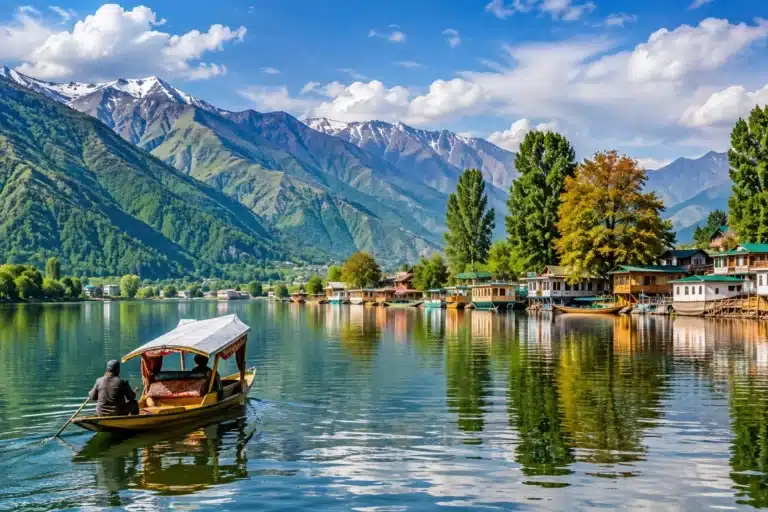
Kinnaur district sits east of Shimla along the Sutlej river, on the road that eventually becomes the Shimla-side entry to Spiti. At Karcham, where the Baspa river meets the Sutlej, a side road turns off NH-5 and climbs into the Baspa valley. The Kinnaur district administration puts Sangla at 2,621 m on the right bank of the Baspa, 17 km from Karcham, with the Raldang peaks (5,499 m) standing behind it. The valley floor here is wide, fertile and full of apple orchards, which is why Sangla has most of the hotels and camps.
Chitkul is the last and highest village in the same valley, at 3,450 m according to the district website. The road from Karcham through Sangla and Rakcham to Chitkul is about 40 km in all. Beyond Chitkul there is only the Baspa, the ITBP post and the ridge towards Tibet, which is why the “last village of India” label stuck. Chitkul’s old wooden temples to the local goddess Mathi are the main thing to see; the district site says the main temple is about 500 years old and was built by a man from Garhwal. The village itself is a few hundred slate-roofed houses, so Chitkul is a half-day visit, not a place that needs two nights.
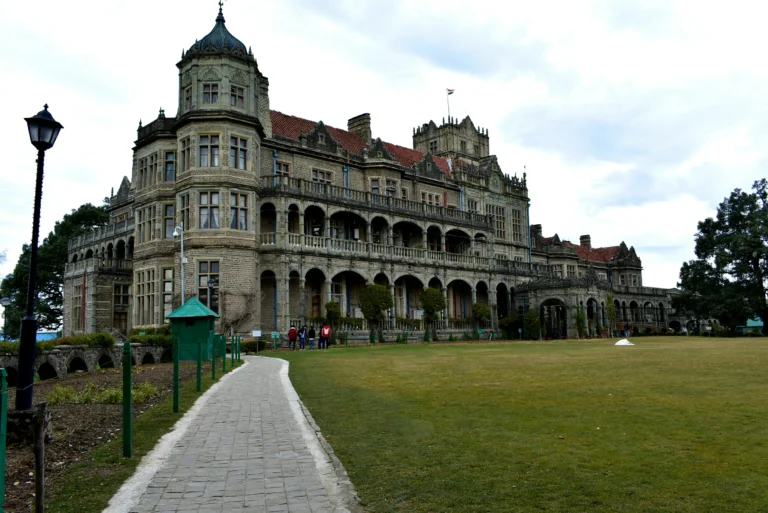
Kalpa is not in the Baspa valley at all. It is above Reckong Peo, the district headquarters, back on the Sutlej side. The district website gives Kalpa an altitude of 2,759 m, 260 km from Shimla and about 14 km (half an hour) above Reckong Peo. Its draw is the straight-on view of Kinner Kailash (6,050 m), the 79-foot rock pillar near its summit that is worshipped as a Shivling, and the heritage village with the Narayan-Nagani temple and the Hu-Bu-Lan-Kar gompa. A Sangla-only trip misses Kalpa; a good Kinnaur trip does both.
Sangla, Chitkul and Kalpa at a glance
| Place | Altitude | Getting there | Stay how long |
|---|---|---|---|
| Sangla | 2,621 m | 17 km from Karcham on NH-5; about 225 km / 8 hours from Shimla | 2 nights (base for Chitkul) |
| Chitkul | 3,450 m | About 25 km above Sangla via Rakcham; about 1 hour | Day trip, or 1 night for sunrise |
| Kalpa | 2,759 m | 14 km above Reckong Peo; 260 km from Shimla | 2 nights |
| Reckong Peo | 2,670 m | 235 km from Shimla; bus stand, ATMs, hospital, SDM office | Transit only |
Altitudes and distances are from the Kinnaur district administration’s places-of-interest page. Driving times are ours, for a private SUV with normal stops; add an hour in October-November because the days are short and the Tranda Dhank cliff section after Jeori should be driven in daylight.
How to reach Sangla Valley from Shimla, Chandigarh and Delhi
Everyone goes through Shimla. From Shimla the road is NH-5 through Narkanda, Rampur Bushahr and Jeori, along the Sutlej to Karcham, then left into the Baspa valley. It is a long day, so most itineraries break it at Sarahan (for the Bhimakali temple) or Narkanda. From Chandigarh the drive to Sangla is too long for one day; our Eccentric Kinnaur package from Chandigarh stops at Narkanda on night one and reaches Sangla on day two for exactly that reason. From Delhi, take the overnight Volvo or the Shatabdi to Kalka and start from there (our Delhi to Shimla guide compares the options); the Kalka-side toy train is not running until 30 November 2026 because of the washed-out track near Taksal, so a Kalka to Shimla taxi is the practical link right now.
By bus, HRTC runs Shimla to Reckong Peo and Shimla to Sangla services, and a morning HRTC bus leaves Reckong Peo for Chitkul via Sangla (the last published timing we have seen is 9:15 am, about four hours; confirm at the Peo bus stand the evening before). Buses work if you are travelling light and have spare days. Families and groups do better with their own vehicle, because the Chitkul road, Roghi village above Kalpa and the Sangla Kanda meadow are all places a bus will not take you.
Choose the vehicle carefully. The Karcham-Sangla road has rock-fall stretches and some narrow cuts, and the Chitkul road crosses several nallahs. A sedan is not the right car here; our comparison of sedan, SUV and Tempo Traveller for Himachal explains why we send a non-AC SUV on every Kinnaur trip and leave the Tempo Travellers for Shimla and Manali.
Do you need a permit for Sangla, Chitkul or Kalpa?
No. Indian citizens need no permit anywhere on this route, and that includes Chitkul despite its border location. Foreign nationals also need nothing for Sangla, Chitkul, Reckong Peo or Kalpa. The Kinnaur district’s tourist guidelines require a Protected Area Permit for foreigners only in the Pooh block further up the Sutlej (Nako, Pooh, Kanam, Sumra) and in Spiti; the Inner Line Permit fee is Rs 200 per person at the e-Governance Centre, issued through the SDM office at Reckong Peo. In practice this means a foreigner doing Sangla-Chitkul-Kalpa needs only a passport; one continuing to Nako and Kaza needs the permit, which is why the inner line starts after Jangi. Everyone should carry a photo ID: the ITBP check post before Chitkul does ask.
If you are using Kinnaur as the gateway to Spiti, read our comparison of Spiti via Shimla or Manali first. The Shimla-Kinnaur road is the one that stays open in winter, while Kunzum La from the Manali side closes with the first heavy snow.
Best time to visit Sangla Valley: month by month
Mid-April to June is the classic season. Apple blossom in Sangla in April, green meadows at Rakcham and Chitkul by late May, long days, and the Chitkul road fully open. This is also when the valley is busiest; May and June book out at the better camps.
July to mid-September is monsoon. Kinnaur is drier than Shimla or Kullu, but the Karcham stretch is landslide-prone and the Sutlej road sees frequent shooting-stone closures. We run Kinnaur in monsoon only for travellers who accept a flexible schedule.
Mid-September to November is, for us, the best stretch. Apple harvest runs through September and October, the air is clear, Kinner Kailash is visible from Kalpa most mornings, and the Chitkul meadows turn gold. The trade-off is cold. The first snow of the 2026 season fell on Kalpa and Chitkul on 28 September, and light snow fell again in the higher reaches of Kinnaur on 15 October 2026. On 5 November 2025 Chitkul woke up under a layer of fresh snow while Kalpa recorded a minimum of 2.8 degrees C, according to the Tribune. So in November pack for freezing nights at Chitkul and plan the Chitkul visit as a day trip from Sangla rather than a night stay.
December to March is winter. Sangla gets about 270 mm of snow a year and winter temperatures can fall to minus 15 degrees C. Kalpa and Sangla remain reachable for most of the winter and are spectacular under snow, but the road from Rakcham to Chitkul closes for stretches after heavy falls and Chitkul’s homestays and camps largely shut. Winter Kinnaur is a real trip; it is just not the Chitkul trip.
As of 17 October 2026: the Meteorological Centre in Shimla expects dry weather across Himachal until about 21 October, with temperatures rising 2-3 degrees C after the 15-16 October spell. No closure notice for the Karcham-Sangla or Sangla-Chitkul road was issued in the 15-16 October spell as far as we have seen, but road status in Kinnaur changes by the day in autumn, so we confirm it with the hotel and the driver the evening before every departure, and our Himachal road status page carries the weekly position for the high roads.
A 6-day Sangla, Chitkul and Kalpa itinerary from Shimla
This is the shape of our Unexplored Kinnaur 5 nights / 6 days trip from Shimla. Distances are approximate.
- Day 1, Shimla to Sarahan (about 170 km, 6-7 hours). Narkanda, the apple belt around Kumarsain and the Sutlej at Rampur. Evening at the Bhimakali temple in Sarahan, one of the Shakti Peeths, with the Srikhand range in front.
- Day 2, Sarahan to Sangla (about 95 km, 4-5 hours). Jeori, the Tranda Dhank cliff road, Karcham, then up the Baspa. Afternoon walk to Kamru village and its old fort-temple complex above Sangla.
- Day 3, Chitkul day trip (about 25 km each way). Leave by 8 am. Stop at Batseri for its Badri Narayan temple and the walk down to the river, then Rakcham, then Chitkul for the Mathi temple, the Baspa riverbank and a late lunch at the last dhaba. Back in Sangla by evening, when the Chitkul wind picks up.
- Day 4, Sangla to Kalpa (about 60 km, 2-3 hours). Back to Karcham, then NH-5 to Powari and up through Reckong Peo to Kalpa. Sunset on Kinner Kailash from the hotel terrace is the day’s event.
- Day 5, Kalpa. Early light on the range, then Roghi village along the cliff road, the Narayan-Nagani temple, the gompa and Reckong Peo market. Rest in the afternoon; this is the day that makes the trip feel unhurried.
- Day 6, Kalpa to Shimla (260 km, 9-10 hours). Start at 7 am. Lunch at Rampur, tea at Narkanda, Shimla by dark. If you have a seventh day, break the return at Narkanda or Sarahan.
From Chandigarh the same loop takes seven days and starts and ends with a Narkanda night; the Eccentric Kinnaur page lists the sample rate as from Rs 24,999 per person on twin sharing in the off-season, with a private SUV, deluxe hotels and camps, breakfast and dinner. For our season bands, 1 November to 19 December is off-season for Kinnaur, which makes November the cheapest clear-weather month to go.
Where to stay: Sangla, Rakcham, Chitkul or Kalpa?
Sangla and the villages just above it (Batseri and Rakcham) have the widest choice: riverside camps with proper tents and attached bathrooms, mid-range hotels, and homestays in the old wooden houses. For a first visit, two nights here cover Chitkul comfortably. Chitkul itself has guesthouses and a few camps that open roughly April to November; a night there is worth it for the morning light on the valley, but rooms are basic, hot water depends on the sun, and in October nights are at or below freezing. Kalpa’s hotels sit on the ridge facing Kinner Kailash and the view, not the room, is what you are paying for; ask for a range-facing room and you will not want to leave the balcony. Reckong Peo is where you stay only if everything else is full. Mobile coverage is reasonable in Sangla and Kalpa; Chitkul is patchy, so download maps and tell people you will be out of touch.
What to pack for Kinnaur in autumn
Layers rather than one heavy jacket: a fleece, a windproof shell and a warm cap cover a 16 degree C Kalpa afternoon and a Chitkul morning near zero. Sunglasses and sunscreen, because the light at 3,000 m in clear October weather is harsh. Cash, since Sangla has limited ATMs and Chitkul has none that you should count on. Motion-sickness tablets for the Karcham-Sangla road. Any regular medication, as the nearest proper hospital is at Reckong Peo. If you are prone to altitude headaches, sleep in Sangla before going to Chitkul rather than driving straight from Shimla to 3,450 m.
Frequently asked questions
Is Chitkul really the last village of India?
It is the last inhabited village in the Baspa valley on the road towards the Tibet border, and the district website describes it as the last and highest village of the valley. Other “last villages” exist on other roads (Mana in Uttarakhand, for example), but Chitkul is the last one on this one.
Can I visit Sangla and Chitkul in November?
Yes, and November is one of the clearest months. Expect freezing nights at Chitkul, some camps closed, and the chance of a snow day after a western disturbance, as happened on 5 November 2025. Keep a spare day and treat Chitkul as a day trip.
Is Sangla Valley safe for families and older travellers?
The altitudes are moderate (Sangla and Kalpa are both lower than Leh or Kaza), the roads are driveable in an SUV, and medical help is available at Reckong Peo. The long first day from Shimla is the hardest part, which is why we break it at Sarahan.
How many days are enough for Sangla, Chitkul and Kalpa?
Six days from Shimla or seven from Chandigarh. Four days gives you Sangla and Chitkul only, with two very long driving days.
Can I combine Sangla with Spiti?
Yes. Sangla and Kalpa are the natural first stops of the Shimla-side Spiti circuit. Foreigners then need the Inner Line Permit from Reckong Peo before Nako, and everyone needs to check the Kaza-side road status in October-November.
Plan your Sangla and Chitkul trip with Suzu Travels
Suzu Travels is an HP Tourism registered travel agent (Reg. No. DTO-MND-11-243/2022) based in Himachal, running Kinnaur trips from Shimla and Chandigarh since 2019. Tell us your dates and group size and we will send a day-by-day plan with the right vehicle and stays, and confirm the road position before you leave. Get a free Kinnaur trip quote, or WhatsApp or call +91 70874 88961.
Sources: Kinnaur district administration (hpkinnaur.nic.in), places of interest and tourist guidelines; The Tribune, 15 October 2026 and 5 November 2025; Wikipedia, Sangla and Chitkul; Suzu Travels package pages, rates as published on 17 October 2026.