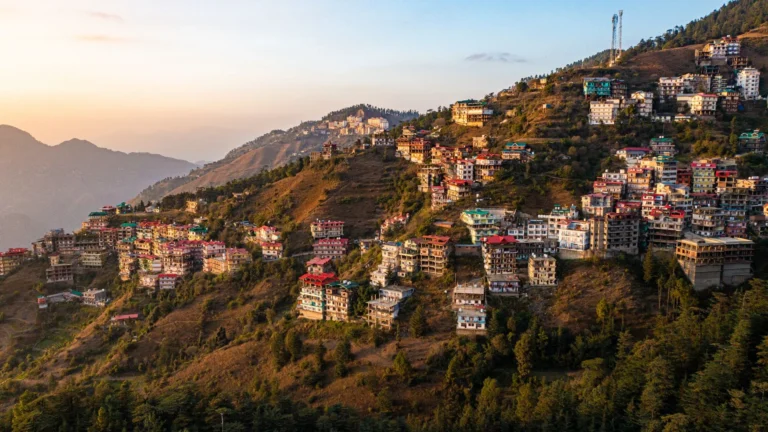

Short answer: Spiti is a high, dry Buddhist valley in north-east Himachal Pradesh, with Kaza, its main town, at about 3,650 m. International travellers can reach it two ways: year-round from Shimla through Kinnaur (2–3 days of driving, with an Inner Line Permit for foreigners for the Jangi–Sumdo stretch near the Tibet border), or from Manali over Kunzum La (one long day) from about June to mid-October. The Manali side has been shut since 15 October 2026 for winter. June–September is the open season for the full circuit; February–March is for snow leopards.
Quick answer (checked 30 October 2026)
- Altitude: Kaza about 3,650 m, Kibber 4,270 m, Chandratal 4,300 m, Kunzum La 4,550 m. Acclimatise over 2–3 days via Kinnaur; never fly Delhi and drive straight to Kaza from Manali.
- Routes: Shimla–Kinnaur–Kaza (about 420 km, open all year, 2–3 driving days) or Manali–Kunzum–Kaza (about 200 km, 9–12 h, June to mid-October only).
- Current status: Gramphu–Batal (Manali–Kaza road) and Kunzum closed since 15 October 2026; Spiti reachable only via Shimla–Kinnaur until roughly June 2027.
- Permits: foreigners need an Inner Line Permit for the Kinnaur border stretch (Jangi to Sumdo), ₹200 per person plus agency fee, groups of two or more through a registered Indian agency; nothing extra inside Spiti.
- Season: June–September for the full loop including Chandratal; October for colour and empty roads; late January–March for snow leopards and frozen landscapes.
- Must-sees: Key (Ki) monastery, Kibber, Langza, Hikkim post office, Komic, Dhankar, Tabo (996 AD), Pin Valley, Chandratal.
- Our packages: Kinnaur–Kaza with Chandratal from ₹32,500 (about US$342) in summer; Winter Spiti ex-Shimla, 6 nights, from ₹28,500 (about US$300) per person.
Plan this trip with a local operator
We are a local operator, registered with HP Tourism (see our certificates). Tell us your dates and we will plan Spiti with a private 4×4 or SUV, an English-speaking driver and the Inner Line Permit arranged, or book our Kinnaur–Kaza tour with Chandratal. WhatsApp +91 70874 88961 (WhatsApp works internationally) · info@suzutravels.com
What is Spiti Valley and who is it for?
Spiti means the middle land, the valley between Tibet and India. It lies in the rain shadow of the main Himalayan range, so it is a cold desert of ochre cliffs, green barley terraces around a few dozen villages, and whitewashed monasteries that have been in continuous use for a thousand years. Culturally it is closer to Ladakh than to the rest of Himachal: Tibetan Buddhist, Bhoti-speaking, and until the 1990s closed to foreign visitors.
It suits travellers who have already done, or do not need, the big-name sights, and who are comfortable with long drives on rough roads, basic rooms, cold nights and thin air. Photographers, trekkers, cyclists, motorcyclists and anyone interested in Buddhist art love it. It is not for a tight three-day schedule or for anyone with a heart or lung condition. We run Spiti from our Himachal base; see how we operate as a Spiti ground handler.
Which route should international travellers take into Spiti?
There are only two roads in, and the choice is mostly made for you by the calendar.
| Route | Distance / days | Open (checked 30 Oct 2026) | Pros | Cons |
|---|---|---|---|---|
| Shimla → Narkanda → Rampur → Kalpa → Nako → Tabo → Kaza | About 420 km; 2–3 driving days with nights in Kalpa and Nako or Tabo | All year, with short weather closures and night-time restrictions at landslide zones | Gradual altitude gain; Kinnaur Kailash views; Tabo and Nako on the way | Longer; ILP stretch for foreigners; narrow cliff road through Kinnaur |
| Manali → Atal Tunnel → Gramphu → Batal → Kunzum La → Losar → Kaza | About 200 km; 9–12 h in one hard day | Usually June to mid-October; shut since 15 Oct 2026 | Short; Chandratal on the way; a loop with the Shimla road | Jump from 2,000 m to 4,550 m in a day; unpaved Gramphu–Batal stretch with stream crossings |
Our standard advice for international guests: go in via Shimla and Kinnaur, come out via Kunzum and Manali when the pass is open (June–mid-October), or do it as an out-and-back from Shimla in the other months. That order gives your body three days to adjust before Kaza. Our Spiti via Shimla or Manali page compares the two in more detail, and the Kinnaur stretch is covered in our Delhi to Kalpa and Kinnaur Valley guide.
Public transport exists but is slow. HRTC runs morning and overnight buses from Shimla to Reckong Peo (about 10–12 hours), and buses from Reckong Peo to Kaza leave in the morning and early afternoon (Vargis Khan timetable, last updated 2022, so confirm locally). From Manali, two early-morning buses run to Kaza only while the pass is open. Most international visitors use a private SUV or 4×4 with a driver, which also lets you stop at Nako lake or a roadside dhaba when you want to.
What permits do foreigners need for Spiti?
Spiti itself is open to foreign nationals without a permit. The complication is the road in from Kinnaur, which runs within a few kilometres of the Tibetan border between Jangi (after Reckong Peo) and Sumdo (the Kinnaur–Spiti boundary), via Pooh and Nako. This stretch is a Protected Area, and foreigners need an Inner Line Permit (ILP), sometimes called a Protected Area Permit, to drive through it.
- Who issues it: the DM/ADM at Reckong Peo or the SDMs at Kalpa and Pooh in Kinnaur, and the SDM at Kaza if you are leaving Spiti towards Kinnaur (Kinnaur district website, checked 30 Oct 2026). In practice our team or your driver handles it at Reckong Peo the afternoon you arrive in Kalpa.
- Conditions: foreign tourists in a group of two or more, sponsored by a recognised Indian travel agency, with a fixed itinerary. Solo foreigners are regularly issued permits in practice when travelling with a registered operator, but the rule says two, so tell us if you are alone and we will advise.
- Cost and documents: ₹200 per person plus the agency’s service charge; passport, visa page, two passport photos and a copy of each. Allow two to three hours at the office; it is closed on Sundays and government holidays.
- Validity: the permit is normally issued for the days you need, up to a maximum of 30 days.
- Not allowed: the side roads towards Shipki La and Kaurik, and photographing military posts or bridges in the border zone.
Indian nationals need no permit on this road. If you enter from Manali and leave the same way, no foreigner permit is needed at all, but that is only possible from June to mid-October.
When is the best time to visit Spiti?
| Months | Roads | Weather in Kaza | What it is like |
|---|---|---|---|
| Jun–Sep | Both routes open; Chandratal reachable; Kunzum usually opens in June | 15–25°C days, 3–8°C nights, strong sun | Full circuit, treks, homestays open; July–August busiest with Indian visitors |
| Oct | Manali side closes mid-month (15 Oct in 2026); Shimla side open | 8–18°C days, below freezing at night | Golden poplars, clear skies, few visitors; our favourite month |
| Nov–mid-Jan | Shimla side only; short snow closures | -5 to 8°C days, -15°C or colder nights | Very quiet; many guesthouses shut; homestays with bukhari stoves |
| Late Jan–Mar | Shimla side only, 4×4 needed; Kaza–Kibber usually cleared | -10 to 5°C days, -20°C nights | Snow leopard season around Kibber; frozen Spiti river; serious cold |
| Apr–May | Shimla side open; Kunzum still shut | 5–15°C days | Snow melting, fields being sown; Chandratal not reachable |
The winter trip is a different product from the summer one. Our winter Spiti guide for 2026-27 explains the clothing, the homestays and the risks, and the snow leopard safari in Spiti page describes the February–March tracking trips from Kibber. For the shoulder months read our best time to visit Spiti month-by-month guide and Spiti in September. Kalpa, the usual first night, has its own Kalpa in winter page.
How do you handle the altitude in Spiti?
Altitude is the one thing that sends Spiti trips wrong, and it is avoidable. Kaza is at about 3,650 m, higher than any town in western Europe, and the villages above it (Kibber 4,270 m, Komic about 4,500 m, Langza 4,400 m) are higher than Lhasa. The rules we apply on our own trips:
- Enter via Kinnaur. Kalpa (2,960 m) and Nako (3,660 m) or Tabo (3,280 m) give two nights of staged ascent before Kaza.
- Do not fly into Delhi and reach Kaza within 48 hours. Spend the first night no higher than Kalpa or Manali.
- Drink three to four litres a day, skip alcohol for the first two nights, and keep the first day in Kaza easy: Key monastery and the town, not Komic.
- Headache, poor sleep and loss of appetite are normal on night one. Vomiting, confusion, breathlessness at rest or a wet cough are not; descend to Tabo or Kalpa the same day. Kaza has a civil hospital with oxygen.
- Ask your doctor about acetazolamide before travelling. Our drivers carry a pulse oximeter and we can hire oxygen cylinders.
Our altitude sickness guide goes into symptoms and treatment in detail.
What should you see in Spiti, and how many days do you need?
Allow a minimum of 7 nights from Shimla or Chandigarh for the out-and-back, and 8–9 nights for the full loop that exits via Manali. A typical plan we run for international guests in summer:
- Day 1: Chandigarh or Shimla → Narkanda → Sarahan or Kalpa (Kinnaur Kailash view).
- Day 2: Kalpa → permit at Reckong Peo → Nako (lake and 11th-century gompa) → Tabo (night).
- Day 3: Tabo monastery (founded 996 AD, mud-walled with original murals; no photography inside) → Dhankar monastery and fort on its cliff → Pin Valley detour → Kaza.
- Day 4: Key monastery (the postcard one, about 14 km from Kaza) → Kibber → Chicham bridge → back to Kaza.
- Day 5: Langza (Buddha statue, fossils) → Hikkim (a post office at about 4,400 m, send a card) → Komic → Kaza. Afternoon in Kaza’s market and the new monastery.
- Day 6: Kaza → Losar → Kunzum La → Chandratal (camp, June to early October only).
- Day 7: Chandratal → Batal → Gramphu → Atal Tunnel → Manali.
In winter the same core (Kaza, Key, Kibber, Langza, Tabo, Dhankar) is done out-and-back from Shimla over six nights, and Chandratal is replaced by time at Kibber for wildlife. Our Winter Spiti Reasonable Euphoria package follows exactly that pattern.
Where to sleep: Kaza has a handful of mid-range hotels with heating and attached bathrooms, and every village has family homestays with shared toilets, home-cooked food and real contact with Spitian life. We recommend at least one homestay night in Langza, Kibber or Dhankar; our Spiti homestay vs hotel page explains what to expect from each.
What does a Spiti trip cost for international travellers?
Spiti is cheap on the ground and expensive in vehicle time, because a private SUV and driver for eight or nine days is the main cost. Our Delightful Kinnaur–Kaza tour with Chandratal is priced from ₹32,500 (about US$342) per person on the Deluxe tier in the off-season band, and the Winter Spiti ex-Shimla package at 6 nights is from ₹28,500 (about US$300) per person; peak dates (20 December–5 January and from 15 March) are about 25% more. Both include the vehicle, driver, accommodation with breakfast and dinner in Spiti, and permit assistance. A 20% token confirms the booking, with a full refund if you cancel within 48 hours of paying, and we take international cards through Razorpay and PayPal.
Independently, budget about ₹800–1,500 (US$8–16) per person per night in a homestay with meals, ₹2,500–5,000 (US$26–53) for a Kaza hotel room, and ₹5,500–8,000 (US$58–84) per day for a shared SUV with driver. Kaza’s single ATM often runs dry, so carry enough rupees from Shimla or Reckong Peo.
Practical notes for foreign visitors to Spiti
- Connectivity: only BSNL and, patchily, Jio work in Kaza; nothing in most villages. Tell family you will be offline. Our drivers carry a BSNL phone.
- Clothing: even in July, nights are near freezing and the wind at Kunzum is bitter. Down jacket, hat, gloves, sunglasses and factor 50 sunscreen all year; in winter, expedition-grade layers.
- Monastery etiquette: shoes off, clockwise around stupas and prayer walls, no photographs of murals or inside shrine rooms unless told otherwise, modest clothing.
- Roads: the Kinnaur section has landslide zones with night-time closures after slides; the Gramphu–Batal section is unpaved with stream crossings that rise in the afternoon. We never drive these after dark.
- Environment: carry out plastic and refill bottles; see our note on Spiti’s tourism pressures.
Frequently asked questions
Do foreigners need a permit to visit Spiti Valley?
Not for Spiti itself. Foreign nationals need an Inner Line Permit only for the Kinnaur border stretch between Jangi and Sumdo on the Shimla–Kaza road. It costs ₹200 per person plus an agency fee, is issued at Reckong Peo, Kalpa, Pooh or Kaza, and requires a group of two or more sponsored by a registered Indian operator. We arrange it for our guests.
Which is better for Spiti: the Shimla route or the Manali route?
Enter via Shimla and Kinnaur whenever you can. It is open all year, the altitude gain is gradual, and you see Kalpa, Nako and Tabo on the way. The Manali route over Kunzum La is shorter but climbs from 2,000 m to 4,550 m in one day and is open only from about June to mid-October; it makes a good exit road.
Is Spiti open in winter for international travellers?
Yes, via Shimla and Kinnaur only. The Manali side has been closed since 15 October 2026. Winter Spiti means -15 to -25°C nights, 4×4 vehicles, homestays with wood stoves and occasional road closures after snow, but also empty monasteries, a frozen river and the best chance of seeing a snow leopard near Kibber in February and March.
How high is Kaza and will I get altitude sickness?
Kaza is at about 3,650 m and the villages above it reach 4,500 m. Most healthy visitors feel a headache and sleep badly on the first night, then adjust. The way to avoid worse is to approach through Kinnaur over two or three days, drink plenty of water, avoid alcohol at first and keep the first day in Kaza gentle. Descend if symptoms get worse.
How many days do you need for Spiti Valley?
Seven nights from Shimla or Chandigarh is the realistic minimum for an out-and-back trip that includes Kalpa, Tabo, Dhankar, Kaza, Key, Kibber and Langza. The full loop exiting over Kunzum La to Chandratal and Manali needs eight or nine nights and is only possible from June to mid-October. Shorter trips mean too much driving and too little acclimatisation.
Can you visit Chandratal lake in October?
Usually only in the first half of the month. The camps at Chandratal pack up in early October and the Gramphu–Batal road and Kunzum La close with the first heavy snow; in 2026 the closure came on 15 October. For a Chandratal trip, plan between mid-June and the end of September and keep a spare day in case of weather.
Plan this trip with a local operator
We are a local operator, registered with HP Tourism (see our certificates). Tell us your dates and we will plan Spiti with a private 4×4 or SUV, an English-speaking driver and the Inner Line Permit arranged, or book our Kinnaur–Kaza tour with Chandratal. WhatsApp +91 70874 88961 (WhatsApp works internationally) · info@suzutravels.com