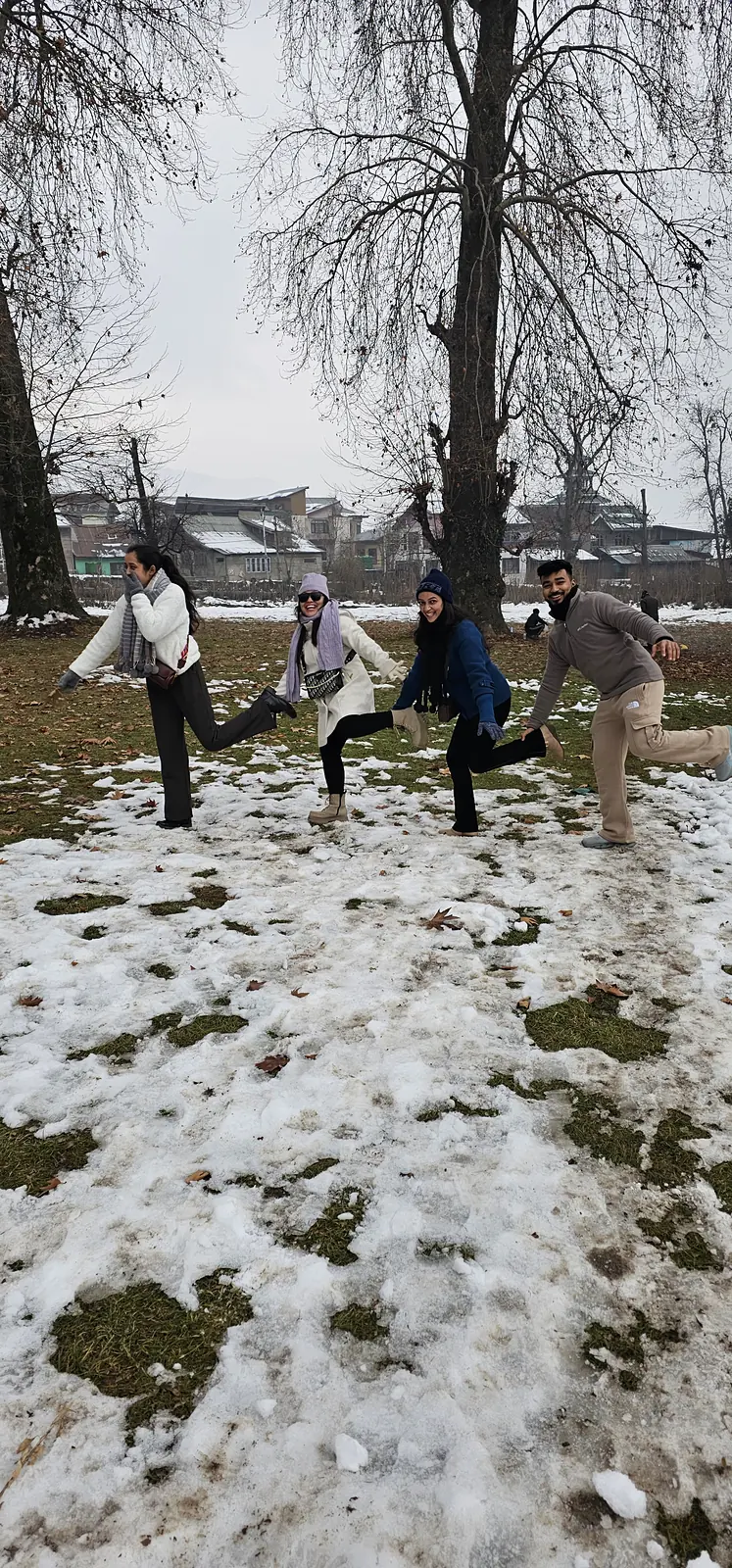

Short answer: Kashmir in January is deep winter. Srinagar averages about 7°C by day and −2°C at night (IMD normals), Dal Lake’s edges freeze, and Gulmarg is in full ski season with the gondola running to Apharwat, weather permitting. Sonamarg is now reachable through the Z-Morh tunnel, Pahalgam town is open but Aru and Chandanwari are usually snowed in. Expect fog delays at Srinagar airport and keep a day spare. Budget from ₹28,500 per person for a 6-day package.
Quick answer (checked 23 October 2026)
- Chillai Kalan: the 40 harshest days, 21 December to 30 January, followed by Chillai Khurd (20 days) and Chillai Bachha (10 days). January 2027 sits entirely inside it.
- Srinagar weather: January normal 7.1°C max / −1.9°C min, 64 mm precipitation (IMD 1991–2020). Nights of −5 to −8°C happen most years; −8.8°C on 30 January 2021 was the lowest in 30 years.
- Gulmarg: ski season December to early March; gondola Phase 1 to Kongdoori and Phase 2 to Apharwat, online tickets only via the J&K Cable Car Corporation portal, closed second and fourth Mondays for maintenance.
- Sonamarg: open in winter since the 6.5 km Z-Morh tunnel opened on 13 January 2025; Zoji La beyond it stays shut.
- Pahalgam: town and Betaab Valley open; Aru and Chandanwari roads usually closed January to early March.
- Prices: Snowclad Kashmir Superior from ₹32,500 and Stunning Kashmir from ₹28,500 per person (indicative, confirmed on quote); a 25% peak surcharge applies 20 December–5 January only.
Plan this trip with a local operator
We are a registered operator (see our certificates) and run Kashmir winters with a Srinagar team. See our Kashmir tour packages or ask for a January quote with your dates and group size. WhatsApp +91 70874 88961 · call +91 70874 88961 · info@suzutravels.com
What is Chillai Kalan, and does it affect a January trip?
Chillai Kalan is the Kashmiri name for the 40 coldest days of winter, counted from 21 December to 30 January (some calendars run it to 31 January). It is followed by Chillai Khurd, the “small cold” of 20 days, and Chillai Bachha, the “baby cold” of 10 days, which takes the season to the end of February. It is a folk calendar, not an official closure: hotels, houseboats, shikaras, Gulmarg and the airport all operate through it.
What it means for you is simple. Snow that falls in Chillai Kalan tends to stay on the ground, water pipes freeze in Srinagar’s old city, and a cold wave can push night temperatures well below the averages. The valley is at its most photogenic and its least forgiving in the same fortnight. If you read our Kashmir in December guide, January is the same trip with more settled snow, fewer holiday crowds after 5 January and a slightly higher chance of a flight disruption.
How cold is Kashmir in January?
| Place (altitude) | Typical January day / night | Snow on the ground | Notes |
|---|---|---|---|
| Srinagar (1,585 m) | 7°C / −2°C normal; cold waves −5 to −8°C | Intermittent; one or two good falls most Januaries | Fog mornings; Dal Lake fringes freeze, rarely the whole lake |
| Gulmarg (2,650 m) | 0 to 3°C / −8 to −12°C | Reliable; 1–2 m by late January in good years | Ski season; gondola pauses in high wind and heavy snowfall |
| Pahalgam (2,130 m) | 3 to 6°C / −8 to −12°C | Usually from late December | Often the coldest reading in the valley; Aru and Chandanwari shut |
| Sonamarg (2,730 m) | 0 to 4°C / −8 to −14°C | Deep; sledging at Thajiwas side | Day trip via Z-Morh tunnel; nothing beyond towards Zoji La |
Srinagar normals are IMD 1991–2020 figures from the Srinagar Meteorological Centre’s climate tables (checked 23 October 2026); the hill-station ranges are our planning bands from recent January station readings reported by the Srinagar MeT office, for example Gulmarg −8°C and Pahalgam −12°C on the night Srinagar hit −8.8°C in January 2021 (The Tribune, 31 January 2021). Forecasts, not averages, decide your packing in the last week before travel.
Does Dal Lake freeze in January?
Partly, most years. After a few nights below −5°C the shallow fringes, the interior channels and the Nigeen side ice over; children walk on the edges and shikara boatmen break a lane through the thin ice. A full freeze thick enough to walk across is rare. Shikara rides continue in January, usually 10 am to 4 pm, with blankets and a kangri (the wicker fire-pot) on board. Houseboats are fitted with bukharis and electric blankets; ask for one on the sunnier Boulevard side and confirm the heating before you book. Mughal gardens are open but bare; the old city, Hazratbal and Shankaracharya hill are the better January outings.
Gulmarg in January: skiing, the gondola and what it costs
Gulmarg is the reason most people choose January over any other month. The ski season runs from December to early March, with the best snow and the longest lift queues in the second half of January. The Gulmarg gondola has two stages: Phase 1 from Gulmarg (about 2,650 m) to Kongdoori, and Phase 2 from Kongdoori to the Apharwat shoulder at about 3,980 m. In winter Phase 2 opens only when wind and avalanche conditions allow, and the whole system closes on the second and fourth Monday of each month for maintenance. A chairlift at Kongdoori and a 726 m ski drag lift, inaugurated on 13 December 2025 as Asia’s longest, serve beginner and intermediate slopes; in late January 2026 the slopes reopened after fresh snow with about four feet at Phase 1 and six feet at Phase 2 (Greater Kashmir, 23 January 2026).
Tickets are sold online only, through the Jammu and Kashmir Cable Car Corporation’s e-ticket portal, with entry from about 8 am and last entry around 3:30 pm. Travel press in August 2026 reported fares of about ₹810 for Phase 1 and ₹1,010 for Phase 2 per person, with some older pages still showing ₹700 and ₹900; the checkout page is the final word, and we book slots for our guests two to three days ahead because Phase 2 issues roughly half as many tickets. Do not buy from agents at the gondola gate. Beginner ski lessons with hired gear are arranged through the J&K Tourism ski school and private instructors in Gulmarg; one day is enough to learn to stop and turn on the bunny slope. For a full ski week, our Gulmarg ski holiday page explains how we structure it. Stays range from one luxury resort to mid-range hotels and wooden huts; in January book early and expect the Tangmarg–Gulmarg road to need chains after a snowfall, with a transfer to 4×4 taxis at Tangmarg on heavy days.
What is open in Sonamarg and Pahalgam in January?
Sonamarg: Until 2025, Sonamarg shut for four to five months every winter because the Gagangir stretch was buried by avalanches. The 6.5 km Z-Morh tunnel, inaugurated on 13 January 2025, bypasses that stretch, and Sonamarg has stayed reachable through winter since. In January it works as a day trip from Srinagar (about 80 km, 2.5 hours): snow play and sledging on the Thajiwas side, pony rides when the slope is firm, and a hot lunch. Nothing operates beyond Sonamarg; Zoji La and the road to Ladakh stay closed. Check the day’s road status with your driver, because the approach from Kangan can still close briefly during active snowfall.
Pahalgam: The town, the Lidder riverside, Betaab Valley and the golf course area stay open and are snowbound by January. The roads to Aru Valley and Chandanwari are not cleared and usually remain shut from January to early March. Baisaran meadow is a pony or foot climb that becomes risky after fresh snow. Pahalgam is about 90 km from Srinagar, 2.5–3 hours, and often records the valley’s lowest temperature, so pack for it.
How do you reach Kashmir in January, and what goes wrong?
Flights: Srinagar has direct flights from Delhi, Mumbai, Bengaluru, Chandigarh and other cities. January’s problem is fog and snow. Low-visibility mornings delay or cancel departures for a few hours, and a heavy snow day can wipe out the schedule; on 30 January 2023 all 68 flights were cancelled after heavy snowfall (The Tribune). Book the latest morning or early afternoon arrival you can, keep a spare day before any onward connection, and never fly out of Srinagar on the same day as an international flight from Delhi.
Train: The Vande Bharat to Srinagar runs six days a week (not Tuesdays), from Jammu Tawi via Katra, Reasi, the Chenab bridge and Banihal, about 4 hours 50 minutes; it started from Katra on 7 June 2025 and was extended to Jammu Tawi on 30 April 2026 (Indian Railways schedule as summarised on Wikipedia, checked 23 October 2026). It is the most weather-proof way into the valley in January and the easiest add-on after Vaishno Devi.
Road: The Jammu–Srinagar highway (NH44) through Ramban and the Banihal tunnel closes for hours or days after landslides or snowfall; in January it is a backup, not a plan. Inside the valley, roads to Gulmarg and Pahalgam are cleared quickly, but allow an extra hour everywhere after snow.
For foreign readers, one factual note: as of 23 October 2026 the UK FCDO advises against all travel to Jammu and Kashmir except Jammu city (advice updated 7 October 2026), and the US State Department lists Jammu and Kashmir at Level 4, Do Not Travel; check your own government’s advice before booking. Domestic tourism continues normally.
What should you eat in Kashmir in winter?
January is harissa season. Harissa is a slow-cooked mutton and rice porridge sold from dawn in the old city around Aali Kadal and Fateh Kadal, eaten with a drizzle of hot oil and a kandur-baked bread; it finishes by mid-morning, so go early. Kahwa, green tea with saffron, almonds and cardamom, is everywhere, and noon chai (pink salt tea) with a girda is the real local breakfast. Winter is also when a wazwan feels earned: rista, gushtaba, rogan josh and tabak maaz. Nadru (lotus stem) yakhni and dum aloo cover vegetarians well. Ask your houseboat or hotel for a kangri under your pheran for the evening walk; it is the oldest heating system in the valley and still the most charming.
How much does Kashmir in January cost, and when is it cheaper?
Our two winter programmes are Stunning Kashmir (6 days, two nights in Pahalgam) from ₹28,500 per person and Snowclad Kashmir Superior (6 days, including a night in Gulmarg) from ₹32,500 per person, indicative and confirmed on quote; inclusions are listed on each package page, and flights and gondola tickets are extra. A 25% peak surcharge applies for travel from 20 December to 5 January; from 6 January rates return to the regular band, which makes the second half of January one of the better-value snow windows in India. For anyone comparing months, our Kashmir in November guide covers the autumn end of the season, and our list of the best places to visit in December in India puts Kashmir beside Rajasthan and Kerala. If you want a colder, higher and drier winter, read Ladakh in winter; for snow nearer Delhi, our Himachal snowfall guide is the companion piece.
What should you pack for Kashmir in January?
- A proper down or insulated jacket, a fleece mid-layer, thermal top and bottom, and a windproof shell for Gulmarg.
- Waterproof boots with grip; rent snow boots and gaiters in Gulmarg if you plan to ski or sledge.
- Woollen cap, neck gaiter, two pairs of gloves (a thin liner and a waterproof outer) and thick socks.
- Sunglasses and SPF 50; snow glare at Apharwat is severe.
- Lip balm, moisturiser and a small thermos; the air is very dry.
- Power bank, a torch and printed copies of gondola bookings; power and network drop after snowfall.
- Any regular medicines and a basic cold kit; pharmacies are plentiful in Srinagar, sparse in Gulmarg.
Frequently asked questions
Is January a good time to visit Kashmir?
Yes, if you want snow and skiing and can accept cold and occasional delays. Gulmarg is at its best, Srinagar is quiet and Sonamarg is now reachable in winter. The trade-offs are night temperatures below freezing, fog-related flight disruptions and the closure of Aru, Chandanwari and the Zoji La side. After 5 January the peak surcharge ends, so mid and late January are good value.
Does it snow in Srinagar in January?
Most Januaries bring one or more snowfalls to Srinagar, sometimes heavy enough to blanket the city for days; other years see mostly frost and fog with snow only on the surrounding hills. Snow is reliable at Gulmarg, Pahalgam and Sonamarg throughout the month. Plan your snow days there and treat snow in Srinagar as a bonus rather than a promise.
Is the Gulmarg gondola open in January?
Yes, it operates through winter except on the second and fourth Monday of each month for maintenance and during high wind, heavy snowfall or avalanche control, when Phase 2 or the whole system can pause for hours or a day. Tickets are sold online only through the J&K Cable Car Corporation portal; book two to three days ahead and keep a flexible morning.
Can I visit Sonamarg in January?
Yes. Since the Z-Morh tunnel opened on 13 January 2025, Sonamarg is reachable in winter as a day trip from Srinagar of about 80 km and 2.5 hours each way. Expect deep snow, sledging and pony rides on the Thajiwas side and hot lunches in the village. Nothing operates beyond Sonamarg, as Zoji La and the Ladakh road stay closed until spring.
How many days are enough for Kashmir in January?
Five to six days work well: two nights in Srinagar including a houseboat, one or two nights in Gulmarg for skiing and the gondola, and one or two nights in Pahalgam or a Sonamarg day trip. Add a buffer day at the end because January flights out of Srinagar are delayed by fog or snow more often than in any other month.
Is Kashmir safe to visit in January?
Domestic tourism runs normally in winter, and the main practical risks are weather: icy roads, delayed flights and cold-related illness. Travel with a registered operator, keep your driver’s and hotel’s numbers handy, and follow local advice on road closures. Foreign visitors should note that the UK FCDO and US State Department currently advise against travel to Jammu and Kashmir, and check their own government’s guidance.
Plan this trip with a local operator
We are a registered operator (see our certificates). For January we book heated hotels and houseboats, gondola slots, a Gulmarg ski day and 4×4 transfers when the Tangmarg road needs them, within our Kashmir tour packages or on a custom plan via our Kashmir quote form. A 20% deposit locks your dates and price; full refund if cancelled within 48 hours of paying; balance before the trip; pay by card via Razorpay (international cards accepted) or PayPal. WhatsApp +91 70874 88961 · call +91 70874 88961 · info@suzutravels.com