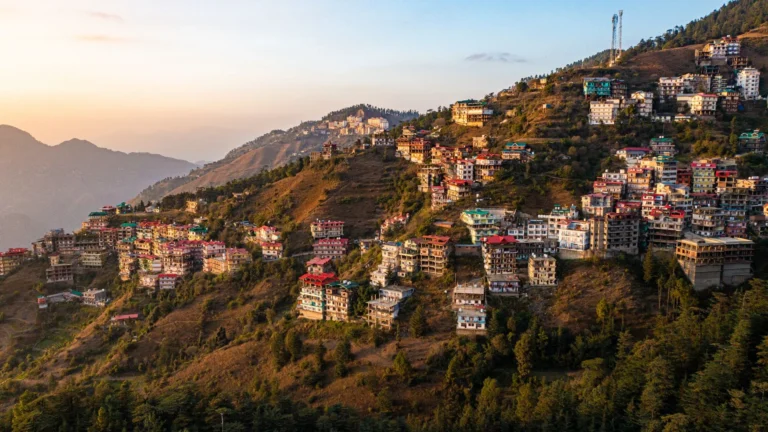

Short answer: Tirthan Valley is a quiet river valley in Kullu district, Himachal Pradesh, at 1,500–1,700 m, about 50 km from Aut on the Delhi–Manali highway. It is the main gateway to the Great Himalayan National Park, a UNESCO World Heritage Site since 2014. Stay by the river at Gushaini, Nagini or Sai Ropa; walk to Chhoie waterfall; take a permit at Sai Ropa for Rolla or Shilt; fish for trout with a licence (season March–October). Best months: March–June and September–November.
Quick answer (checked 23 October 2026)
- Where: Banjar tehsil, Kullu district; Gushaini (about 1,500 m) is the road-head, 34 km from Aut and 25 km from Jibhi.
- Park: Great Himalayan National Park, about 905 sq km core (1,171 sq km with its sanctuaries), UNESCO-listed in June 2014. Villages and stays are in the ecozone; the core zone needs a permit from the Sai Ropa range office.
- Treks: Rolla (about 8 km from Gushaini, day or overnight), Shilt (2 days), Tirth (6–8 days); Chhoie waterfall is a 1-hour walk from Nagini.
- Trout: Angling licence from the HP Fisheries Department; closed season 1 November to end February every year.
- Reach: Delhi–Aut about 465 km by HRTC overnight bus, then Aut–Larji–Banjar–Gushaini by local bus or taxi; nearest airport Bhuntar (about 55 km).
- Stay: Riverside homestays, guesthouses, cottages and camps; ₹1,000–4,000 per night is the usual band.
Plan this trip with a local operator
We are a Himachal-based operator, registered with HP Tourism (see our certificates). We add Tirthan to our Himachal tour packages, arrange the Sai Ropa permit and a registered guide for park treks, and run the transfers from Delhi or Chandigarh. WhatsApp +91 70874 88961 · call +91 70874 88961 · info@suzutravels.com
Where is Tirthan Valley, and how is it different from Jibhi?
The Tirthan river rises inside the Great Himalayan National Park and flows west past Gushaini, Nagini, Sai Ropa and Banjar to meet the Beas at Larji, just below the Aut tunnel. “Tirthan Valley” in travel use means the stretch from Sai Ropa up to Gushaini and the last villages before the park gate, roughly 1,500–1,700 m. Jibhi sits in a side valley on the Banjar–Jalori road, about 25 km away. Jibhi is about cottages, Jalori Pass and cafés; Tirthan is about the river, the park and trout. Most people do both; our Jibhi and Tirthan Valley 4-day itinerary sets out the split.
Tirthan is still one of the least built-up valleys within a day of Delhi, which is why it is in our list of offbeat Himachal destinations. Expect few ATMs, patchy signal and early dinners.
What is the Great Himalayan National Park, and do you need a permit?
The Great Himalayan National Park (GHNP) protects the Tirthan, Sainj, Jiwa Nal and upper Parvati catchments from about 1,500 m to over 6,000 m. The UNESCO-inscribed property is 90,540 ha (about 905 sq km); with the adjoining Sainj and Tirthan sanctuaries the conservation area is about 1,171 sq km. It was formally notified as a national park in 1999 and inscribed on the World Heritage list in June 2014 for species such as the western tragopan, musk deer, Himalayan tahr and snow leopard (UNESCO World Heritage Centre, checked 23 October 2026). Along its south-western edge is a 26,560 ha buffer called the ecozone, about 265 sq km, where the villages, homestays and most day walks lie.
Ecozone versus core zone. You do not need a permit to stay in Gushaini or walk to Chhoie waterfall or the first stretch of the Tirthan trail; those are in the ecozone. You do need a permit to cross into the core zone, which begins a few kilometres above Gushaini on the Rolla route. Permits are issued at the GHNP range office at Sai Ropa (the park spells it Shairopa), about 5 km before Gushaini, and at the Director’s office at Shamshi near Kullu. Carry ID.
Fees. The park’s own website (greathimalayannationalpark.org, page updated 10 September 2026) lists the rules but asks visitors to confirm current fees with park authorities. Figures published earlier were ₹100 per person per day for Indian visitors and ₹400 per day for foreigners, with extra charges for still and video cameras. Treat those as a guide, not a quote; we confirm the exact amount when we book your permit.
Rules inside the park (from the same official page): multi-day trekkers must go with registered guides and porters; routes must be approved by the range officer; no open fires, no firearms, no pets, no fishing or hunting inside the park; all non-biodegradable litter must be carried out of the park and the ecozone. Travel insurance covering evacuation is strongly advised for anyone staying more than a day.
Which treks can you do from Gushaini?
| Trek | Distance and time | Permit and guide | Who it suits |
|---|---|---|---|
| Chhoie waterfall | About 3 km one way from Nagini, 1 hour up through fields and forest; 2–2.5 hours return | None needed | Everyone, including children |
| Gushaini to Rolla | About 8 km one way along the Tirthan, 4–4.5 hours up; Rolla is at roughly 2,100 m | Permit from Sai Ropa; guide required for overnight | Fit walkers; day return is long, overnight is better |
| Rolla to Shilt | About 5 km, steep, 3–4 hours; Shilt hut at about 3,100 m | Permit, guide and porter | 2–3 day trekkers; good for birding and pheasants |
| Tirth (source of the Tirthan) | About 90 km return via Rolla, Nada Thach and Majhoni, 6–8 days, up to about 4,000 m | Permit, guide, porters, camping gear | Experienced trekkers, May–June and September–October |
| Serolsar Lake and Raghupur Fort | From Jalori Pass (3,120 m), 40 km by road from Gushaini; 4–5 km and 3 km one way respectively | None needed; road shut in snow, usually late December to March | Day-trippers combining Tirthan with Jibhi |
Distances are from published trek reports and the GHNP route descriptions, checked 23 October 2026; guides quote slightly different numbers, so plan with a margin. If you want a longer Himachal trek with less logistics, compare the Kareri Lake trek near Dharamshala on our adventure pages, or a night under canvas with camping in Himachal.
How does trout fishing work in Tirthan?
The Tirthan is one of Himachal’s protected trout streams, stocked with brown trout since the colonial era and rainbow trout from state hatcheries. Angling is legal only with a licence from the Himachal Pradesh Fisheries Department, issued through its Kullu offices and, in practice, through the tourism office and licensed hosts in the valley. Rules we work with: rod and line only, a daily bag limit, a minimum size below which fish must be released, and no fishing within 100 m of bridges. We have not printed the licence fee here because the official schedule we could verify this week does not state a current figure; ask us or the Fisheries office for the day’s rate.
The closed season is fixed: trout angling is banned across Himachal from 1 November to 28 February every year to protect spawning, with fines under the HP Fisheries Act (The Tribune, 2 November 2024). So a winter trip is for eating trout, not catching it. The best months to fish are March–April and October, when the water is clear and low. Catch-and-release is encouraged, and most hosts can arrange a local angling guide and tackle.
Where should you stay: Gushaini, Nagini or Sai Ropa?
We do not name properties; here is how the villages differ.
- Gushaini: The last proper village before the park, with a small bazaar, the bridge over the Tirthan and most of the riverside guesthouses and homestays. Choose it if you are trekking.
- Nagini: 2–3 km below Gushaini, quieter, with cottages and camps on the river and the Chhoie waterfall trail starting behind the village. Best for couples and families who want the river, not the bazaar.
- Sai Ropa: The park office, a forest rest house and a few stays in the orchards. Convenient for an early permit; limited food options.
Expect ₹1,000–2,000 for homestay rooms with home food, ₹2,500–4,000 for riverside cottages, and seasonal camps from about ₹1,200 per person with meals. Rates rise 20–40% over Christmas–New Year and on May–June weekends. Power cuts are routine; ask about hot water and heating in winter.
When is the best time to visit Tirthan Valley?
| Months | Valley weather (approx.) | What works | Crowd |
|---|---|---|---|
| March–April | Day 15–22°C, nights 4–8°C; rhododendron and apple blossom | Fishing opens 1 March; Chhoie, Rolla; snow still above Shilt | Low |
| May–June | Day 22–28°C, cool nights | All treks including Tirth; park’s best wildlife season | High on weekends |
| July–August | Monsoon; river in spate, landslides on the Aut–Banjar road | Short stays only; no river swimming, no high treks | Very low |
| September–November | Clear, day 15–24°C; frosty nights by November | Best trekking light and water; fishing till 31 October | Medium in October |
| December–February | Day 8–14°C, nights around or below 0°C; snow above 2,200 m, occasional in the villages | Riverside rest, Chhoie walk, snow at Jalori side when the road allows; park treks mostly closed | Low, spike at New Year |
There is no IMD observatory in the valley; ranges are compiled from published climate averages for the Banjar–Tirthan belt at about 1,500–1,700 m. For a winter trip, our Himachal snowfall guide 2026-27 explains where snow is likely and when.
How do you reach Tirthan Valley?
From Delhi by road (about 500 km to Gushaini, 11–13 hours): NH44 to Chandigarh, the Kiratpur–Nerchowk four-lane, Mandi, Pandoh, then turn off at Larji just before the Aut tunnel on the Manali highway. From Larji it is about 25 km to Banjar and another 10 km to Gushaini on a narrow but tarred road. Our Delhi to Manali taxi drivers know the detour; a Gushaini drop adds about an hour to the Manali run.
By bus: HRTC overnight Volvos from ISBT Kashmere Gate towards Kullu and Manali stop at Aut on request; fares to Bhuntar were listed at about ₹1,520–1,550 for Himsuta Volvo and ₹770–790 for ordinary buses on 24 October 2026 (HRTC via AbhiBus, checked 23 October 2026). From Aut, local buses run to Banjar from about 6:30 am (₹35–50), with onward buses or shared taxis to Gushaini; a private taxi from Aut to Gushaini is usually ₹1,500–2,000. HRTC also runs a few direct ordinary Delhi–Banjar services that take 14–16 hours.
By air and rail: Bhuntar (Kullu–Manali airport) is about 55 km and 2 hours away; flights are costly and weather-prone. Chandigarh is the practical airport and railhead, about 275 km and 7–8 hours. Vehicles registered outside Himachal pay the state entry tax at the border; see Himachal entry tax and permits.
How much does a Tirthan trip cost?
Four days from Delhi on HRTC with homestay nights, a Chhoie walk and a guided Rolla day costs roughly ₹8,000–13,000 per person, including the park permit, a local guide share and food. A private cab from Delhi changes the total most; for a family of four it is often cheaper than four Volvo tickets each way. Our Himachal trip cost guide explains the main levers. For a longer loop, our Incredible Himachal 7N/8D package from ₹18,999 per person (indicative, confirmed on quote) can be routed through Tirthan and Jibhi instead of a second Manali night. For a similar river-valley feel in Kinnaur, see our Sangla and Chitkul guide.
Responsible travel in Tirthan
- Carry your plastic out of the valley; the ecozone has no waste processing. Himachal bans single-use plastic carry bags.
- Stay on marked trails inside the park and keep noise down; the western tragopan and musk deer are shy.
- Do not light fires in the forest, bathe with soap in the river, or feed wildlife.
- Hire local guides and porters through the park or your host; it is the rule in the core zone and the valley’s main income after apples and trout.
- Respect temple rules in villages like Bathahad and Shringa Rishi; several do not allow outsiders inside.
Frequently asked questions
Is Tirthan Valley better than Jibhi?
They suit different trips. Tirthan has the river, the national park, trout fishing and proper treks; Jibhi has cottages, cafés and the Jalori Pass day. Tirthan is quieter and more outdoors-focused, Jibhi is easier for a lazy weekend. They are 25 km apart, so most four-day plans give two nights to each rather than choosing.
Do I need a permit to visit Tirthan Valley?
No permit is needed to stay in Gushaini, Nagini or Sai Ropa, walk to Chhoie waterfall or drive to Jalori Pass. A permit is required only to enter the core zone of the Great Himalayan National Park, for example beyond the first stretch on the Rolla route. Get it at the Sai Ropa range office with ID; multi-day treks also need a registered guide.
Can I fish for trout in Tirthan in December?
No. Himachal closes trout angling on all its streams from 1 November to 28 February each year to protect spawning fish, with fines under the HP Fisheries Act. You can still eat farmed trout at homestays in winter. Fishing reopens on 1 March with a licence from the Fisheries Department; March–April and October are the best months.
How many days are enough for Tirthan Valley?
Two nights cover the river, Chhoie waterfall and a short walk up the Tirthan trail. Three nights let you add a guided day to Rolla or a Jalori Pass trip. Add two to three more days for Shilt, and a full week for the Tirth trek. Travel from Delhi takes most of a day each way, so plan four to five days door to door.
Is Tirthan Valley safe for families with children?
Yes, for the valley floor. Riverside stays, the Chhoie walk and trout lunches work well with children of school age. Keep them away from the river edge; the Tirthan is fast and cold even in May. Avoid monsoon months, carry basic medicines because the nearest hospital is in Banjar or Kullu, and choose stays with heating from November to March.
Which is the nearest airport and railway station to Tirthan Valley?
Bhuntar, the Kullu–Manali airport, is the nearest at about 55 km and 2 hours by road, but flights are limited and weather-dependent. Chandigarh airport and railway station, about 275 km and 7–8 hours away, are the dependable options. Most travellers simply take the overnight HRTC bus from Delhi to Aut and a taxi onward.
Plan this trip with a local operator
We are a Himachal-based operator, registered with HP Tourism (see our certificates). Tell us your dates and whether you want the river, the trek or both; we handle the Sai Ropa permit, a registered guide, riverside stays and the cab from Delhi or Chandigarh as part of our Himachal tour packages. A 20% deposit locks your dates and price; full refund if cancelled within 48 hours of paying; balance before the trip; pay by card via Razorpay (international cards accepted) or PayPal. WhatsApp +91 70874 88961 · call +91 70874 88961 · info@suzutravels.com