
Updated: November 2026
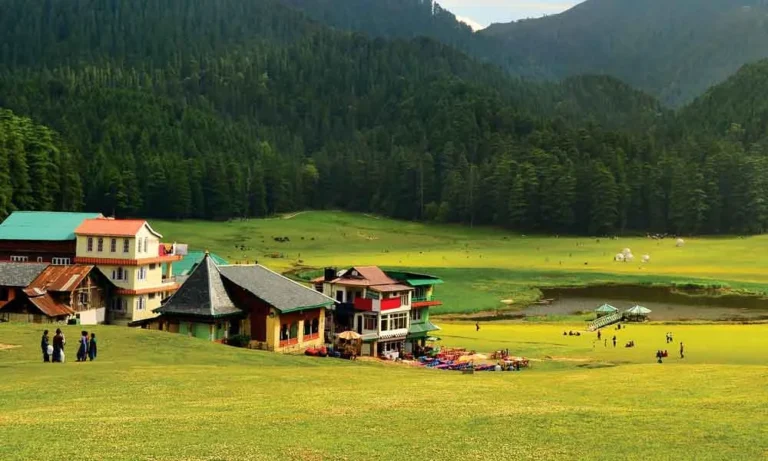
Short answer: The best offbeat places in Himachal are Jibhi and Tirthan, Jalori Pass with Serolsar Lake, Shoja, Barot, Chitkul, Kalpa, Pangi and the Dhauladhar villages above Dharamshala. Jibhi is the easiest (turn off the Manali highway at Aut, about 500 km from Delhi). In winter 2026–27 pick Jibhi, Barot or the Dharamshala villages — Jalori, Sach Pass and Pangi shut under snow.
Quick answer: 8 offbeat Himachal places at a glance
| Place | Altitude / access | Best months | Nov–Mar | Suits |
|---|---|---|---|---|
| Jibhi & Tirthan | ~1,900 m · via Aut, ~500 km from Delhi | Mar–Jun, Sep–Nov | Open (some cottages unheated) | Couples, slow stays |
| Jalori & Serolsar | 3,120 m pass · ~12 km above Jibhi, 5 km walk to the lake | Apr–Nov | Usually shut after heavy snow, Dec–Mar | Easy high-altitude walk |
| Shoja | Below Jalori on the Banjar road | Mar–Jun, Sep–Nov | Cold, road can close in snow | One-night stop |
| Barot | Uhl valley via Jogindernagar, ~500 km from Delhi | Mar–Jun, Sep–Oct | Reachable, very cold | Anglers, campers |
| Chitkul | 3,450 m · Sangla valley, about 240 km from Shimla | May–Oct | Unreliable after snowfall | Long-drive travellers |
| Kalpa & Roghi | ~2,960 m · Kinnaur, opposite Kinner Kailash | Apr–Jun, Sep–Nov | Reachable, cold; winter route to Spiti | Photographers |
| Pangi (Killar) | Over Sach Pass (~4,400 m) from Chamba | Roughly Jun–Oct | Sach Pass closed for winter | Experienced travellers only |
| Naddi, Dharamkot | Above McLeod Ganj, Dharamshala | Mar–Jun, Sep–Dec | Open | Trekkers, long stays |
Distances are approximate road figures; mountain timings depend on weather and road work.
Himachal’s problem in 2026 is not that it has too few good places. It is that almost everyone goes to the same four.
Improved highways, the Atal Tunnel and a great deal of social media have pushed Shimla, Manali, Kasol and McLeod Ganj to the point where a long weekend in peak season means traffic on Mall Road and a queue at the snow point. Meanwhile there are valleys two hours away where you will share the road with a herd of sheep.
This is a list of eight of them, with honest notes on how to reach each one, when it is worth going, and — importantly — who it does not suit. Quiet places are quiet for reasons, and some of those reasons matter.
1. Jibhi and Tirthan Valley
The pitch: Wooden cottages beside a trout stream, pine forest, and evenings with nothing to do but sit. The Great Himalayan National Park, a UNESCO World Heritage site, is next door.
Getting there: About 8-9 hours from Delhi, 4-5 from Chandigarh. The turn-off is at Aut on the Chandigarh–Manali highway, which means you pass it on the way to Manali and most people keep driving.
Best season: March to June, and September to November. Winter is beautiful but many cottages are unheated.
Suits: Couples, writers, anyone who wants to do nothing productively. Does not suit: Travellers who need a full sightseeing list each day.
We have a detailed 4-day Jibhi and Tirthan itinerary if this is the one that appeals.
2. Jalori Pass and Serolsar Lake
The pitch: At 3,120m, Jalori is one of the few high passes you can drive to without a permit, and the 5km walk from the top to Serolsar Lake through old oak forest is among the gentlest rewarding walks in Himachal.
Getting there: An hour or so above Jibhi — the two pair naturally into one trip.
Best season: April to November. The pass closes under snow in winter, usually from December to March.
Suits: Anyone who wants a high-altitude view without a serious trek.
3. Shoja
The pitch: A handful of houses on the way up to Jalori, with what is probably the best forest-to-valley view in the Banjar region. The waterfall point and the old British-era rest house are the only two things to see, and that is the appeal.
Best season: Same as Jibhi. Suits: A one-night stop rather than a base.
4. Barot Valley
The pitch: A trout-fishing valley on the Uhl river with a colonial-era haulage trolley track, and the Nargu Wildlife Sanctuary above it. Still genuinely under-visited compared with anywhere in Kullu.
Getting there: Via Jogindernagar, roughly 10 hours from Delhi. The last stretch is narrow and slow, which is part of why it stays quiet.
Best season: March to June, September to October.
Suits: Anglers, campers, people who like a valley with a working life of its own. Does not suit: Anyone uncomfortable on narrow mountain roads.
5. Chitkul
The pitch: The last inhabited village on the old Indo-Tibetan trade route, at 3,450m in the Sangla Valley. Wooden houses, the Baspa river, and a genuine sense of arriving at the end of something.
Getting there: Via Shimla and Kinnaur — a long drive, two days from Delhi done sensibly.
Best season: May to October. The village largely empties in deep winter and access becomes unreliable.
Suits: Travellers who will happily drive two days for one village. It is worth it, but go knowing that. Our Kinnaur package from Shimla covers Sangla, Chitkul and Kalpa together.
6. Kalpa and Roghi
The pitch: Kalpa sits directly opposite the Kinner Kailash range, and on a clear morning the peaks turn gold above the apple orchards. Roghi village, a short drive on, has the Suicide Point viewpoint and almost no one on it.
Best season: April to June and September to November. Autumn is exceptional — apple harvest, clear air.
Suits: Photographers, and anyone en route to Spiti who should be breaking the journey here anyway for acclimatisation.
7. Pangi Valley
The pitch: One of the least-visited inhabited valleys in the entire Indian Himalaya, cut off from the rest of Himachal by high passes for much of the year. Killar, the main village, still feels genuinely remote in a way very little of Himachal now does.
Getting there: Via Lahaul over Sach Pass, or from Jammu. Open roughly June to October only.
Suits: Experienced mountain travellers. Does not suit: Almost everyone else — and we say that plainly. Roads are rough, facilities are minimal, and it is not a first Himachal trip.
8. Dhauladhar villages above Dharamshala
The pitch: Everyone stops at McLeod Ganj (our Dharamshala tour package from Delhi covers it). Above it, Naddi, Dharamkot and the villages towards Triund offer the same Dhauladhar wall with a fraction of the crowd, and the wellness and yoga scene here has grown into something substantial.
Best season: March to June, September to December.
Suits: Slow travellers, trekkers, anyone doing a longer stay. See our Dharamshala tour packages.
Which offbeat Himachal places can you visit in winter 2026–27?
Winter changes this list more than any other factor. As of November 2026:
- Open and good: Jibhi, Tirthan and the Dharamshala villages — clear, cold days and off-season cottage rates. Barot is reachable but very cold at night.
- Weather-dependent: Jalori Pass and Shoja close for days after each heavy snowfall and are usually shut from December to March; Chitkul and Kalpa stay reachable via Shimla and Kinnaur but road conditions change after snow.
- Closed: Sach Pass, the road into Pangi from Chamba, shuts for winter and normally reopens only in late May or June. The Lahaul route to Spiti over Kunzum has also been closed since 15 October 2026, so a winter Spiti trip now goes only via Kinnaur — see our winter Spiti guide.
How do you plan an offbeat Himachal trip?
A few things we have learned running these routes:
- Pick two, not six. The whole point of these valleys is the pace. Six in a week is a road trip through them, not a visit.
- Check road access for your dates. Jalori and Sach Pass close in winter; Pangi is open only a few months a year. The season is not a formality here.
- Book accommodation ahead. These places have ten rooms, not a thousand. In October the good cottages in Jibhi are full weeks out.
- Carry cash. Card machines and reliable UPI signal thin out quickly once you are off the main highways.
- Expect basic, not bad. A homestay in Barot is clean, warm and well fed. It is not a hotel, and going in expecting one is how people end up disappointed by somewhere excellent.
Can you combine an offbeat valley with Shimla or Manali?
You do not have to choose. Some of the best itineraries we build pair one well-known base with one quiet valley — Manali with Jibhi, or Shimla with Kalpa and Sangla. You get the infrastructure and the activities on one side and the silence on the other, and the contrast makes both better.
Our Himachal tour packages are customised rather than fixed, so this kind of pairing is straightforward to build.
Frequently asked questions
Which offbeat place in Himachal is easiest to reach from Delhi?
Jibhi and Tirthan Valley. The turn-off is on the main Manali highway at Aut, so the drive is no harder than going to Manali — you simply turn earlier.
Are offbeat destinations in Himachal safe for solo travellers?
Broadly yes, and Himachal has a good record here. The practical cautions are about mountains rather than people: tell someone your route, do not trek alone without a guide, and remember that phone signal is unreliable in most of these valleys.
Which of these are open in winter?
Jibhi, Tirthan, Barot and the Dharamshala villages stay accessible, though some cottages close; Shoja can be cut off for a few days after heavy snow. Jalori Pass, Chitkul and Pangi close or become unreliable. Kalpa remains reachable but cold.
Do I need a permit for any of these?
Not for Jibhi, Barot, Shoja, Jalori, Kalpa or the Dharamshala villages. Indians need only photo ID for Sangla, Chitkul and Kalpa. Foreign nationals need an Inner Line/Protected Area permit only for the Jangi–Sumdo stretch towards Spiti, issued in person by the DM/SDM/ADC to groups of two or more — see our permits guide.
How many days do I need?
Four days for Jibhi with Jalori and Shoja. Six to seven for Kinnaur including Sangla, Chitkul and Kalpa. Pangi needs eight or more and real experience.
Which offbeat place in Himachal is best in November and December?
Jibhi and Tirthan, or the villages above Dharamshala. Both stay open, the skies are clear and cottage rates drop after Diwali. Jalori Pass is worth trying only on a clear-weather day before the first heavy snow; Pangi is closed for winter.
How far is Chitkul from Shimla?
About 240 km, usually 8–9 hours via Rampur and Karcham, so most travellers break the drive at Sarahan or Sangla. Chitkul is the last village on the Baspa valley road, 3,450 m up, and our Kinnaur package covers it with Sangla and Kalpa.
Let us plan the quiet version
We are a Himachal-based DMC, which means our drivers and homestay contacts are in these valleys rather than only on the main circuit. If the version of Himachal you have in mind does not involve a queue, tell us your dates and how much driving you are willing to do, and we will build the route around that.
Suzu Travels is an HP Tourism registered travel agent (Reg. No. DTO-MND-11-243/2022 — see our certificates), based in Ghumarwin and running Himachal trips. You get a written, itemised quote before you pay.
Get a free quote for an offbeat route · Call +91 70874 88961