


Tabo Monastery: a thousand years of art in mud and colour
Founded in 996 CE and still in use, Tabo’s plain mud temples hide some of the finest Buddhist murals in the Himalaya. What to see, how to visit respectfully, and how it fits a Spiti trip.
- 996 CE founded
- ~3,280 m Tabo
- ~47 km before Kaza
- Open all year
Photo: Trina Singha Roy, CC BY-SA 4.0
Updated November 2026 · HP Tourism registered travel agent · Reg. No. DTO-MND-11-243/2022 · certificates
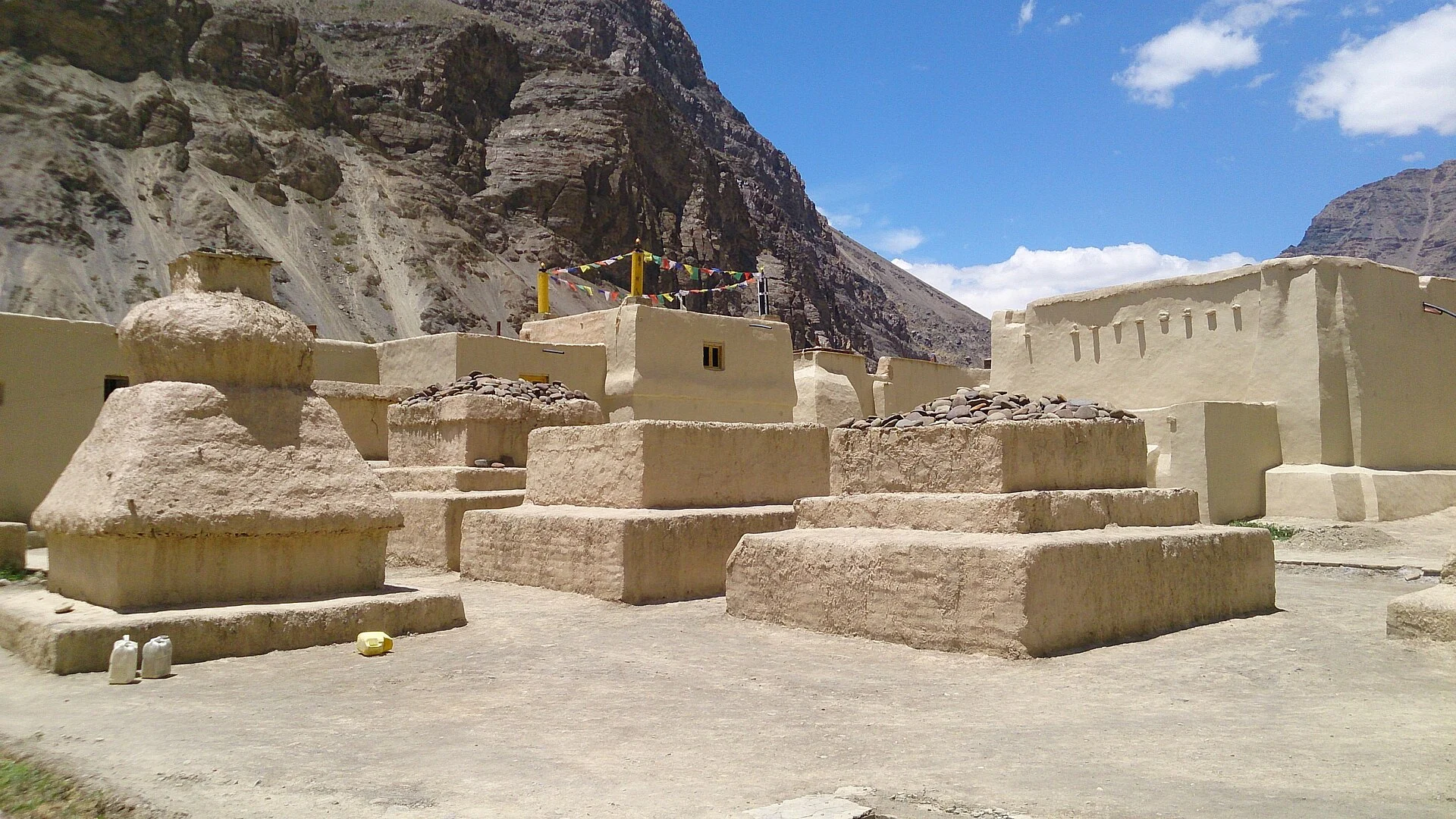
Tabo Monastery, at about 3,280 m in the Spiti valley, was founded in 996 CE by the translator Rinchen Zangpo and has been in use ever since — one of the oldest continuously functioning Buddhist monasteries in the Himalaya. From outside it is a cluster of low mud-walled temples and stupas; inside, the main assembly hall is lined with painted clay sculptures and murals so fine that Tabo is often called the ‘Ajanta of the Himalayas’. It is protected by the Archaeological Survey of India. Caves on the cliff above the village were used for meditation. Tabo lies on the Kinnaur–Kaza road about 47 km before Kaza, so it is an easy stop on any Spiti circuit, and the road via Kinnaur keeps it reachable most of the year.
- Founded996 CE by Rinchen Zangpo; in use ever since.
- HeightAbout 3,280 m.
- WhereTabo village, Spiti — about 47 km before Kaza on the Kinnaur road.
- InsideOld temples are dim and protected: no flash, follow the monk’s guidance.
- SeasonReachable most of the year via Shimla and Kinnaur.
Tabo, Nako and Kaza weather today
Tabo (about 3,280 m) with Nako (about 3,660 m) before it and Kaza (about 3,800 m) after it — current temperature and the next days’ high, low and snow.
Forecast data: MET Norway (CC BY 4.0), refreshed about once a day — last update —.
Why Tabo matters
Tabo was founded in 996 CE by Rinchen Zangpo, the great translator who carried Buddhist teaching and Kashmiri-style art across the western Himalaya. A thousand years later it is still a working monastery, now in the Gelug tradition, with monks living beside the old temples.
Its importance lies inside the plain walls: the assembly hall holds a circle of painted clay figures of deities set high on the walls, and the temples are covered with murals in the early western Himalayan style. That is why Tabo is called the ‘Ajanta of the Himalayas’, and why it is protected by the Archaeological Survey of India.
The Dalai Lama has held the Kalachakra teaching at Tabo, which brought thousands of pilgrims to this small village.
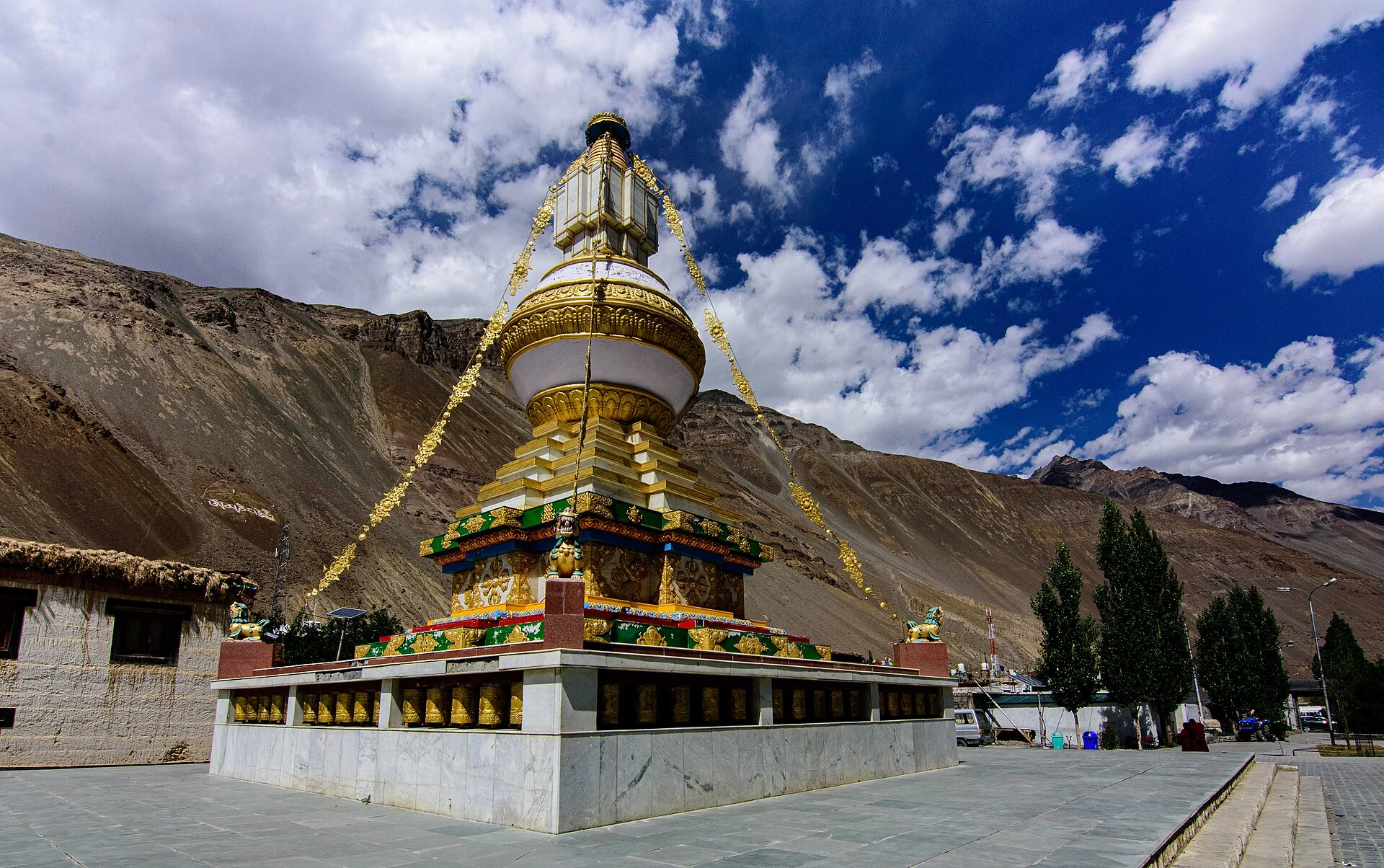
How to visit Tabo Monastery
The old temples are dark and fragile. Carry a small torch, keep your voice low, and follow the monk who opens the halls; photography is not allowed inside the old temples. The newer gompa and the stupas outside can be photographed. Allow about an hour, plus time to climb to the caves.
| What | Details |
|---|---|
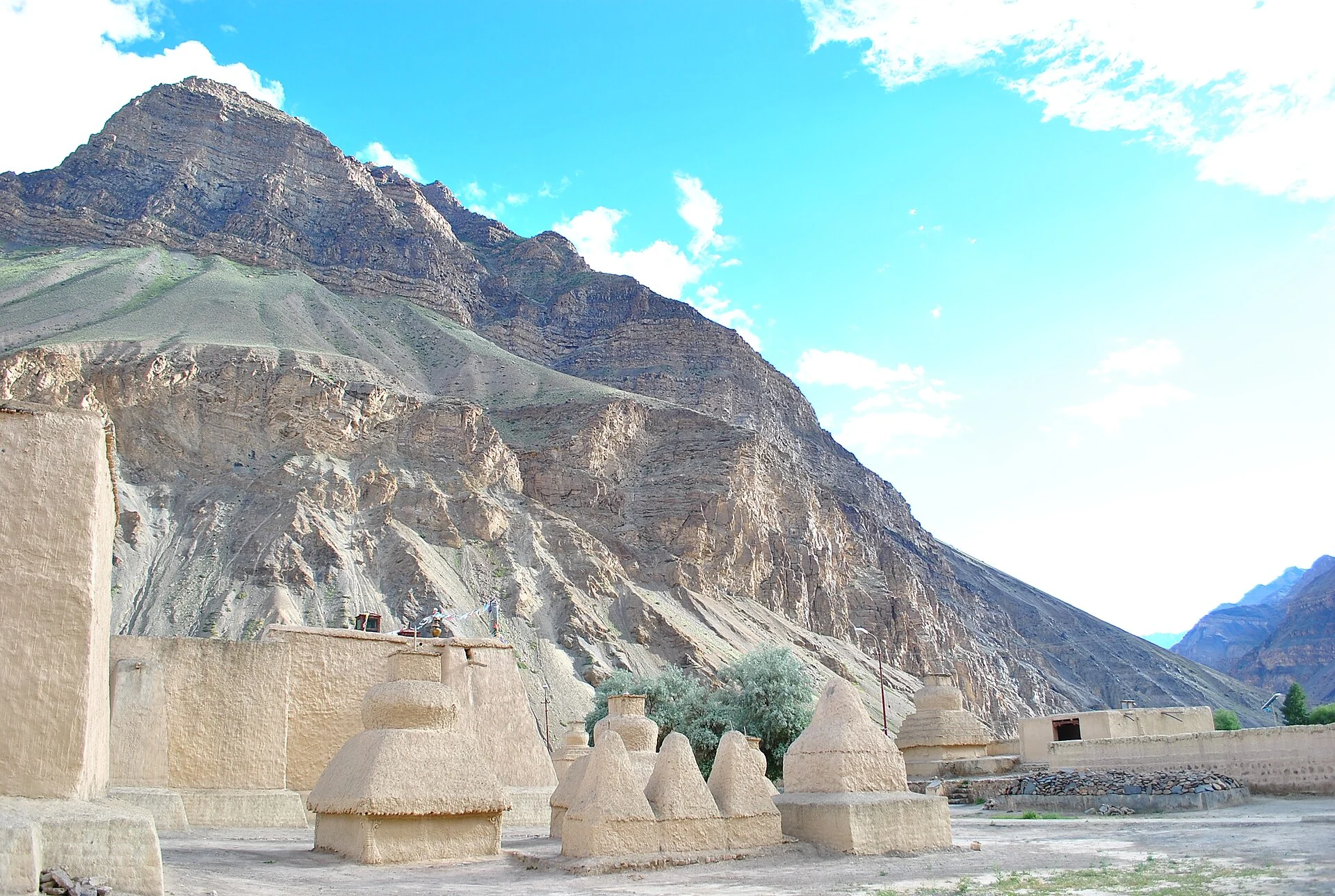
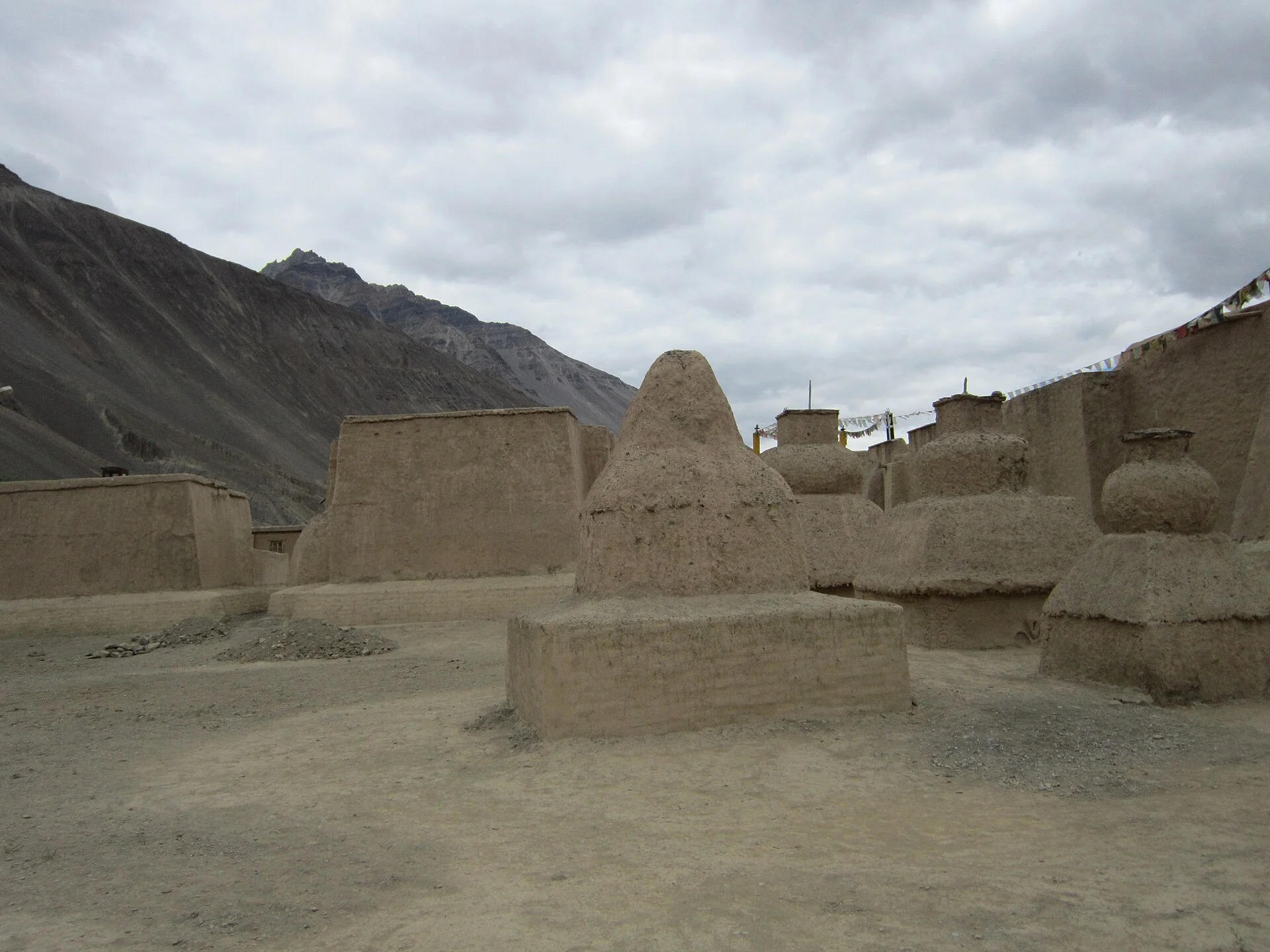
| Old complex | Mud-walled temples with murals and clay sculptures (ASI-protected) |
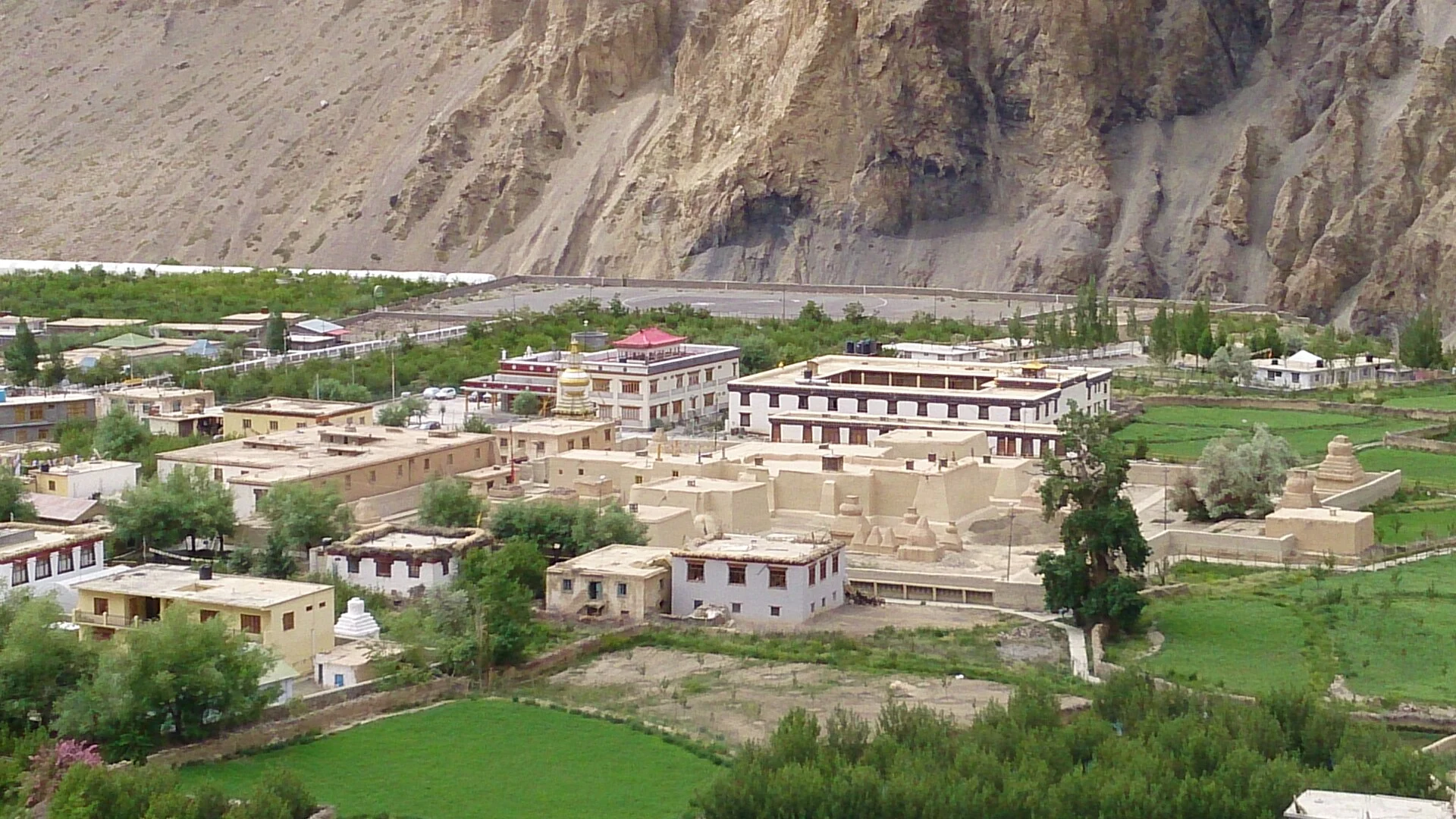
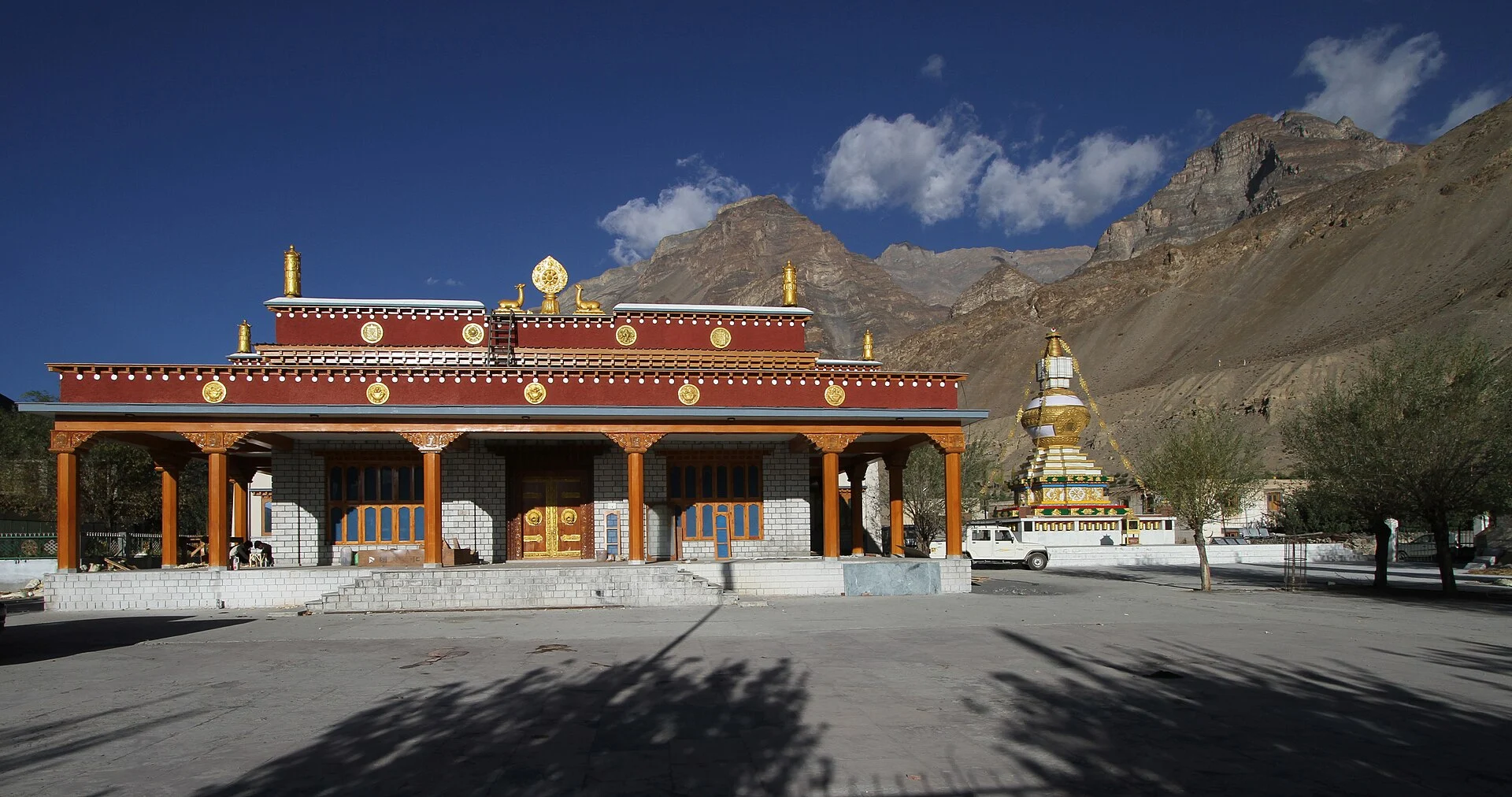
| New gompa | Newer prayer hall and golden stupa beside the old complex |
| Caves | Meditation caves on the cliff above the village — a short, steep walk |
| Time | 1–2 hours |
| Photos | Not inside the old temples; ask elsewhere |
| Where to stay | Tabo has guesthouses and homestays; Kaza has more choice |
Next stops: Key Monastery · Langza, Hikkim and Komic · before Tabo: Nako lake and village.
Best time to visit Tabo
May to October is the most comfortable time, with sunny days and cool nights. Tabo is lower than Kaza, so it is a good first night in Spiti for acclimatisation when you come from Kinnaur. In winter the Kinnaur road usually stays open (with closures after heavy snow), nights fall well below freezing and the valley is very quiet — see Spiti in winter.
Tabo in pictures
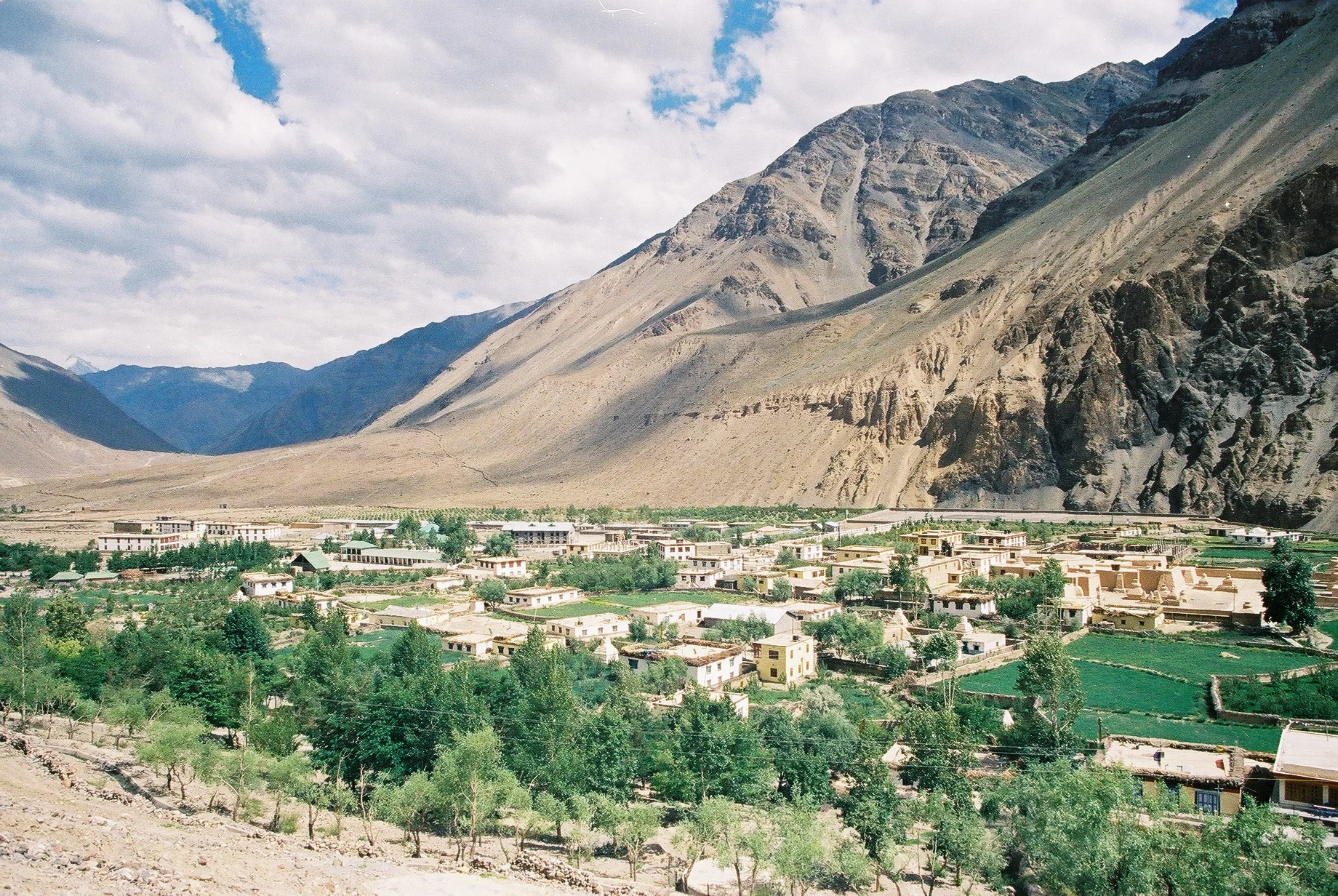
The old mud complex, its stupas, the new gompa, the meditation caves and the village — real photographs, each credited to its photographer.

Around Tabo
On the same road through Spiti.
Dhankar
A fort-monastery on a crumbling ridge, with a high lake above. Dhankar guide →
Gue mummy
A naturally preserved monk’s body in a small shrine.
How to reach Tabo
From Shimla: via Rampur, Reckong Peo, Nako and Sumdo, usually over three days with stops — the gradual climb helps acclimatisation. From Manali (summer only): over Atal Tunnel and Kunzum Pass to Kaza, then down the valley to Tabo. See which route to take.
Plan Spiti with us
Stays, meals and a private car with a mountain driver, in one quote.
Planning Spiti?
Tell us your dates, where you are starting from and how many of you are travelling. We plan the route through Kinnaur and Spiti for safe acclimatisation and send a written quote with stays and a private car. Suzu Travels is a travel agent registered with HP Tourism, based in Bilaspur, Himachal Pradesh.
Tabo Monastery: frequently asked questions
How old is Tabo Monastery?
It was founded in 996 CE by Rinchen Zangpo and has been in use ever since.
Why is Tabo called the Ajanta of the Himalayas?
For the murals and painted clay sculptures inside its old temples, among the finest early Buddhist art in the Himalaya.
Can I take photos inside Tabo Monastery?
Not inside the old temples; you can photograph the outside, the stupas and the new gompa.
How far is Tabo from Kaza?
About 47 km down the Spiti valley.
Is Tabo open in winter?
Yes. The road via Kinnaur usually stays open, with closures after heavy snow.
How high is Tabo?
About 3,280 m.
Sources
Photo credits
Tabo Monastery from above — Photo: Trina Singha Roy, CC BY-SA 4.0 · The new stupa at Tabo — Photo: Schwiki, CC BY-SA 4.0 · The monastery and the mountains — Photo: Parth.rkt, CC BY-SA 3.0 · Old stupas at Tabo — Photo: Aimy Dhankar, CC BY-SA 3.0 · The complex from the hill — Photo: Manish Pathak, CC BY-SA 4.0 · Inside the old complex — Photo: Manish Pathak, CC BY-SA 4.0 · The new gompa — Photo: Gerd Eichmann, CC BY-SA 4.0 · The meditation caves — Photo: Prof Ranga Sai, CC BY-SA 4.0 · Tabo village — Photo: Amit Parikh (talk), Public domain