
Spiti valley in winter: what it is really like
How cold Kaza gets from November to March, the one road that stays open, snow leopard season, what is open in the villages, what to pack, and a 7-day winter plan from Shimla.
- −15 to −25 °C January nights
- Shimla side only winter road
- ~412 km Shimla to Kaza
- Jan–Mar snow leopard season
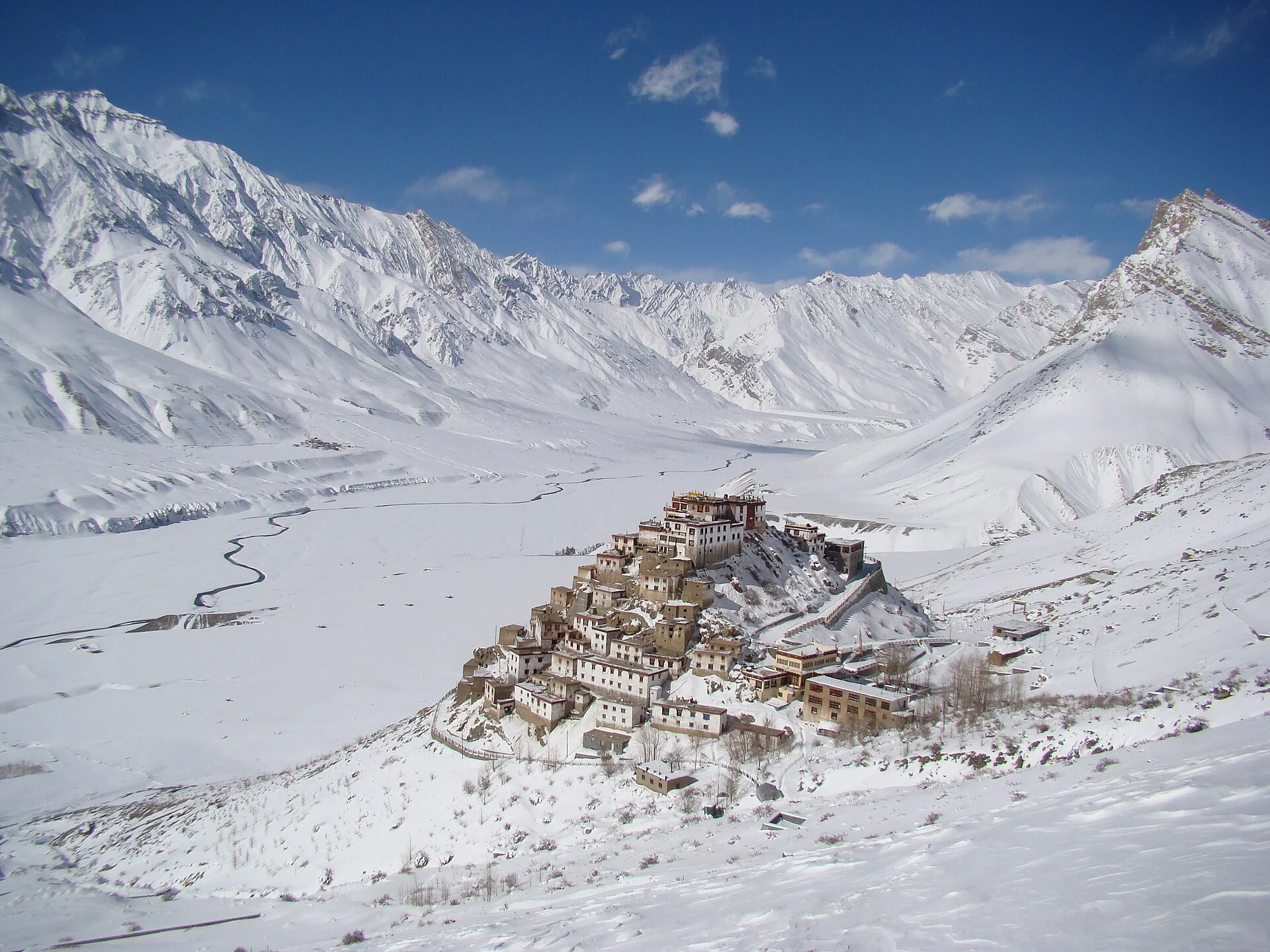
Photo: Ksuryawanshi, CC BY-SA 4.0
Updated November 2026 · HP Tourism registered travel agent · Reg. No. DTO-MND-11-243/2022 · certificates
In winter, Spiti is reached only from Shimla through Kinnaur — the Manali–Kunzum road has been closed since 15 October 2026 and usually reopens around June. Kaza, at about 3,800 m, is in deep winter from November: days hover around freezing to single digits, and January nights fall to −15 to −25 °C. Snow comes in spells from December to March; between them the sky is often brilliantly clear. It is a trip for prepared travellers, with a local winter driver and two buffer days — rewarded by white villages, quiet monasteries and the snow leopard season (January–March).
- RoadOnly Shimla–Kinnaur–Kaza; Kunzum shut until about June.
- Kaza in JanuaryAbout 1–2 °C by day, −13 °C average night; −15 to −25 °C in cold spells.
- SnowSpells from December to March; February is often the snowiest.
- WildlifeSnow leopard season, January–March (Kibber area).
- Must haveA winter driver, two buffer days, heated stays.
Kaza, Kalpa and Narkanda weather today
Kaza in Spiti (about 3,800 m), Kalpa in Kinnaur (about 2,960 m) and Narkanda (2,708 m) on the winter route from Shimla — current temperature and the next days’ high, low and snow.
Forecast data: MET Norway (CC BY 4.0), refreshed about once a day — last update —.
How cold is Spiti in winter?
Kaza has no long published IMD record, so the temperatures below use the India Meteorological Department’s normals for Leh (about 3,500 m), a similar cold, dry, high-altitude town, as a reference. Real nights in Spiti can be colder: Tabo recorded −10.2 °C and −10.8 °C on 4–5 January 2026, and Kaza and the high villages are colder still.
| Month | Reference avg max / min (Leh IMD) | What it is like in Spiti | Road |
|---|---|---|---|
| November | 10.6° / −7.2 °C | Dry, cold, sub-zero nights | Kinnaur side only |
| December | 4.5° / −11.7 °C | Very cold; snow spells begin | Kinnaur side only |
| January | 1.5° / −13.1 °C | Coldest; frozen streams; snow leopard season | Kinnaur side; delays after snow |
| February | 4.2° / −9.2 °C | Often the heaviest snow spells | Kinnaur road can close for days |
| March | 9.7° / −3.7 °C | Snow, slow warming; still very cold nights | Kinnaur side only |
Reference figures from IMD normals for Leh — not Kaza records. Full year and road table: Spiti (Kaza) weather by month · in Hindi: स्पीति का मौसम.
Which road is open to Spiti in winter?
Shimla–Narkanda–Rampur–Reckong Peo–Nako–Tabo–Kaza (NH-5 and NH-505) is the only winter route — about 412 km from Shimla, two long driving days, usually with a night at Kalpa or Reckong Peo and sometimes at Nako. It is open most days, but fresh snow and rockfall in Kinnaur, especially around Malling, can close it for a day or more.
The Manali–Atal Tunnel–Gramphu–Batal–Kunzum–Losar road has been closed since 15 October 2026 and usually reopens around June; Chandratal is also closed in winter. If you are starting from Manali, you still have to come round through Shimla.
Live roads and weather on the way: Kinnaur weather · Rampur weather · Narkanda weather.
What you can see and do in Spiti in winter
Key monastery and Kibber stay reachable from Kaza on most days, and are at their most striking under snow. Langza, Hikkim and Komic lie higher and are reached when the road is clear; after heavy snow they can be cut off for days. Dhankar and Tabo monasteries, lower in the valley, are usually reachable.
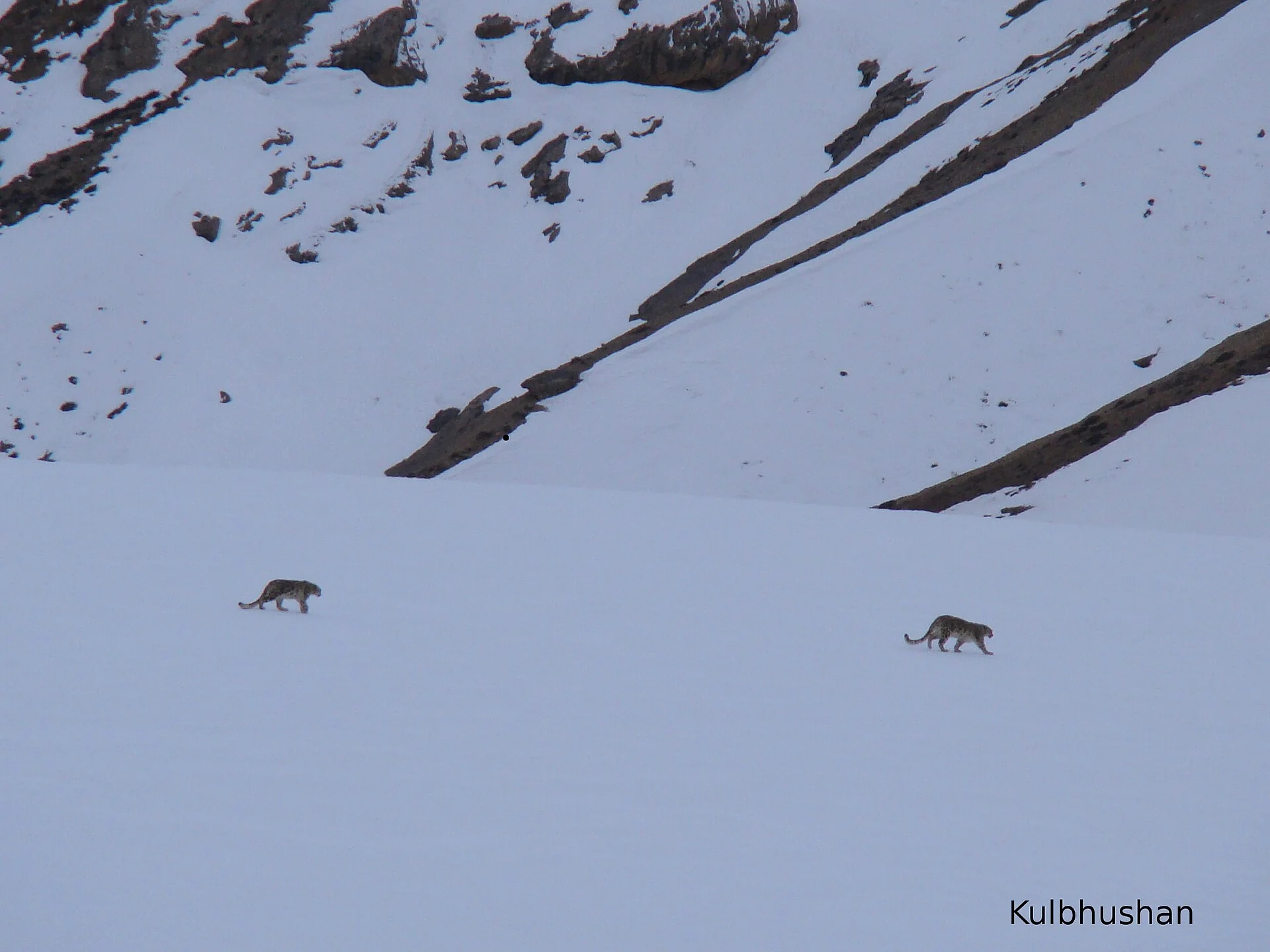
Snow leopards: January to March is the season for snow leopard sightings around Kibber, when the animals follow their prey lower down the slopes. Sightings are never certain and are done with local spotters; dress for long, very cold mornings outdoors.
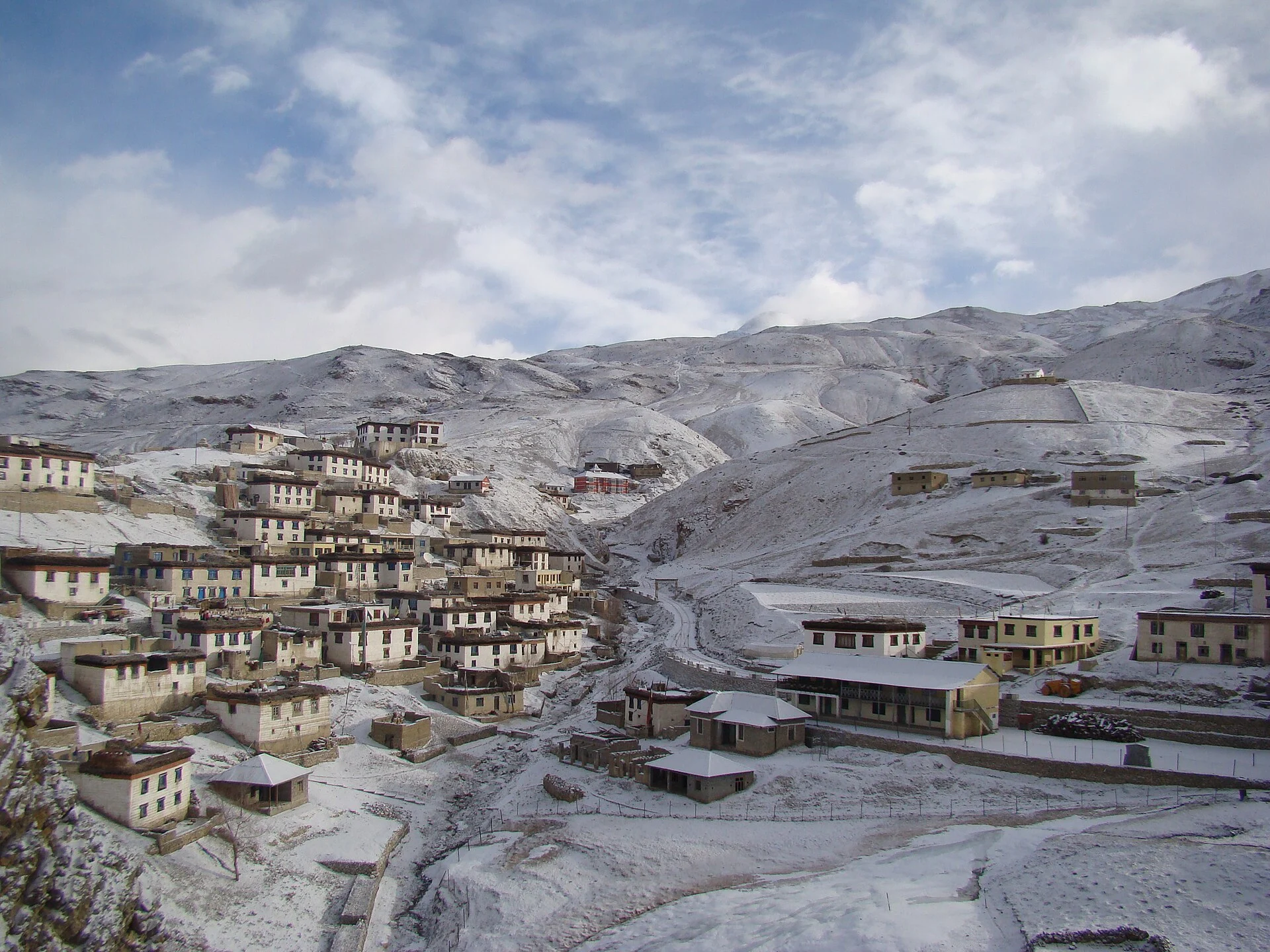
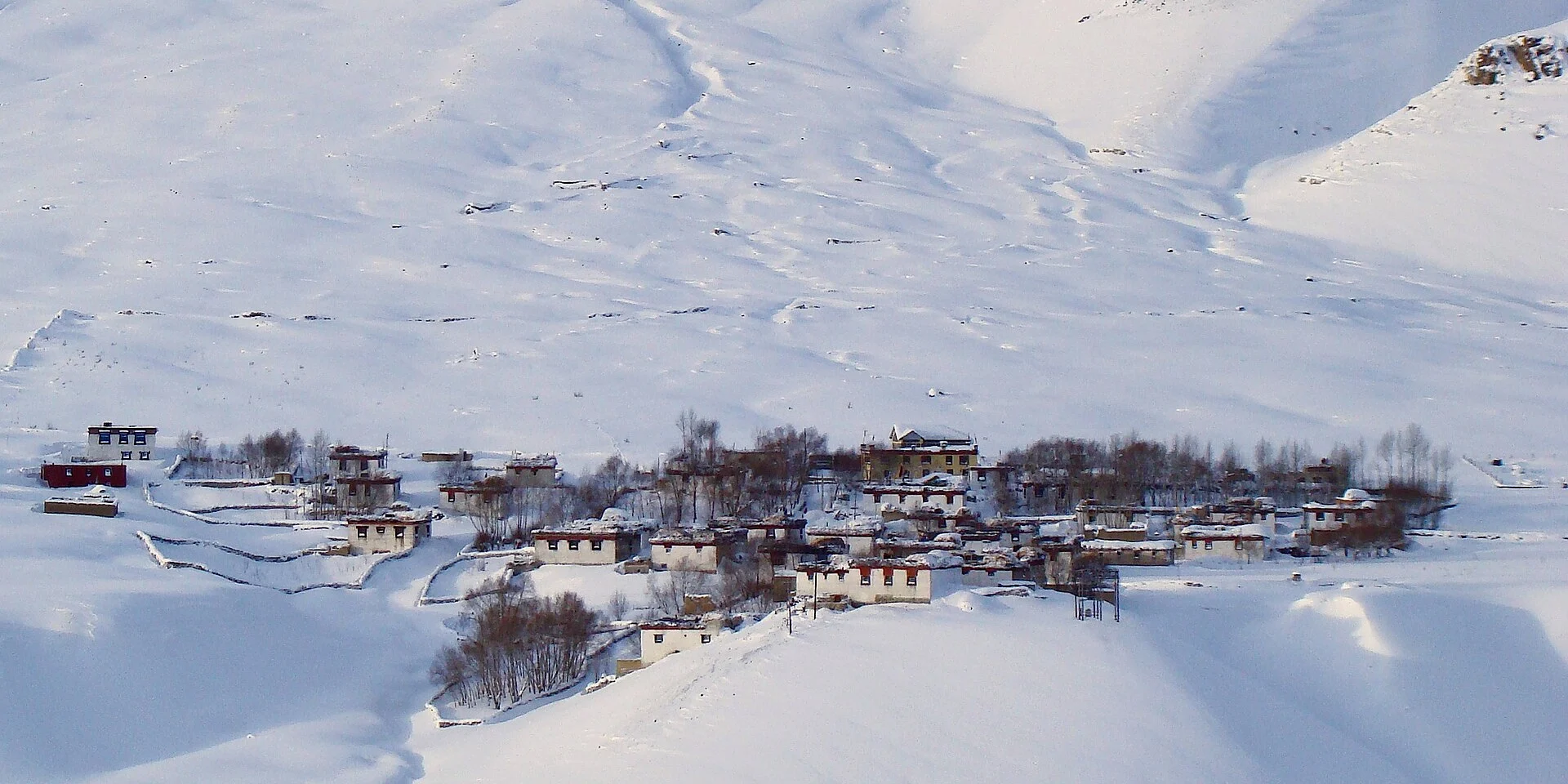
Village life: most stays in winter are family homestays; water pipes freeze, hot water comes in buckets, and the warmth comes from a bukhari stove in the kitchen. Many hotels and cafés in Kaza close for the season.
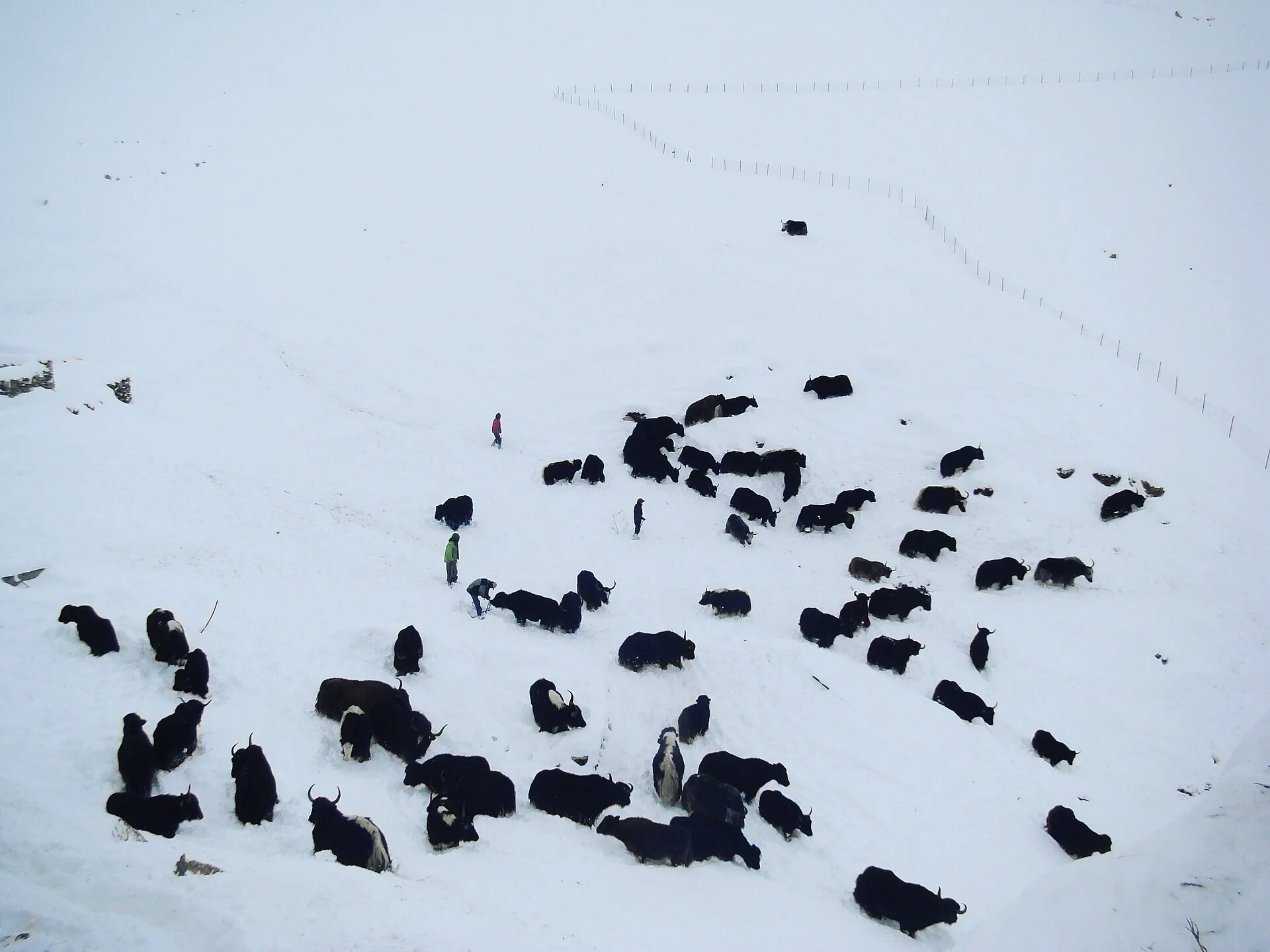
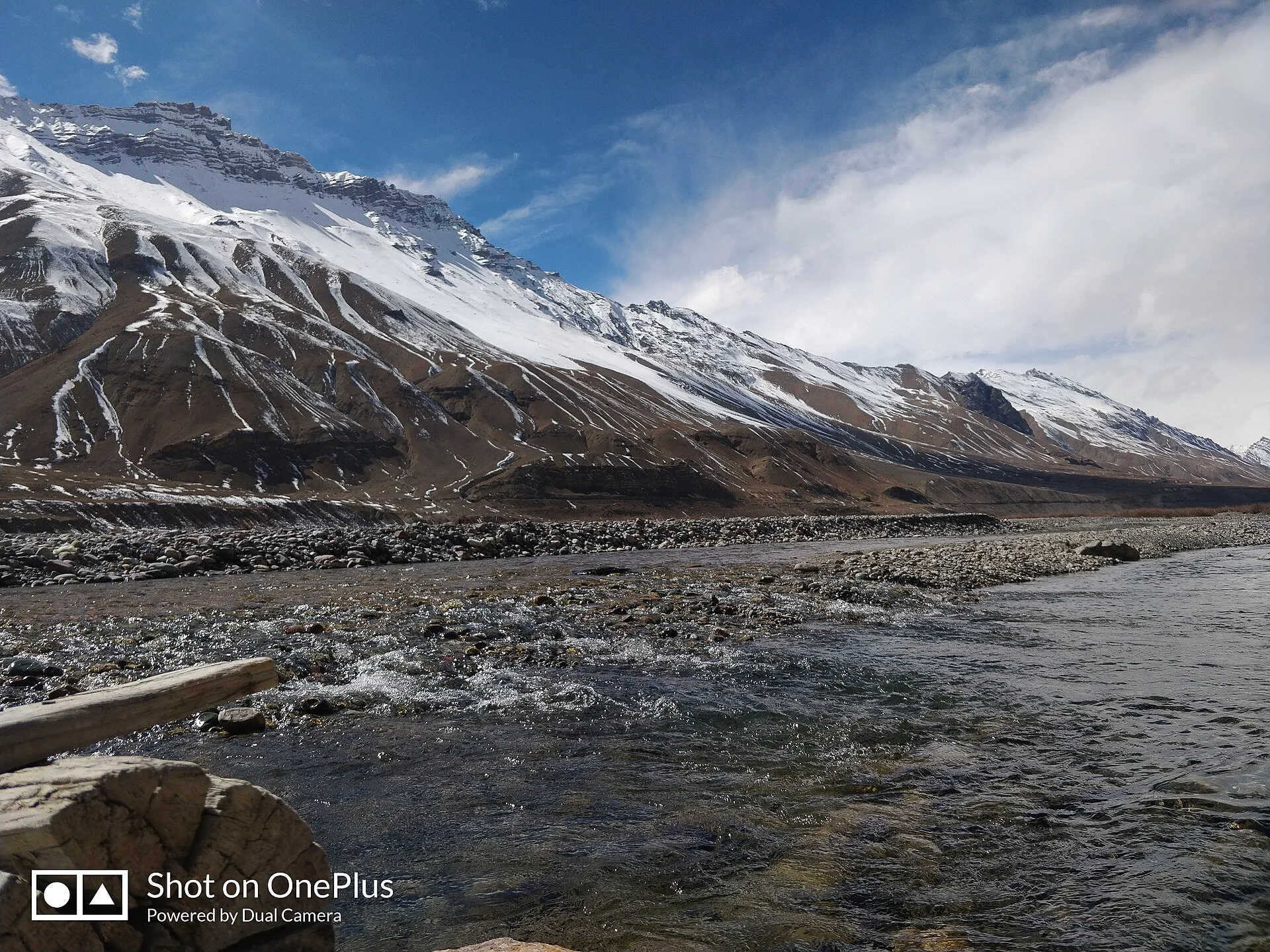
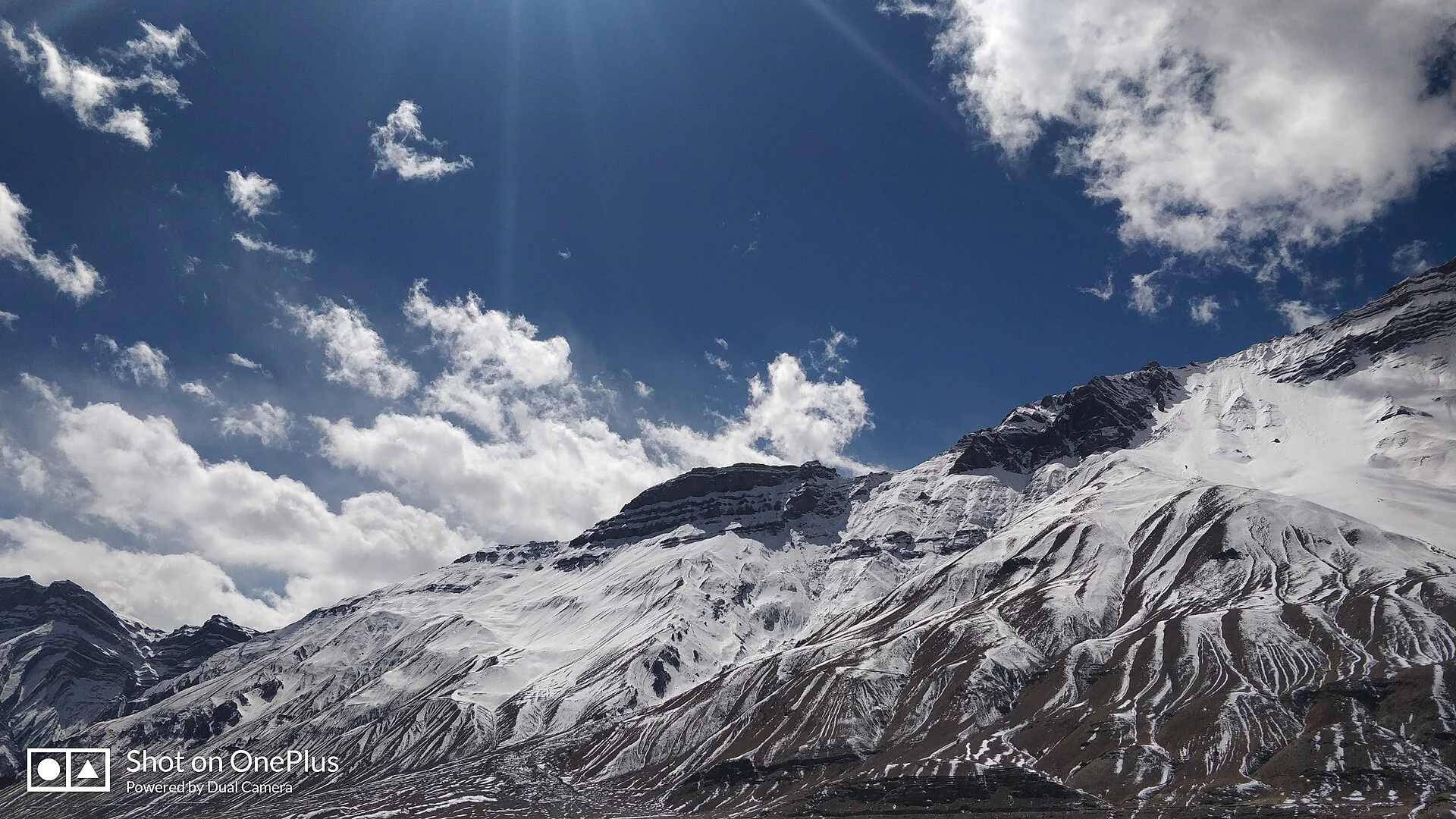
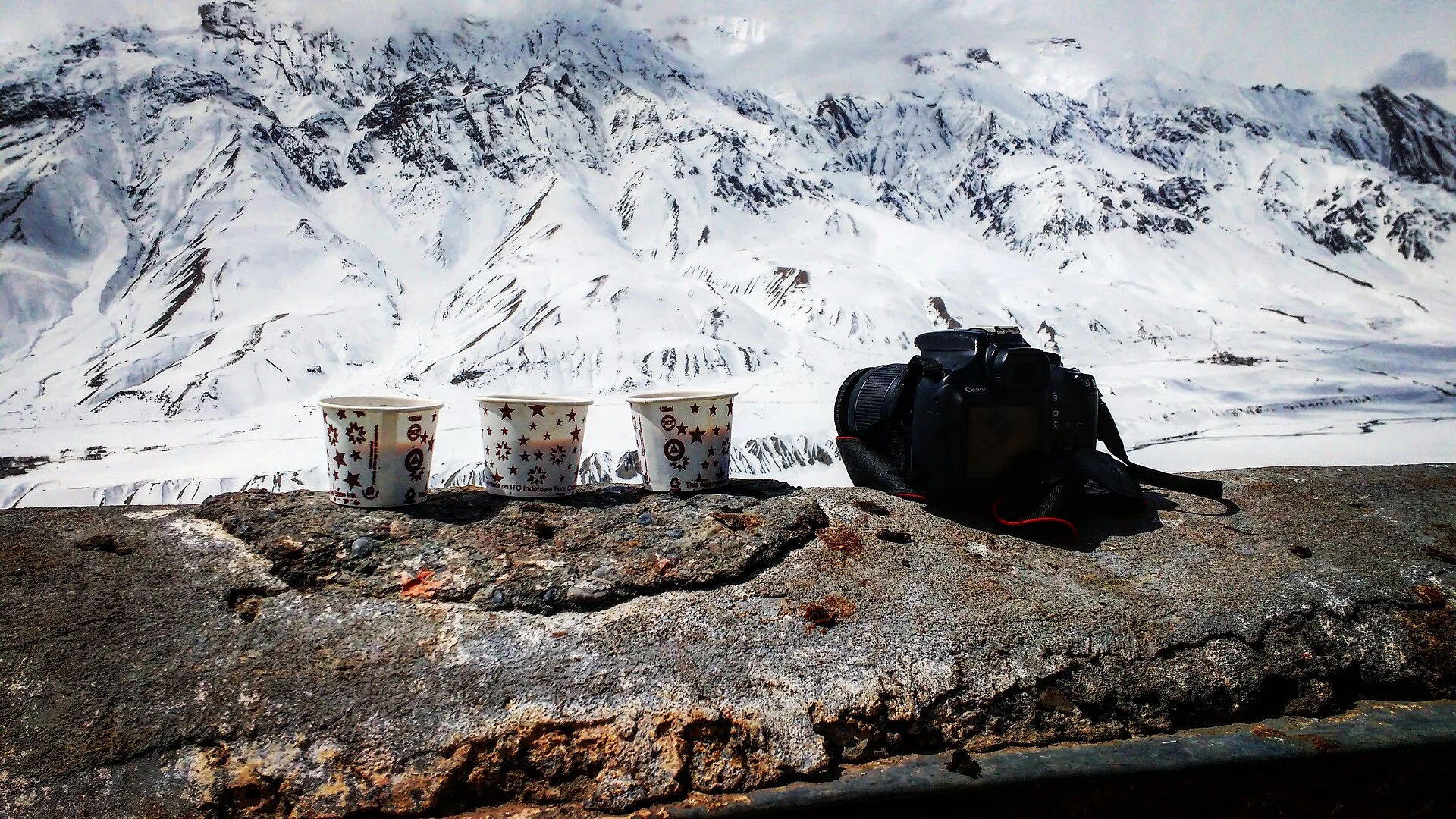
Spiti in winter, in pictures
Key monastery and Kibber under snow, winter villages, yaks and snow leopards — real photographs, each credited to its photographer.
Which winter month should you pick?
Depending on what you are going for.
First winter trip
Dry and cold, little snow; easiest roads.
Snow in the villages
White Spiti; coldest nights.
Snow leopards
With local spotters around Kibber.
Quieter, milder
Snow still around, slowly warming.
Combine with Kinnaur
Kalpa, Nako and Tabo on the way.
Take care
Often the heaviest snow spells; road closures.
A 7-day Spiti winter plan from Shimla
Day 1 — Shimla to Kalpa or Reckong Peo (about 230 km): along the Sutlej via Narkanda and Rampur; the Kinner Kailash range from Kalpa.
Day 2 — Kalpa to Tabo, past Nako lake and Malling: a short, slow stage that lets your body adjust to the height.
Day 3 — Tabo to Kaza, via Dhankar monastery: a rest afternoon in Kaza. Walk slowly and drink plenty of water.
Day 4 — Key monastery and Kibber, and a look for wildlife on the Kibber slopes.
Day 5 — Langza, Hikkim and Komic if the road is open; otherwise Pin valley or a spare day around Kaza.
Day 6 — Kaza to Kalpa or Reckong Peo.Day 7 — back to Shimla. Keep at least one extra day free for snow on the road.
Ready-made trips: Winter Spiti tour, 7 days from Shimla · Winter Spiti expedition 6N/7D · all Spiti packages.
What to pack and how to stay safe
Clothing: a proper down jacket, two thermal layers, fleece, windproof outer layer, woollen cap, balaclava, insulated gloves, woollen socks and waterproof boots with grip. Sunglasses and sunscreen — the winter sun on snow is fierce.
Altitude: Kaza is at about 3,800 m. Go up slowly through Kinnaur, rest on arrival, avoid alcohol for the first days, and come down if you feel unwell.
Vehicle and driver: a 4×4 or high-clearance SUV with a driver who knows Kinnaur in winter matters more than anything else. Carry cash — ATMs and card machines are few and can fail in the cold.
Our Spiti winter trips
Stays, meals and a winter driver in one quote.
Planning Spiti this winter?
Tell us your dates, where you are starting from and how many of you are travelling. We check the Kinnaur road and the weather, and send a written quote with heated stays, meals and a local winter driver. Suzu Travels is a travel agent registered with HP Tourism, based in Bilaspur, Himachal Pradesh.
Spiti in winter: frequently asked questions
Is Spiti open in winter?
Yes — but only from the Shimla side, through Kinnaur. The Manali–Kunzum road has been closed since 15 October 2026 and usually reopens around June.
How cold is Spiti in December?
Days are around freezing to single digits and nights well below −10 °C; January nights can reach −15 to −25 °C.
Is it safe to visit Spiti in winter?
With preparation, yes: a local winter driver, a suitable vehicle, warm clothing, slow acclimatisation and at least one buffer day for snow on the road.
When is the best time to see snow in Spiti?
Late December to February; February often has the heaviest snow spells.
Can you see snow leopards in Spiti?
January to March is the season, around Kibber, with local spotters — a sighting is never certain.
How many days do you need for Spiti in winter?
Seven days from Shimla is the minimum for a comfortable trip, plus one or two buffer days.
Can you go to Chandratal in winter?
No — Chandratal and the Kunzum road are closed in winter.
Sources
- MET Norway Locationforecast (CC BY 4.0) — live forecast data
- India Meteorological Department — Leh climatological normals (reference)
- Wikipedia: Spiti Valley
Photo credits
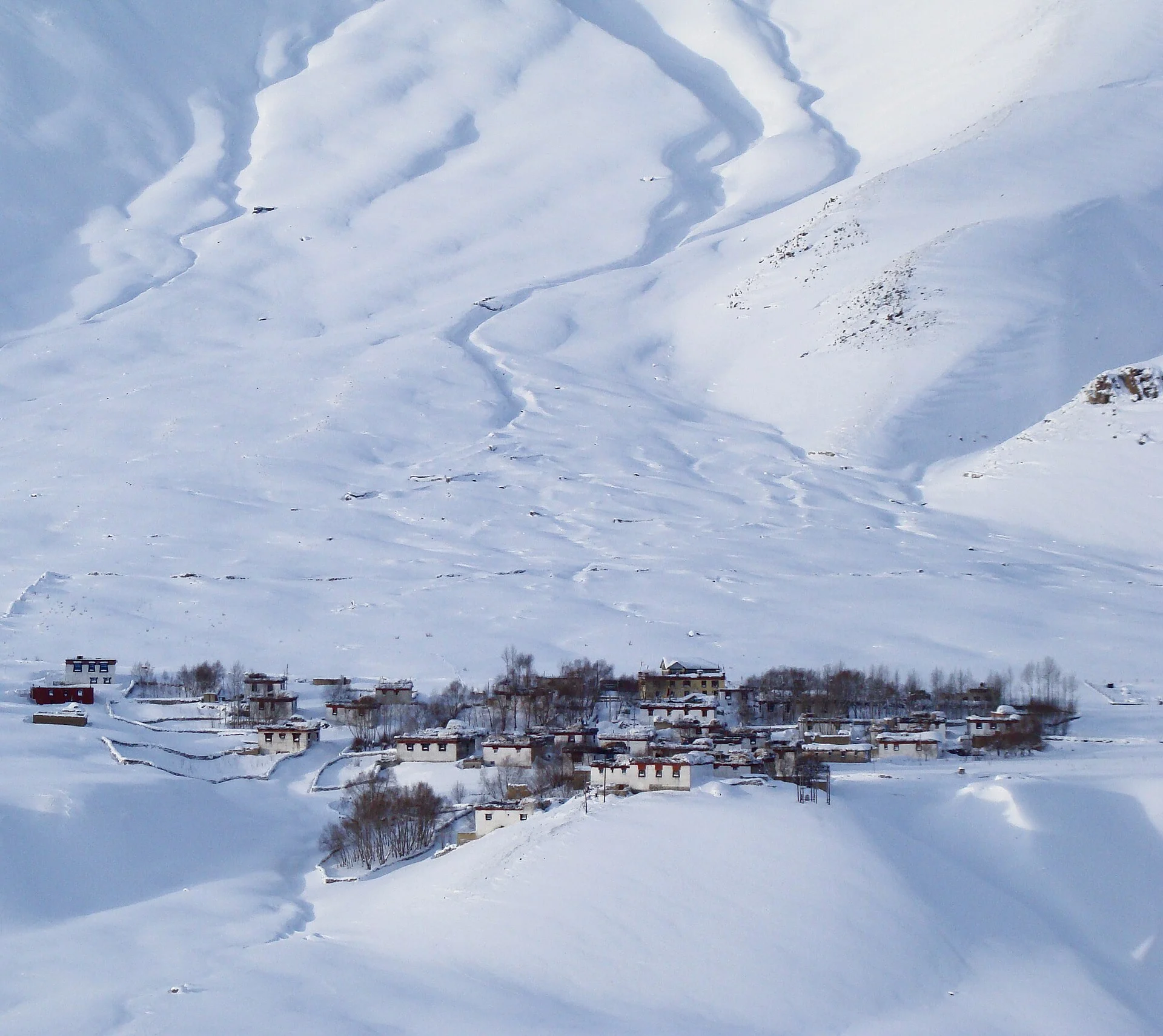
Key monastery in winter — Photo: Ksuryawanshi, CC BY-SA 4.0 · Kibber village in snow — Photo: Ksuryawanshi, CC BY-SA 4.0 · Khurik village in winter — Photo: Ksuryawanshi, CC BY-SA 3.0 · Yaks in the snow — Photo: Ksuryawanshi, CC BY-SA 3.0 · The Spiti valley in winter — Photo: Konu-9712, CC BY-SA 4.0 · A high village in snow — Photo: Konu-9712, CC BY-SA 4.0 · Snow leopards in Spiti — Photo: Ksuryawanshi, CC BY-SA 4.0 · Snow at Key monastery — Photo: Visharad Thakur, CC BY-SA 4.0 · Khurik on a winter day — Photo: Ksuryawanshi, CC BY-SA 3.0