
Key Monastery: Spiti's fortress of faith at 4,166 m
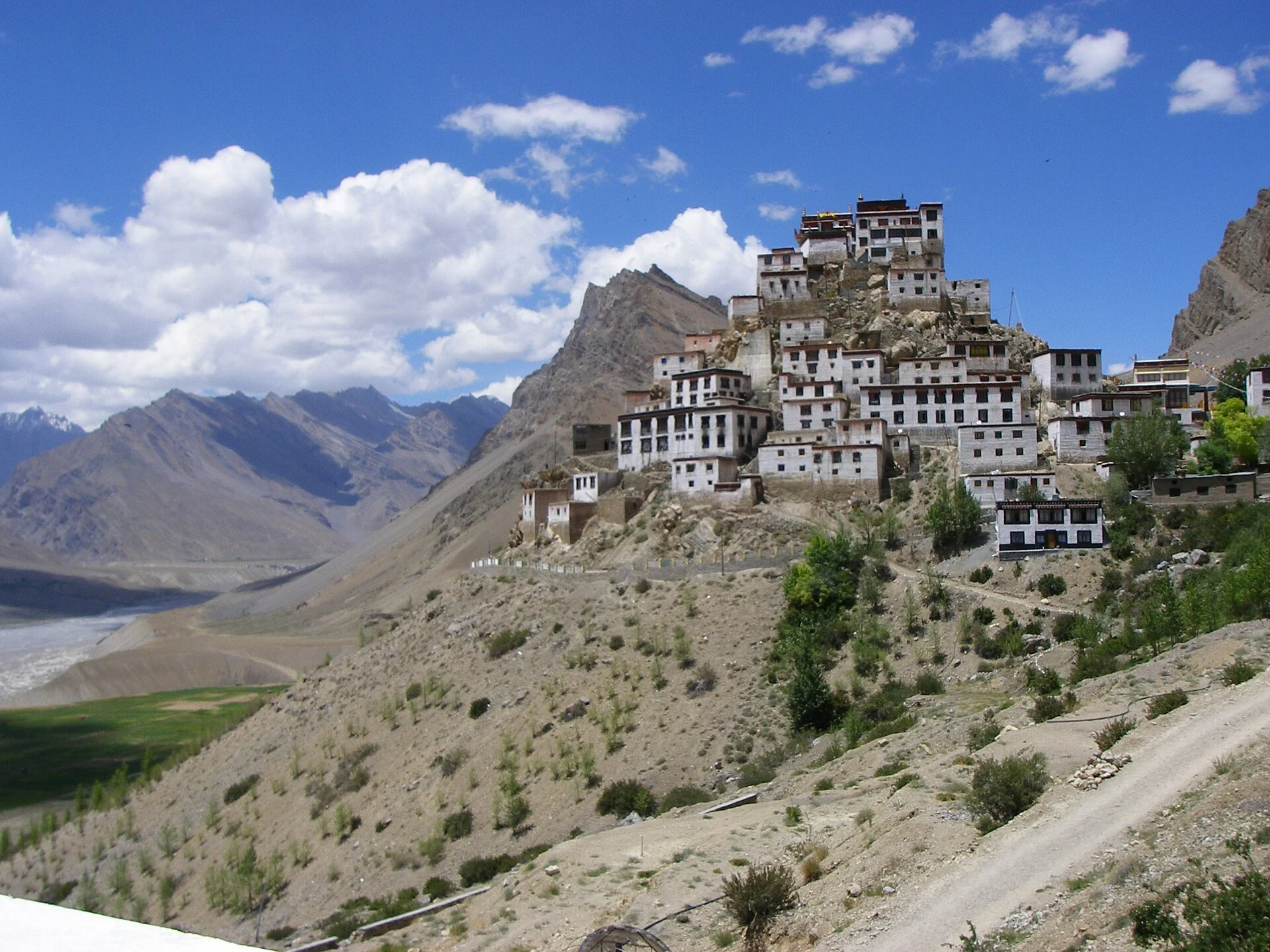
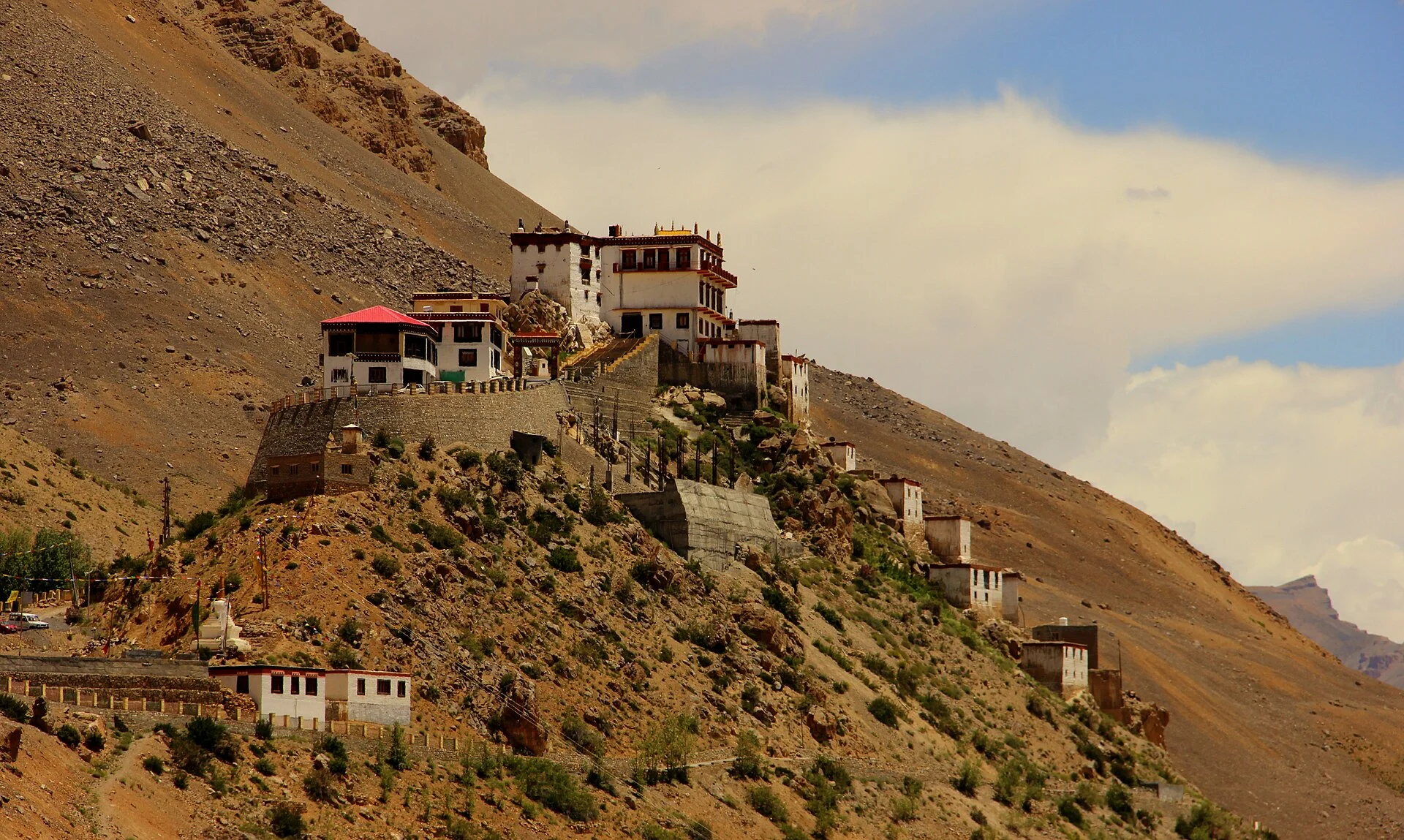
The white, stacked monastery on a cone-shaped hill that has become the picture of Spiti — its history, what to see, how to get there from Kaza, and when to go.
- 4,166 m above sea level
- ~14 km from Kaza
- Gelug school
- Jun–Oct easiest months
Photo: SilverBirch, CC BY-SA 3.0
Updated November 2026 · HP Tourism registered travel agent · Reg. No. DTO-MND-11-243/2022 · certificates
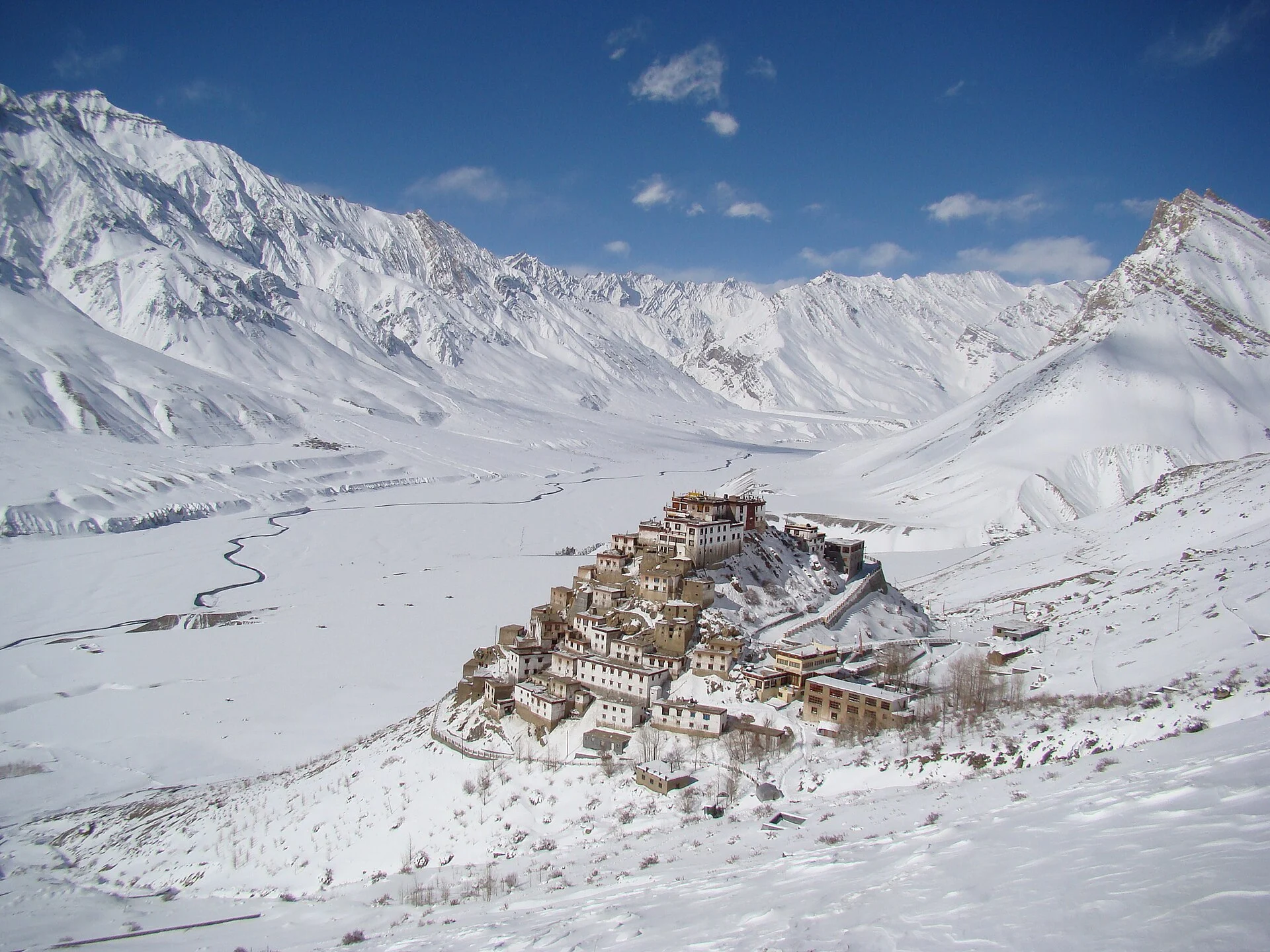
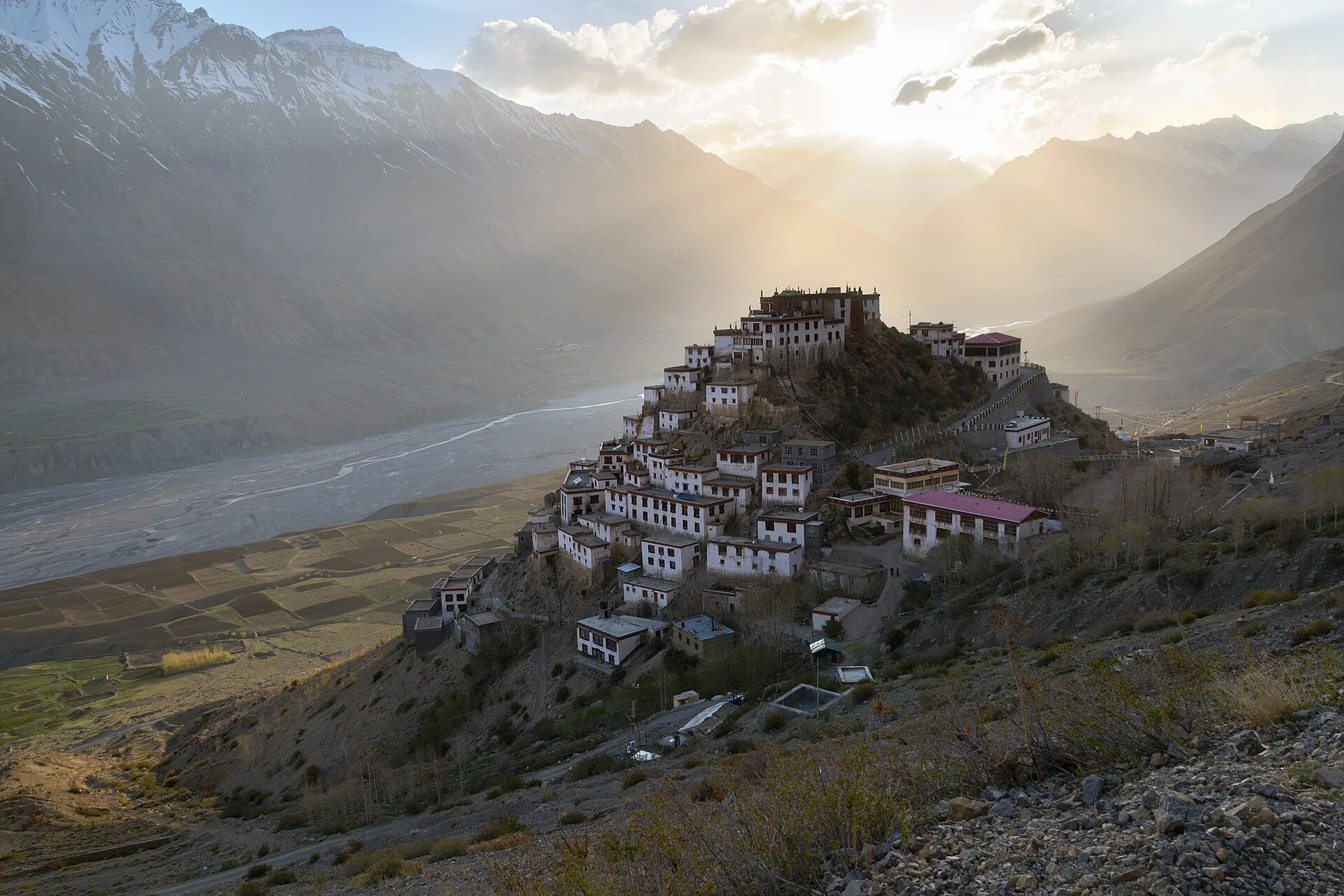
Key Monastery (Kee or Kye Gompa) is the largest monastery in the Spiti valley, built in tiers up a cone-shaped hill at about 4,166 m, roughly 14 km from Kaza. Tradition dates it to the 11th century; it became a Gelug (yellow-hat) monastery in the 17th century and was attacked, burnt and rebuilt several times — in 1820, twice in 1841, by fire in the 1840s, and after the 1975 earthquake. Inside are prayer halls with old murals, books and images, and resident monks who often welcome visitors for butter tea. It is a short drive from Kaza and easy to combine with Kibber and the Chicham bridge. June to October is the easiest time; in winter it stays open and looks spectacular under snow, but roads and weather need care.
- HeightAbout 4,166 m on a hill above the Spiti river.
- From KazaAbout 14 km — 30–40 minutes by road.
- FoundedTraditionally 11th century; Gelug since the 17th century.
- InsidePrayer halls, old murals and books; dress modestly, ask before photographing.
- Best timeJune – October; winter visits with a local driver.
Kaza and Tabo weather today
Key is about 14 km from Kaza (about 3,800 m) and some 350 m higher. Current temperature and the next days’ high, low and snow.
Forecast data: MET Norway (CC BY 4.0), refreshed about once a day — last update —.
A thousand years on the hill
Tradition credits the founding of Key to Dromtön, a pupil of the great teacher Atisha, in the 11th century. In the 17th century, under the Fifth Dalai Lama, it became an establishment of the Gelug school, which it remains today.
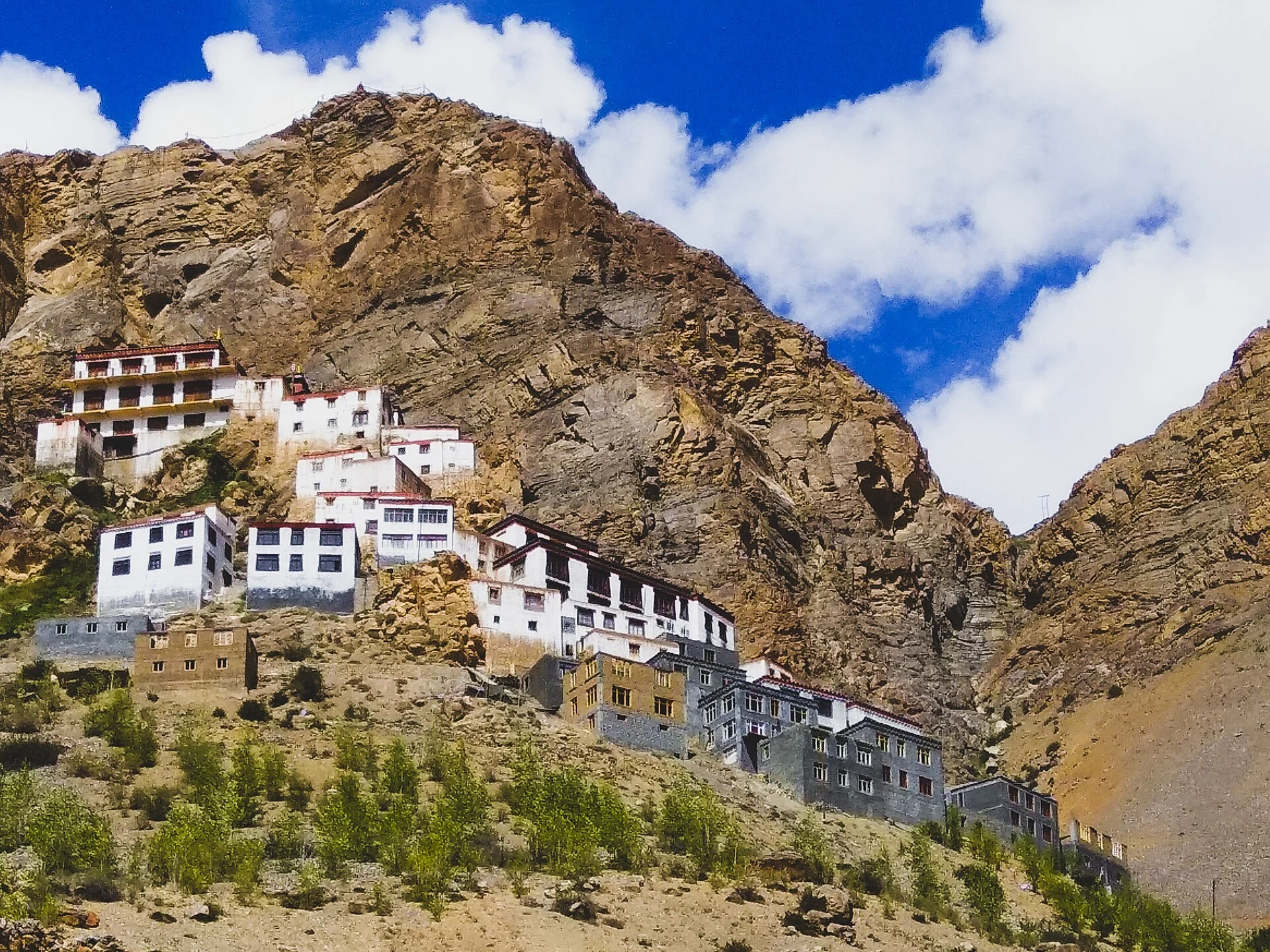
Its position on the trade and war routes of the western Himalaya brought repeated trouble: Key was sacked in 1820 during the Ladakh–Kullu wars, damaged twice in 1841 by Dogra and then Sikh armies, burnt in the 1840s and badly hit by the 1975 earthquake, after which it was repaired with help from the Archaeological Survey of India. That history explains its unusual, fortress-like jumble of buildings climbing the hill.
In 2000 the monastery celebrated its millennium in the presence of the Dalai Lama, who inaugurated a new prayer hall on 3 August that year.
What to see and how to visit
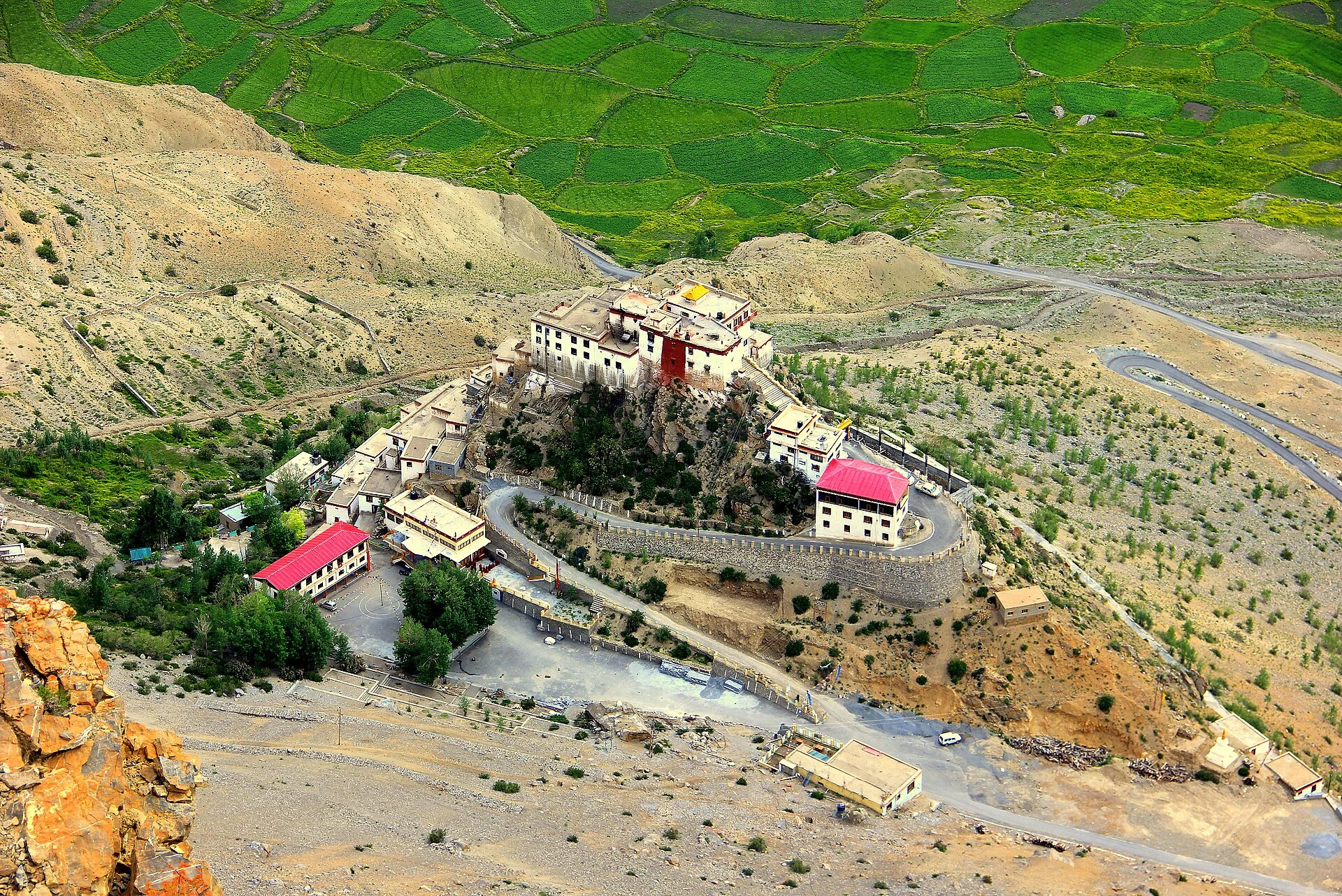
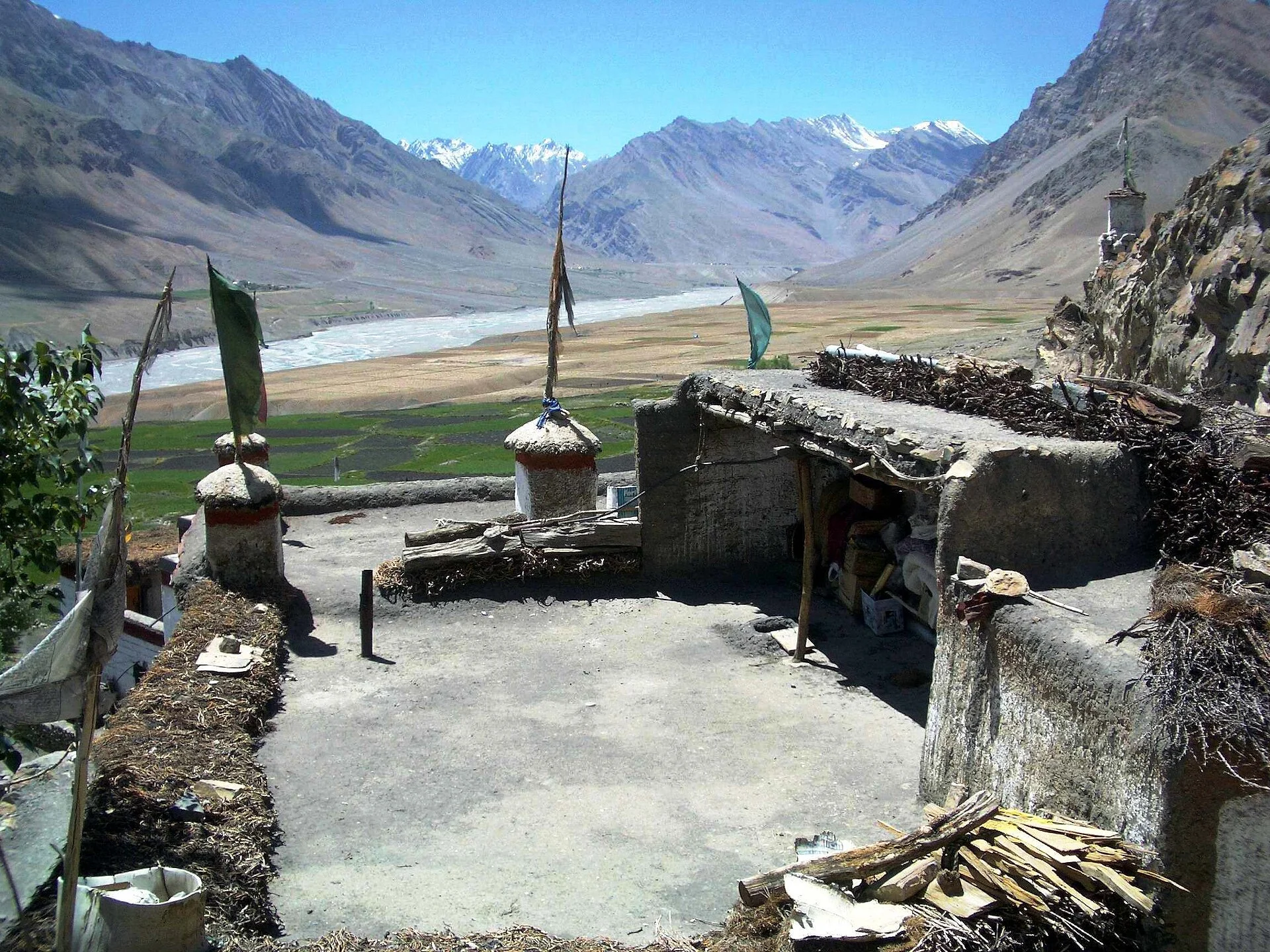
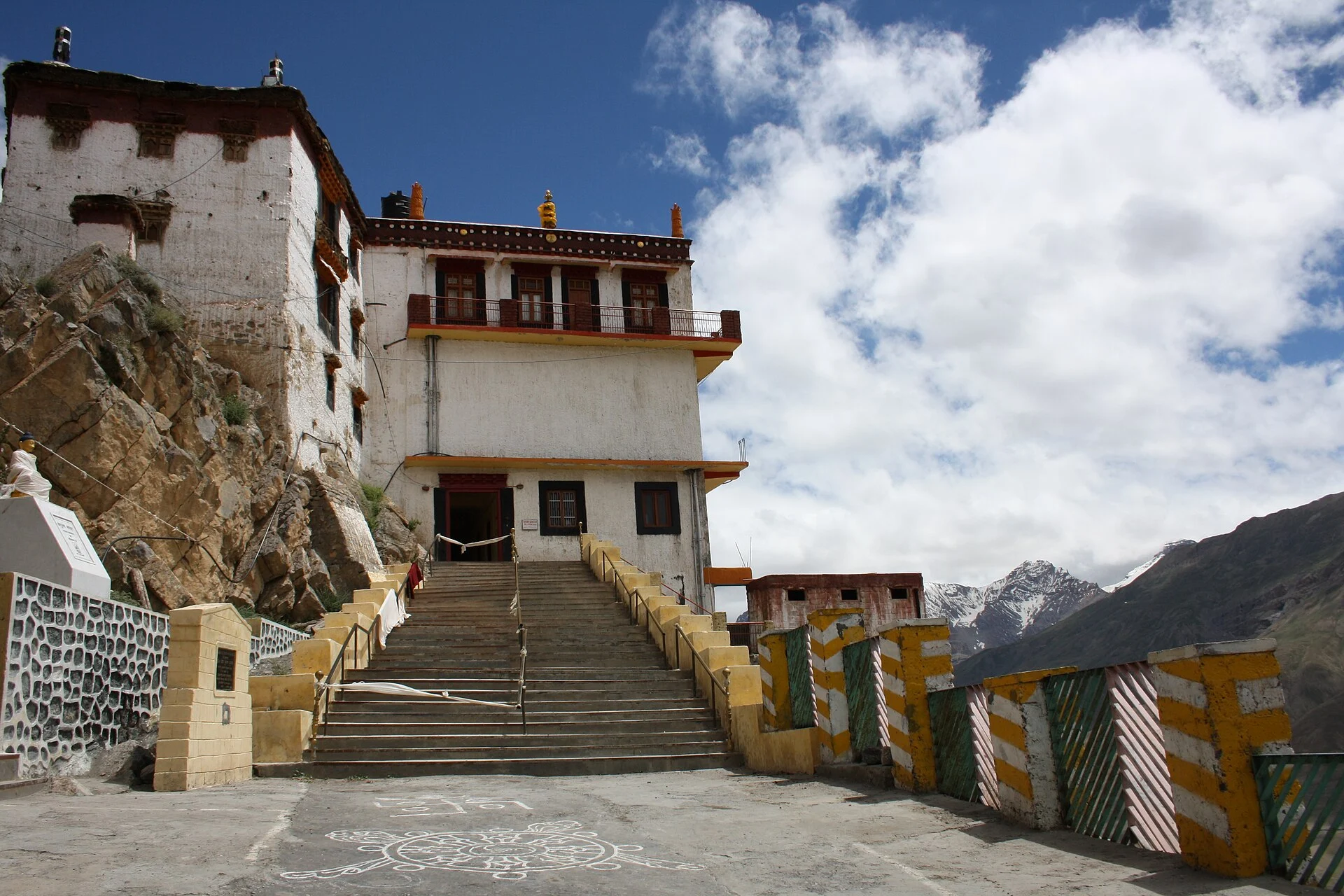
The climb from the car park leads through narrow passages and steep steps to the prayer halls, the assembly room and a rooftop with wide views of the Spiti river. The walls carry old paintings and the monastery keeps a collection of murals, books and images. Visitors are welcome during the day; there is no fixed entry fee, and a donation is appreciated.
| Item | Details |
|---|---|
| Height | About 4,166 m |
| Distance | About 14 km from Kaza; Kibber about 8 km further |
| Time to allow | 1–1.5 hours at the monastery |
| Dress | Covered shoulders and legs; remove shoes where asked |
| Photos | Ask before photographing inside halls and monks |
| Winter | Open, but roads can be icy; go with a local driver |
On the same morning: Kibber village and the gorge bridge towards Chicham. On another half-day: Langza, Hikkim and Komic. On the way in or out: Tabo Monastery.
Best time to visit Key Monastery
June to October brings dry, sunny days and open roads from both Manali and Shimla. July–August is when the Manali side is busiest; the Kinnaur side may see landslides in heavy rain. From November to April Spiti is reached only via Shimla and Kinnaur, temperatures fall far below freezing at night, and the snow-covered monastery makes one of the most striking sights in the Himalaya — plan it with our winter Spiti guide.
At over 4,000 m, take altitude seriously: spend at least one night in Kaza before visiting, go slowly on the steps, and drink plenty of water.
Key Monastery in pictures
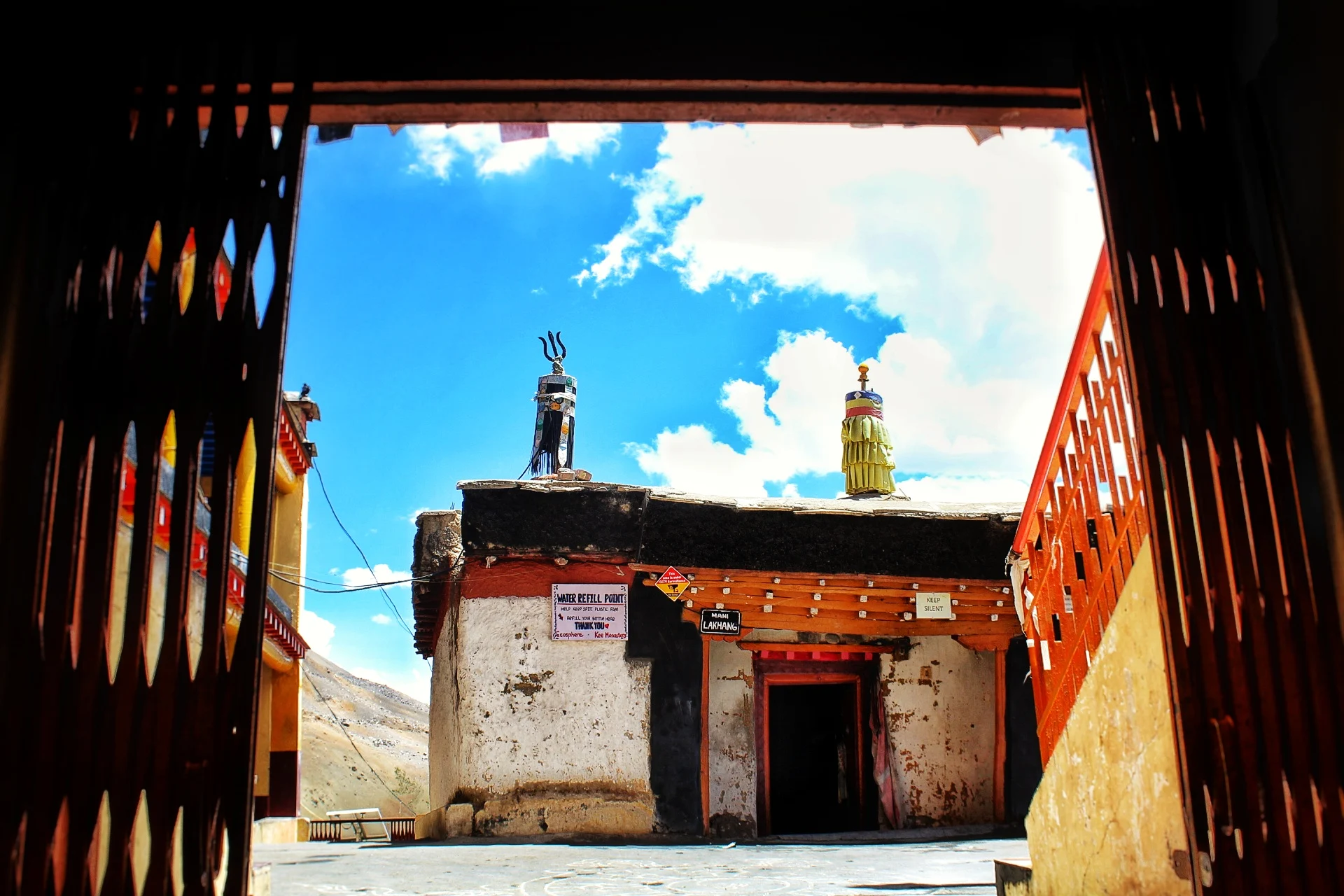
The monastery on its hill in summer and under snow, its courtyards and the view from the roof — real photographs, each credited to its photographer.
Around Key Monastery
Add these to the same day or the next.
Kibber
One of the high villages of Spiti, gateway to snow-leopard country in winter. Kibber guide →
Chicham bridge
A bridge high over a deep gorge on the road to Chicham.
Langza, Hikkim and Komic
Buddha statue, fossils and the high post office. Guide →
How to reach Key Monastery
Key is a short drive from Kaza. To reach Kaza: via Shimla and Kinnaur (most of the year) over 3–4 days, which also helps acclimatisation, or via Manali over Atal Tunnel and Kunzum Pass (about June to mid-October). See which route to take and the road trip from Delhi.
Plan Spiti with us
Stays, meals and a private car with a mountain driver, in one quote.
Planning Spiti and Key Monastery?
Tell us your dates, where you are starting from and how many of you are travelling. We plan a safe, well-paced route and send a written quote with stays and a private car. Suzu Travels is a travel agent registered with HP Tourism, based in Bilaspur, Himachal Pradesh.
Key Monastery: frequently asked questions
How high is Key Monastery?
About 4,166 m above sea level, on a hill above the Spiti river.
How far is Key Monastery from Kaza?
About 14 km, a 30–40 minute drive.
How old is Key Monastery?
Tradition dates it to the 11th century; it has been a Gelug monastery since the 17th century and was rebuilt several times after raids, fire and the 1975 earthquake.
Is there an entry fee at Key Monastery?
There is no fixed fee; a donation is appreciated.
Can I visit Key Monastery in winter?
Yes. It stays open, but Spiti is then reached only via Shimla and Kinnaur and roads can be icy — go with a local driver.
What is the best time to visit Key Monastery?
June to October for easy roads and mild days; winter for snow scenery.
Sources
- Wikipedia: Key Gompa (altitude, history)
- MET Norway Locationforecast (CC BY 4.0) — live forecast data
Photo credits
Key Monastery above the Spiti river — Photo: SilverBirch, CC BY-SA 3.0 · Key Monastery in winter — Photo: Ksuryawanshi, CC BY-SA 4.0 · Key Monastery from above — Photo: Gurpreet1986, CC BY-SA 4.0 · The valley from the monastery roof — Photo: John Hill, CC BY-SA 4.0 · Steps inside the monastery — Photo: Mike Shaw, CC BY-SA 4.0 · Evening light on Key — Photo: Prasad Gaude, CC BY-SA 4.0 · The monastery walls — Photo: Nitinkambo, CC BY-SA 4.0 · A courtyard at Key — Photo: Bossysammy, CC BY-SA 4.0 · Key Monastery on its ridge — Photo: Gurpreet1986, CC BY-SA 4.0