
Short answer: Kalpa is a Kinnauri village at about 2,960 m, 7–8 km above Reckong Peo and roughly 250–265 km from Shimla on NH-5. People come for one thing: the Kinnaur Kailash range filling the window at sunrise, with the 79-foot Shivling rock on its ridge. Plan two nights, reach it by road from Shimla in 8–10 hours, and visit between late March and early December unless you are going for snow.
Quick answer (checked 30 October 2026)
- Where: Kinnaur district, Himachal Pradesh, on the slope above Reckong Peo, the district headquarters.
- Altitude: about 2,960 m (9,700 ft); nights are cold even in June.
- Getting there: Shimla to Kalpa is 8–10 hours by car on NH-5; HRTC buses run Shimla–Reckong Peo for about ₹600 (Abhibus listing, Jan 2026).
- Road status: NH-5 open end to end as of October 2026, with occasional short closures at Nigulsari after rain.
- Best months: April–June and mid-September–November; snow season December–March for those who want it.
- Must-do: Roghi village road, Suicide Point walk, Narayan-Nagini temple, sunrise from your balcony.
- Our trip: Eccentric Kinnaur from Chandigarh, 6N/7D, from ₹24,999 per person (Deluxe, off-season).
Plan this trip with a local operator
We are a local operator, registered with HP Tourism (see our certificates). Tell us your dates and we will plan Kalpa as part of our Eccentric Kinnaur circuit from Chandigarh or build a Kalpa-only trip with a private car. WhatsApp +91 70874 88961 · Call +91 70874 88961 · info@suzutravels.com
Where is Kalpa and why do people go there?
Kalpa sits on the western slope of the Sutlej valley in Kinnaur, the district in the east of Himachal that borders Tibet. The village is 7–8 km uphill from Reckong Peo, the district headquarters where the buses stop and the banks and petrol pumps are. Across the valley, directly opposite, stands the Kinnaur Kailash range, with peaks rising to about 6,000 m and the natural rock pillar that pilgrims call the Shivling, about 24 m (79 ft) tall, on its ridge (Wikipedia and Vargis Khan, checked 30 Oct 2026).
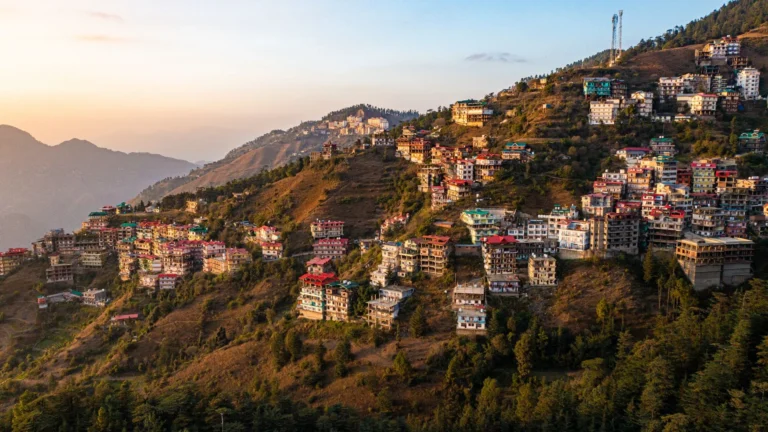
That view is the reason the village exists on any itinerary. From most hotel balconies the mountain wall is close enough that you can watch the first light move down it at sunrise and the Shivling change colour through the day. Kalpa was known as Chini until well after Independence, was the original headquarters of Kinnaur before the seat moved down to Reckong Peo, and is the home village of Shyam Saran Negi, remembered as independent India’s first voter.
In our experience Kalpa works best as the last high stop on a Kinnaur loop that also takes in Sarahan, Sangla and Chitkul. Our Kinnaur valley travel guide covers the whole district; this page is about Kalpa itself.
How do you reach Kalpa from Shimla, Chandigarh and Delhi?
There is only one practical road: NH-5, the old Hindustan–Tibet road, from Shimla through Narkanda, Rampur Bushahr, Jeori, Wangtu, Tapri and Karcham to Powari, then up to Reckong Peo and Kalpa. Wikipedia gives Kalpa as 265 km from Shimla; the driving guides we checked put the Powari turn-off at about 246 km, so expect 250–265 km and 8–10 hours with a lunch stop at Rampur (Discover with Dheeraj, updated 20 Oct 2026). Our Shimla to Kalpa guide has the stop-by-stop breakdown.
| Starting point | Distance to Kalpa (approx.) | Time by car | How we break it |
|---|---|---|---|
| Shimla | 250–265 km | 8–10 h | One day if you leave by 06:00; otherwise a night at Sarahan or Sangla |
| Chandigarh | about 360–380 km | 11–13 h | Night 1 at Narkanda, then Sangla or Kalpa |
| Delhi | about 600 km | two driving days | See our Delhi to Kalpa guide; most people stop at Narkanda or Shimla |
| Sangla | about 55 km | 2–2.5 h | Back to Karcham, then up the Sutlej to Powari |
| Kaza (Spiti) | about 200 km | 7–8 h | Via Nako, Khab and Pooh; the only Spiti road in winter |
By bus: HRTC runs Shimla to Reckong Peo in about 10–11 hours for roughly ₹600 in an ordinary bus (Abhibus listing for the HRTC service, Jan 2026). Older timetables show a direct Shimla–Kalpa bus around 06:15 and Delhi and Chandigarh services passing through Shimla around 09:00; confirm at the Shimla bus stand (0177-2659795) because timings change with the season. From Reckong Peo, local buses and shared taxis cover the last 7–8 km up to Kalpa.
By air or train: the nearest airport with daily flights is Chandigarh; Shimla’s small airport has the Alliance Air Delhi flight six days a week. The Kalka–Shimla toy train is running only between Dharampur and Shimla while the Kalka section is shut until 30 November 2026, so a train arrival means Kalka or Chandigarh and a car onward.
What is the NH-5 road like right now?
The Kinnaur stretch of NH-5 is cut into cliffs above the Sutlej, and the section between Jeori and Wangtu, including Chaura, Nathpa and Nigulsari, is where the trouble happens. A landslide at Nigulsari on 6 August 2026 dropped boulders onto the highway and closed it for hours (Amar Ujala, 6 Aug 2026), and rockfall was still reported there in mid-September. As of October 2026 the highway is open from Shimla all the way to Sumdo, with only occasional one-lane holds after rain (Discover with Dheeraj, updated 20 Oct 2026).
Two practical rules from our drivers. First, the district administration has in the past barred all traffic at Nigulsari between 8 pm and 5 am during the monsoon (Tribune, 31 Aug 2025); whether or not an order is in force, do not plan to be on that stretch after dark. Second, if rain has fallen overnight, start late enough that the clearing crews have had a look, and ask at Rampur before committing. For the background to the first snow of this season, see our note on the 28 September 2026 snowfall in Kinnaur and Spiti.
What is there to do in Kalpa?
Kalpa is small. You can see the village in a morning, which is exactly why two nights work: one evening and one dawn for the mountain, one full day for the walks.
- Sunrise over Kinnaur Kailash. Book a room with a balcony facing east and set an alarm. The light hits the Shivling first and works its way down to the valley over about half an hour.
- Narayan-Nagini temple. A pagoda-style wooden temple in the old village, with the carved Kinnauri woodwork that you will not see further down the valley. Remove shoes, photograph from outside unless invited.
- Hu-Bu-Lan-Kar gompa. A small Buddhist monastery a few minutes’ walk from the temple; Kinnaur’s villages practise both faiths, and Kalpa shows it.
- Suicide Point. About 3 km on the Roghi road, through apple orchards to a sheer drop above the Sutlej. The walk is the point; stay well back from the edge, the fence is not continuous.
- Roghi village. About 6 km from Kalpa on a narrow cliff road. Traditional slate-roofed houses, a small Narayan temple, orchards right down to the road. Go by car or a two-hour walk each way.
- Chaka meadows. A steep 3 km trail from near Hotel Rakpa Regency up to grassland at roughly 3,800 m, with a wider view of the range than Kalpa itself. Allow a full day, carry water and a jacket.
- Kothi (Chandika Devi) temple. About 3 km from Reckong Peo, on the way up; worth ten minutes on the drive in.
Apple orchards surround everything. Kinnaur’s harvest runs from roughly August into October depending on altitude, and in those weeks the road below Kalpa is lined with crates waiting for trucks. Buy from the orchard gate rather than the Reckong Peo market if you can.
When is the best time to visit Kalpa?
Kalpa has a long winter, from October to May on the climate charts, and a short, mild summer. Winter snow can lie 1.5–2 m deep and the temperature can fall to about −20 °C (Wikipedia, checked 30 Oct 2026). That shapes the calendar below.
| Months | What to expect | Our view |
|---|---|---|
| April–June | Clear mornings, apple blossom in April, days 15–22 °C, nights near 5 °C | The easiest season; book early for May and June |
| July–mid-September | Monsoon landslides on NH-5, cloud over the peaks | We avoid it; if you must, keep a buffer day |
| Mid-September–November | Harvest, sharpest views, nights below zero by November | Our favourite; October is peak pricing |
| December–March | Snow on the village, many hotels shut, road holds after storms | Only with a 4×4 and flexible dates; see our Kalpa in winter guide |
The temperatures above are typical ranges from our own trips, not official figures; check the IMD forecast for Reckong Peo the week you travel. For how Kalpa fits the wider state calendar, see the best time to visit Himachal.
Where should you stay in Kalpa?
Kalpa has perhaps two dozen hotels and homestays, most of them along the road between the bus stop and Roghi, and the thing that separates them is the view. Ask one question before booking: does the room face Kinnaur Kailash? A rear room in a well-run hotel is a poorer deal than a plain front room with a balcony.
Well-known examples, with no claim about rates or availability: the HPTDC-run Hotel Kinner Kailash, the state tourism hotel with large lawns and the classic view; The Grand View, which we use on our own Eccentric Kinnaur package; and Hotel Rakpa Regency on the Roghi road, where the Chaka trail starts. Homestays in Roghi and the old village are quieter and cheaper but usually without heating. In October and in snow season, confirm that the hotel has a generator and a heating arrangement; power cuts are normal.
Reckong Peo, 7–8 km below, has more budget hotels and all the practical things (ATMs, petrol, the HRTC stand), but no view. Sleep in Kalpa, shop in Peo.
How does Kalpa fit into a Kinnaur or Spiti itinerary?
Kalpa is rarely the only destination. The three patterns we run most often:
- Kinnaur loop, 6 nights from Chandigarh. Narkanda, two nights at Sangla with a day trip to Chitkul, two nights at Kalpa, a night at Sarahan for the Bhimakali temple, and back. That is our Eccentric Kinnaur package, from ₹24,999 per person on twin sharing, Deluxe, off-season. The Sangla and Chitkul guide covers the Baspa valley half of it.
- Kinnaur to Spiti, 7 nights from Shimla. Sarahan, Sangla, Kalpa, then over the Khab confluence and Nako to Kaza, Chandratal and out through the Atal Tunnel to Manali. Our Kinnaur–Kaza with Chandratal package is from ₹32,500 per person and runs only while the Kunzum road is open, roughly June to mid-October.
- Shorter Kinnaur from Shimla. For people already in Shimla, our Unexplored Kinnaur from Shimla page has the itinerary; ask us for a dated quote.
Two seasonal notes. The Gramphu–Batal road out of Spiti to Manali has been shut since 15 October 2026 for the winter, so from now until about June, Kalpa to Kaza is an out-and-back on the Shimla side; our Spiti via Shimla or Manali post explains the choice. And Indian citizens need no permit for Kalpa, Sangla or Chitkul; the Inner Line Permit applies to foreign nationals beyond Jangi towards Spiti.
What should you pack and watch out for at 2,960 m?
At just under 3,000 m most healthy adults feel nothing worse than a mild headache on the first evening, but families with young children and anyone with a heart or lung condition should take it slowly: a night at Narkanda or Sangla before Kalpa helps. Drink more water than you think you need, go easy on alcohol the first night, and do not rush up to Chaka meadows on day one.
- A proper warm layer in every month; a down jacket from October to April.
- Sunscreen and sunglasses, because the air is thin and the glare off the range is strong.
- Cash. Reckong Peo has ATMs, Kalpa effectively does not, and UPI works only when the network does.
- Any regular medicines, plus basic altitude and motion-sickness tablets for the road.
- A power bank and a torch; evening power cuts are routine.
- Mobile coverage: Jio and BSNL are the most reliable in Kinnaur; Airtel is patchy beyond Rampur.
Frequently asked questions
How far is Kalpa from Shimla?
Kalpa is about 250–265 km from Shimla on NH-5 via Narkanda, Rampur, Wangtu, Karcham and Reckong Peo. In a car it takes 8–10 hours with a lunch halt at Rampur; the HRTC bus to Reckong Peo takes 10–11 hours. Most families either leave Shimla by 06:00 or break the drive at Sarahan or Sangla.
What is the altitude of Kalpa?
Kalpa is at about 2,960 m (around 9,700 ft), roughly 500 m higher than Reckong Peo below it. The altitude is high enough for cold nights all year and a mild headache on arrival for some people, but low enough that most visitors adjust within a day. Take the first evening slowly and keep the Chaka meadows walk for day two.
Is Kalpa open in winter?
Yes, Kalpa is reachable in winter because NH-5 stays open except during and just after heavy snowfall, when it may close for a day or two. Many hotels shut from December to February, snow can lie 1.5–2 m deep, and nights fall well below zero. Go with a 4×4, flexible dates and a hotel that has confirmed heating and a generator.
Do Indian tourists need a permit for Kalpa?
No. Indian citizens need no permit for Kalpa, Reckong Peo, Sangla or Chitkul. Foreign nationals need an Inner Line Permit for the stretch beyond Jangi towards Nako and Spiti, which is issued at the SDM office in Reckong Peo. Carry a government photo ID in any case; police check posts at Karcham and Jangi record vehicle details.
How many days are enough for Kalpa?
Two nights in Kalpa is the right amount: one sunset and one sunrise over Kinnaur Kailash, a morning for the Narayan-Nagini temple and the gompa, and an afternoon for Roghi village and Suicide Point. Add a third night only if you want the Chaka meadows day walk. Combine it with Sangla and Sarahan for a six-night Kinnaur trip.
Can you see the Kinnaur Kailash Shivling from Kalpa?
Yes. The 79-foot Shivling rock stands on the ridge of the Kinnaur Kailash range directly across the valley from Kalpa and is visible from most east-facing hotel balconies, from the village lanes and from Suicide Point. It shows best at sunrise and in the hour before sunset; by late morning haze and cloud often hide the upper ridge.
Plan this trip with a local operator
We are a local operator, registered with HP Tourism (see our certificates). Tell us your dates and we will plan Kalpa as part of our Eccentric Kinnaur circuit from Chandigarh or build a Kalpa-only trip with a private car. WhatsApp +91 70874 88961 · Call +91 70874 88961 · info@suzutravels.com