
Short answer: there is no single India packing list, because the country spans snow and tropics in one month. In winter (December to February) pack a proper insulated jacket and layers for the Himalaya and Delhi mornings, light cottons for Rajasthan afternoons, and breathable clothes for humid Kerala. Year-round, bring modest temple clothing, a scarf, a type C/D plug adapter, a reusable water bottle, printed e-visa approval and a small first-aid kit. Leave satellite phones, drones and vapes at home.
Quick answer (checked 23 October 2026)
- Himalaya in winter: Manali averages 10.5°C by day and −1.1°C at night in January, Shimla 9.3°C and 1.7°C, Srinagar 7.1°C and −1.9°C (1991–2020 normals). Pack for snow: insulated jacket, thermals, waterproof boots.
- North plains in winter: Delhi averages 20°C by day and 7.5°C at night in January, with dense fog that delays flights and trains. Pack a fleece and a warm layer for mornings.
- Rajasthan: pleasant October to March (Jaipur 22.5°C/8.4°C in January); May highs around 40°C.
- Kerala: warm and humid all year (Alappuzha about 33°C/22°C in January, humidity 68% in January and 88% in July); monsoon June to August.
- Power: 230 V, 50 Hz, plug types C, D and M. One universal adapter covers it.
- Do not bring: satellite phones or satellite messengers (illegal without prior government permission), drones (foreigners may not fly them) and e-cigarettes (banned since 2019).
Plan this trip with a local operator
We are a local operator in Himachal Pradesh, registered with HP Tourism (see our certificates). Tell us your dates and route and we will send a season-specific packing note with your itinerary, along with a private car and English-speaking driver. Start with our first-time India travel guide. WhatsApp +91 70874 88961 (WhatsApp works internationally) · info@suzutravels.com
Why does an India packing list depend on region and season?
In January a traveller can stand in snow at Solang near Manali in the morning and be sweating in Kochi by evening. The classic routes cross all three of India’s climate zones. The north Indian plains (Delhi, Agra, Jaipur, Varanasi) are cold and foggy from mid-December to early February, hot from April to June, and wet from July to September. The Himalaya (Himachal, Uttarakhand, Kashmir, Ladakh) has snow from December to February and cool, pleasant summers. The tropical south and the coasts (Kerala, Goa, Tamil Nadu, the Andamans) are warm all year, with heavy rain in the south-west monsoon from June to September and, for Kerala and Tamil Nadu, a second wet spell in October and November.
So the first step is to look at your route month by month. Our best time to visit India guide covers this. The second step is to pack in layers, so the same base clothes work in all three zones with a jacket added or removed.
India packing matrix: season by region
| Region | Winter (Dec–Feb) | Spring and autumn (Mar, Oct–Nov) | Summer and monsoon (Apr–Sep) |
|---|---|---|---|
| North plains (Delhi, Agra, Jaipur, Amritsar, Varanasi) | Delhi 20°C days, 7–8°C nights; dense fog. Fleece, light down jacket, closed shoes, scarf and hat for early starts such as the Taj at sunrise. | Warm days, cool evenings. Cottons plus one light layer. | Delhi averages about 40°C in May. Loose cotton or linen, sun hat, electrolytes; July to September add an umbrella and quick-dry footwear. |
| Himalaya (Shimla, Manali, Dharamshala, Kashmir, Auli) | Snow likely at some point most years; nights below freezing. Full winter kit (see layering list below). Gulmarg and Spiti are far colder than Manali. | Mild days, cold nights. Fleece, windproof shell, warm sleepwear; March can still bring snow above 2,500 m. | Pleasant 20–28°C days. Light layers, rain jacket for the July to August monsoon, trekking shoes. |
| Rajasthan desert (Jodhpur, Jaisalmer, Bikaner, Udaipur) | Jaisalmer 23°C days, 9°C nights in January; desert camps are cold after dark. Warm layer for evenings, cottons for the day. | Ideal. Light clothing, sun protection, a scarf against dust. | Extreme heat April to June, well above 40°C. Lightest fabrics, full sun cover, 3 litres of water a day. |
| Kerala and the south coast (Kochi, Alleppey, Goa, Tamil Nadu) | 33°C days, 22°C nights, humidity around 68%. Breathable cottons, sandals, swimwear, sunscreen, mosquito repellent. No warm layer needed. | Hot and humid; October to November brings afternoon rain in Kerala. Umbrella, quick-dry clothes. | Monsoon June to August (Alappuzha about 590 mm in June, humidity 86–88%). A rain jacket is too hot; carry an umbrella and sandals that can get wet. |
Temperatures are 1991–2020 climate normals (India Meteorological Department data in standard climate tables), read 23 October 2026. Averages, not forecasts.
Layering list for Manali, Shimla or Kashmir in winter
This is the kit we recommend to guests heading up the Delhi to Manali road between December and February, and it is enough for a Gulmarg ski holiday if you add rented ski gear on arrival. Most of it can be bought in Manali or Shimla, but not always in your size on a busy weekend.
- Base layer: two sets of thermal top and bottom (merino or synthetic, not cotton).
- Mid layer: a fleece or light wool sweater, plus a down or synthetic insulated jacket.
- Outer layer: a waterproof, windproof shell. Snow in Manali is often wet and heavy.
- Legs: fleece-lined or softshell trousers; waterproof overtrousers if you plan to play in snow at Solang.
- Feet: waterproof boots with grip (pavements ice over at night), wool socks, indoor slippers for cold hotel floors.
- Extremities: insulated gloves plus thin liner gloves, a wool hat that covers the ears, a neck gaiter or scarf, and sunglasses (snow glare is intense at altitude).
- Extras: lip balm, high-SPF sunscreen, a hot-water bottle, and a head torch for power cuts after snowfall.
Check our Himachal snowfall winter 2026–27 page for current conditions before you fly. Roads beyond Solang close during and after heavy snow; a day in the hotel is normal in January.
What should you wear at temples, gurdwaras and mosques?
Modest dress is required at almost every religious site and expected in small towns. For both men and women that means shoulders and knees covered. Loose trousers or a long skirt and a shirt with sleeves work everywhere. A large light scarf is the most useful item in your bag: head cover, shawl on air-conditioned trains, sun protection in Rajasthan.
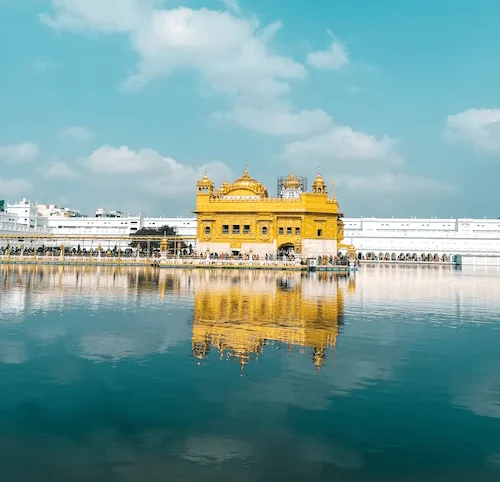
- Golden Temple, Amritsar: everyone must cover their head (free scarves are provided at the entrances), remove shoes and socks at the free shoe counter, wash their feet in the shallow channel, and leave tobacco, alcohol and intoxicants outside. The rules are set by the Shiromani Gurdwara Parbandhak Committee and are enforced.
- Hindu temples: shoes off before the threshold; some southern temples ask men to remove shirts and do not admit non-Hindus to the inner sanctum. Some Jain temples refuse leather.
- Mosques: head cover for women, long sleeves and trousers for all; non-Muslims are usually welcome outside prayer times.
- Taj Mahal: no dress code; shoe covers (provided) are required on the main platform, and food, tripods and drones are not allowed.
Slip-on shoes save time at every door.
Medicines, health kit and documents
We are a travel company, not doctors. For vaccinations and prescriptions consult your doctor or a travel clinic at least six weeks before departure, and read CDC Travelers’ Health (United States), NHS Fit for Travel (United Kingdom) or your country’s equivalent. From experience:
- Carry prescription medicines in original packaging with a copy of the prescription. Some medicines that are over the counter at home are controlled in India; check with the Indian embassy if you take strong painkillers or ADHD medication.
- A basic kit: rehydration salts, your usual stomach remedy, plasters, antiseptic wipes, motion-sickness tablets for mountain roads, and a thermometer. Pharmacies are everywhere in cities and well stocked.
- Mosquito repellent with DEET or picaridin for Kerala, Goa and the plains after the monsoon. Long sleeves at dusk.
- Travel insurance that covers medical evacuation, and for the Himalaya, altitude above 3,000 m if you plan to go to Spiti, Ladakh or high passes.
Documents. Passport with at least six months’ validity and two blank pages; a printed copy of your e-visa approval, since immigration officers and some hotels ask for paper; printed hotel and flight confirmations; two passport photos; digital copies of everything. Our India e-visa guide walks through the application. Hotels must record foreign guests, so expect to show your passport and visa at every check-in.
Electronics, plugs, SIM cards and money
Power. India uses 230 V at 50 Hz with plug types C (two round pins), D (three round pins) and M (larger three round pins). Most hotel sockets accept type C and D; a universal adapter handles all three. Phone and laptop chargers are dual-voltage; hair dryers from 110 V countries usually are not. Carry a power bank for long train and car days, in cabin baggage only.
Connectivity. Buy a prepaid SIM at the airport with your passport and visa, or set up a travel eSIM before you land; coverage is patchy in the high Himalaya.
Money. Cards work in hotels, restaurants and city shops; cash is needed in small towns, for tips and for entry tickets at smaller monuments. Foreign visitors can also open a UPI One World prepaid wallet with passport and visa KYC at authorised counters in major airports and pay by QR code almost anywhere; unused balance is refunded when you leave (National Payments Corporation of India, July 2024). Carry small notes.
Water. Bring a reusable bottle, ideally with a built-in filter or a UV purifier. Most hotels provide large cans of filtered water, and it saves dozens of plastic bottles over a trip. Never drink tap water.
What should you not bring to India?
- Satellite phones and satellite messengers. Devices such as Garmin inReach, Thuraya and Iridium handsets are illegal in India without prior permission from the Department of Telecommunications under the Indian Wireless Telegraphy Act, 1933 and related telecom law. Travellers are detained for carrying them even unused, most recently two US nationals at Srinagar airport on 19 April 2026 (The Week, 19 April 2026); earlier cases at Delhi and Goa airports involved a Garmin inReach. Leave them at home.
- Drones. Foreign nationals are not permitted to fly drones recreationally in India, and registration on the Digital Sky platform requires an Indian entity. Monuments and airports are no-fly zones anyway. The simplest advice is not to bring it.
- E-cigarettes and vapes. Banned nationwide since the Prohibition of Electronic Cigarettes Act, 2019. They can be confiscated at the airport.
- Rupees in cash above the permitted limit. Bring foreign currency and change it in India.
- A wheeled suitcase for the mountains. A soft duffel is easier in hill towns where cars cannot reach the hotel door.
A two-week north and south India packing list
For a January route of Delhi, Agra, Jaipur, then Kerala, one 20 kg bag and a day pack hold: 5 light tops, 2 long-sleeved shirts, 2 loose trousers, 1 long skirt or extra trousers, beach shorts; a fleece and a packable insulated jacket (Delhi mornings, Taj at sunrise); walking shoes, sandals, slip-ons; a week of socks and underwear; scarf, sun hat, sunglasses, swimwear; adapter, power bank, torch; filter bottle, zipped day pack, thin dry bag; health kit, sunscreen, repellent; documents folder with e-visa printout and insurance details.
Swap the jackets for extra cottons in March or October. For the full Rajasthan tour add a dust scarf and a warm layer for desert camp nights; for the Kerala tour add a second swimsuit and quick-dry towel. Laundry is cheap and fast everywhere, so pack for a week and wash once.
When you book with us, your itinerary comes with a one-page packing note for your exact dates. A 20% deposit locks your dates and price; full refund if cancelled within 48 hours of paying; balance before the trip; pay by card via Razorpay (international cards accepted) or PayPal.
Frequently asked questions
What should I pack for India in January?
Layers. The north plains are cold at night (Delhi about 7–8°C) and foggy in the morning, the Himalaya is below freezing, and Kerala and Goa are 30°C and humid. Bring a fleece and a packable insulated jacket, cottons for the day, a scarf, closed shoes and sandals. Add full winter kit if Manali, Shimla or Kashmir are on your route.
Do women need to cover their heads in India?
Only at specific sites: gurdwaras such as the Golden Temple (men too), mosques, and some temples. Elsewhere a head cover is not expected. Shoulders and knees covered is the general rule for religious sites and small towns. A large scarf handles every case and is the single most useful item in an India packing list.
Which plug adapter do I need for India?
India uses 230 V, 50 Hz sockets of types C, D and M. A universal travel adapter covers all three. Most phone and laptop chargers accept 100–240 V, so no converter is needed for them. Hair dryers from 110 V countries may not work; most hotels provide one.
Can I bring a drone or a satellite phone to India?
No, in practice. Satellite phones and satellite messengers such as Garmin inReach are illegal without prior Department of Telecommunications permission, and travellers have been detained at Delhi, Goa and Srinagar airports for carrying them. Foreign nationals may not fly drones recreationally, and most tourist sites are no-fly zones. Leave both at home.
What medicines should I take to India?
Consult your doctor or a travel clinic, and read CDC Travelers’ Health or NHS Fit for Travel for current vaccination and malaria advice. Carry prescription medicines in original packaging with the prescription. A small kit with rehydration salts, plasters, antiseptic wipes and motion-sickness tablets covers most day-to-day needs; pharmacies in India are well stocked.
Should I bring a water filter bottle to India?
Yes. Tap water is not safe to drink, and a filter or UV bottle lets you refill from hotel taps and the large water cans most hotels and houseboats now provide. It saves money and dozens of single-use plastic bottles over a two-week trip. Bottled water is cheap and available everywhere as a fallback.
Plan this trip with a local operator
We are a local operator in Himachal Pradesh, registered with HP Tourism (see our certificates). Tell us your dates and route and we will send a season-specific packing note with your itinerary, along with a private car and English-speaking driver. Start with our first-time India travel guide. WhatsApp +91 70874 88961 (WhatsApp works internationally) · info@suzutravels.com