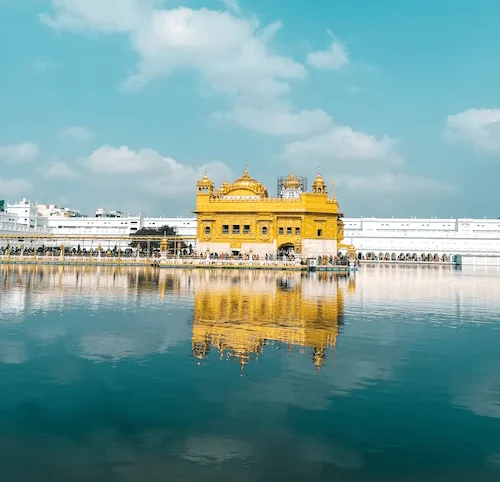

Short answer: The Varanasi Ganga aarti is a 45-minute fire ceremony performed every evening at Dashashwamedh Ghat, starting just after sunset: around 6 pm from October to March and around 7 pm from April to September. Arrive 60–90 minutes early for a place on the steps, or watch from a rowing boat on the river. Assi Ghat holds a quieter morning aarti, Subah-e-Banaras, 45 minutes before sunrise. Dev Deepawali, the biggest night of the year, falls on 24 November 2026.
Quick answer (checked 23 October 2026)
- Main aarti: Dashashwamedh Ghat, daily, about 6:00 pm October–March and 6:45–7:00 pm April–September; it tracks sunset, so allow 15 minutes either way. Lasts about 45 minutes. Free.
- Morning aarti: Subah-e-Banaras at Assi Ghat, starting about 45 minutes before sunrise (roughly 5:30 am in winter, 5:00 am in summer), followed by Vedic chanting, classical music and yoga. Free.
- Where to watch: The ghat steps (arrive early), a shared or private rowing boat (about Rs 250–500 per person shared, Rs 1,500–3,000 for a private boat), or a riverside rooftop café.
- Dev Deepawali 2026: Tuesday 24 November (Kartik Purnima). Lamps are lit at dusk; boat prices run two to four times normal and hotels book out weeks ahead.
- Getting there: Delhi–Varanasi flights take about 1 h 25–1 h 45 min, six a day; the Vande Bharat 22436 leaves New Delhi 06:00 and arrives 14:00.
- Exchange rate used: Rs 94.70 per US$ (USD/INR close 22 October 2026).
Plan this trip with a local operator
We are a North India operator registered with HP Tourism (see our certificates). Tell us your dates and we will add Varanasi to a Golden Triangle tour or a two-week India itinerary, with flights or Vande Bharat tickets, airport transfers and a licensed boatman for the aarti. WhatsApp +91 70874 88961 (WhatsApp works internationally) · info@suzutravels.com
What is the Ganga aarti and why does it draw such crowds?
Aarti is the Hindu ritual of offering light to a deity. In Varanasi the deity is the river itself, Ganga, worshipped as a goddess. Every evening a line of young priests in matching silk kurtas stands on raised platforms at the water’s edge and performs a synchronised sequence of offerings: incense, a camphor flame, multi-tiered brass lamps that weigh several kilos, a yak-tail whisk, a peacock-feather fan and finally flowers, to the sound of bells, conches and devotional songs amplified across the water. The Dashashwamedh ceremony in its present choreographed form dates from the early 1990s and is organised by a local trust, Ganga Seva Nidhi; the ritual it draws on is far older.
It is free, it happens every night of the year, and it takes place at the busiest ghat in the holiest city in India, with flower-and-wick lamps drifting out on the current. That is why first-time visitors remember it so vividly.
What time is the Ganga aarti at Dashashwamedh Ghat?
There is no fixed clock time; the aarti begins shortly after sunset and so moves through the year. Published schedules and local operators agree on roughly the following (checked 23 October 2026 across Varanasi visitor guides; confirm with your hotel on the day, as festival days and VIP visits shift things):
| Months | Dashashwamedh evening aarti | Assi Ghat Subah-e-Banaras | Arrive for a good spot |
|---|---|---|---|
| October–March | About 6:00 pm (some evenings 5:45 pm in December–January) | About 5:30 am | 75–90 minutes early; this is peak season |
| April–June | About 7:00 pm | About 5:00 am | 35–45 minutes early |
| July–September | About 6:45 pm; moved up the steps when the river is high | About 5:15–5:30 am | 30–45 minutes early; boats may be suspended in flood |
The ceremony itself lasts about 45 minutes, longer on Kartik Purnima, Ganga Dussehra and Diwali. Police barricade the main viewing area 35–50 minutes before the start; after that you watch from the fringes or the water.
Dashashwamedh, Assi or the smaller ghats: which should I choose?
Dashashwamedh Ghat is the big one: seven priests, the largest crowd and the most elaborate staging. It is a spectacle, and on a winter weekend it is also a crush of several thousand people. Go at least once.
Assi Ghat, 2 km upstream at the southern end of the riverfront, holds two ceremonies. The evening aarti is smaller and shorter, usually about 6 pm in winter and 7 pm in summer, with more locals than tourists. The morning programme, Subah-e-Banaras, began in 2014 and is the better experience: it opens about 45 minutes before sunrise with a short aarti as the sun comes up over the far bank, continues with Vedic chanting and a fire offering, then a half-hour Indian classical music recital, and ends with a free open-air yoga session. The whole thing runs about two hours and is free; bring a shawl in winter.
Rajendra Prasad Ghat, immediately next to Dashashwamedh, hosts a parallel aarti run by a different group and is slightly less packed; arrive 30–40 minutes early in peak season. Several other ghats, including Kedar and Panchganga, have small, unamplified aartis that feel more like worship than performance. If you have two evenings, do Dashashwamedh on one and a quiet ghat on the other.
Boat, ghat steps or rooftop: how to watch
| Option | Indicative cost | Pros | Cons |
|---|---|---|---|
| Ghat steps | Free; plastic chairs near the platforms are sometimes offered for a small donation | Closest to the priests, full sound, the smell of camphor and incense | Must arrive very early; crowded; pickpockets work the crush |
| Shared rowing boat | About Rs 250–500 per person (US$2.65–5.30) | The classic view of the whole line of lamps from the water; you can arrive 30 minutes before | Dozens of boats raft together; you may be several boats back; sound is distant |
| Private rowing boat | About Rs 1,500–3,000 per boat (US$16–32); motorboats Rs 4,000–6,000 | Can include a sunset drift past the cremation ghats first; the boatman holds a front position | Board by 4:30 pm in winter to secure the position; agree the price and duration first |
| Rooftop café or hotel terrace | Rs 200–500 cover or a food minimum | Seated, a drink in hand, good for photographs with a zoom lens | Distant; you lose the sound and the sense of occasion |
Boat prices are what boatmen were quoting in the 2026 season according to Varanasi visitor guides; they rise two- to four-fold around Dev Deepawali and fall in summer. Pay at the end, not the start, and use the boatmen licensed at the ghat rather than touts in the lanes. Life jackets are rarely offered; ask. During monsoon floods (usually August–September) the district administration suspends boating altogether.
Crowds, etiquette and a few hard truths
- This is worship, not a show put on for you. Stand or sit when those around you do, keep your voice down, and do not walk in front of the priests’ platforms during the ceremony.
- Photography is fine from the steps and the water. Drones are banned over the ghats.
- Manikarnika and Harishchandra ghats, a short way downstream, are cremation grounds in use day and night. Do not photograph them, do not accept an offer from a “guide” to take you closer in exchange for a donation to the wood fund, and do not sit on a boat that idles in front of a pyre.
- Children selling flower lamps (diyas) are persistent. If you buy one, Rs 10–20 is the price; floating it is part of the pleasure.
- Keep wallets and phones in front pockets or a zipped bag held in front of you; the barricaded area is dense.
- Sadhus posing for photographs will ask for money; decide your policy in advance. There are no toilets at the ghat itself.
- Dress modestly, remove shoes if you step onto the priests’ platform area, and do not throw anything but flowers into the river.
Dev Deepawali 2026: the night of a million lamps
Fifteen days after Diwali, on the full moon of Kartik, Varanasi celebrates Dev Deepawali, the Diwali of the gods. In 2026 it falls on Tuesday 24 November; the full-moon tithi runs from 11:42 pm on 23 November to 8:23 pm on 24 November, and lamps are lit in the evening twilight after a local sunset of about 5:07 pm (panchang calendars, checked 23 October 2026). Every one of the 80-odd ghats is lined with earthen diyas; the state government reported about 2.5 million lamps in 2025, with a laser-and-light show at Chet Singh Ghat from 6:15 to 8:45 pm, green fireworks, and a no-fly zone over the city (Doordarshan and ETV Bharat reports, 5–6 November 2025). Expect similar or larger arrangements in 2026.
It is extraordinary and it is exhausting. Riverside hotels sell out one to two months ahead; boats are booked days in advance at several times the normal rate; the lanes behind the ghats are shoulder to shoulder from mid-afternoon until late. If you want to be there, book your room and a private boat now, arrive the day before, and treat 24 November as a full day with no other plans. If you want a calm Varanasi, come the week after instead: the city is still decorated and the crowds are gone. Guru Nanak Jayanti and Kartik Purnima bathing fall on the same day, so trains and flights into the city are also full.
How do I get to Varanasi from Delhi?
By air. Six non-stop flights a day link Delhi and Varanasi’s Lal Bahadur Shastri airport: four IndiGo, one Air India Express and one Air India, taking about 1 h 25–1 h 45 min (daily schedule listing, checked 23 October 2026). The airport is at Babatpur, about 25 km and 45–60 minutes from the ghats by prepaid taxi; the last kilometre into the old city is on foot or by cycle-rickshaw because cars cannot enter the lanes. There are also direct flights from Mumbai, Bengaluru, Kolkata, Hyderabad and, usefully for Golden Triangle travellers, from Jaipur and, in some seasons, Agra.
By train. The Vande Bharat Express 22436 leaves New Delhi at 06:00 and arrives at Varanasi Junction at 14:00, an 8-hour run with stops at Kanpur and Prayagraj; it does not run on Thursdays (IRCTC timetable via ConfirmTkt, checked 23 October 2026). A second Vande Bharat and several overnight trains, including the Shiv Ganga Express, also serve the route; check IRCTC for current times. Foreign tourists can book on the IRCTC site or app with an international card after registering, and the Foreign Tourist Quota is worth using in peak season. Varanasi Junction is 4 km from Dashashwamedh; Banaras station (formerly Manduadih) is a little further.
By car. Delhi to Varanasi is about 820 km and 12–14 hours on the Yamuna and Agra–Lucknow expressways. It is not a day trip, but a private car and driver makes sense if you are travelling Delhi–Agra–Lucknow–Varanasi with stops, or Varanasi–Bodh Gaya–Sarnath afterwards.
How does Varanasi fit with the Golden Triangle?
The standard extension is Delhi–Agra–Jaipur by road over five or six days, then a flight from Jaipur or Delhi to Varanasi for two nights, and a flight back to Delhi for your departure. Two nights gives you an evening aarti, a dawn boat ride and Subah-e-Banaras, the lanes and Kashi Vishwanath temple, and a half-day at Sarnath, where the Buddha gave his first sermon, 10 km away. A third night lets you take a slow second evening at a quiet ghat. Our Golden Triangle tour page shows the base route, the Taj Mahal at sunrise guide covers the Agra morning, and best places to visit in India puts Varanasi in context with Kerala, Rajasthan and the Himalaya for a longer trip. For the sequence that works best, do Varanasi last: it is the most intense city of the three and the one you want to arrive at with some India experience behind you.
When is the best time to visit?
October to March. IMD normals for Varanasi (1991–2020) give November days of about 29 °C and nights of 14 °C; December–January 22–24 °C by day with nights around 9–10 °C, misty dawns and occasional dense fog that delays flights; February–March 27–33 °C. From April the heat is brutal, 39–40 °C by day in April–May, and the evening aarti is still worth it but little else is. The monsoon, late June to September, brings the river up over the lower steps, suspends boats and shrinks the ceremony. Festival peaks are Dev Deepawali (24 November 2026), Diwali, Maha Shivaratri (around February–March) and Ganga Dussehra (May–June). See our best time to visit India guide to line Varanasi up with the rest of your route, and the first-time India travel guide for visas, money and health. If you book with us: a 20% deposit locks your dates and price; full refund if cancelled within 48 hours of paying; balance before the trip; pay by card via Razorpay (international cards accepted) or PayPal.
Frequently asked questions
What time does the Ganga aarti start in Varanasi?
At Dashashwamedh Ghat it starts shortly after sunset: about 6 pm from October to March, sometimes 5:45 pm in midwinter, and about 6:45–7 pm from April to September. It lasts around 45 minutes. Times are not fixed by the clock, so confirm with your hotel on the day and arrive 60–90 minutes early in peak season.
Is the Varanasi Ganga aarti free?
Yes. Watching from the ghat steps costs nothing, and the morning Subah-e-Banaras at Assi Ghat is also free. You pay only if you choose a boat (about Rs 250–500 per person shared, or Rs 1,500–3,000 for a private rowing boat) or a rooftop café with a cover charge. Ignore anyone selling VIP tickets to the ceremony itself.
Is it better to watch the aarti from a boat or from the ghat?
The ghat steps give you the sound, the heat of the lamps and the atmosphere, but you must arrive very early and stand in a crowd. A boat gives the classic wide view of all the priests with the lamps reflected in the water and lets you arrive later. Many visitors do the steps one night and a boat the next.
When is Dev Deepawali in 2026?
Tuesday 24 November 2026, on Kartik Purnima, fifteen days after Diwali. Lamps are lit on all the ghats at dusk, around 5 pm, with a laser show, fireworks and an extended aarti. About 2.5 million diyas were lit in 2025. Book riverside hotels and boats at least a month ahead; prices are several times normal.
What is Subah-e-Banaras at Assi Ghat?
A morning programme at Assi Ghat that began in 2014. It opens about 45 minutes before sunrise with a short Ganga aarti, followed by Vedic chanting and a fire offering, a half-hour classical music recital and a free open-air yoga session, about two hours in total. It is calmer and far less crowded than the evening ceremony and costs nothing.
How many days do I need in Varanasi?
Two nights is the practical minimum: one evening aarti, one dawn boat ride or Subah-e-Banaras, the old-city lanes and Kashi Vishwanath temple, and a half-day at Sarnath. Three nights lets you add a quiet second evening at a smaller ghat and a slower pace. Most international travellers combine it with the Golden Triangle on a 10–14 day trip.
Plan this trip with a local operator
We are a North India operator registered with HP Tourism (see our certificates). Send us your dates and we will build Varanasi into your Golden Triangle or two-week India route with flights, a licensed boat for the aarti, Sarnath and a guide who knows the lanes. WhatsApp +91 70874 88961 (WhatsApp works internationally) · info@suzutravels.com