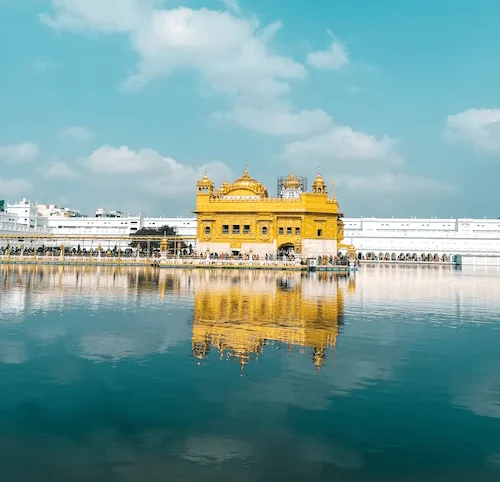

Short answer: Qutub Minar is the 72.5 m red-sandstone victory tower in Mehrauli, south Delhi, begun in 1199 and a UNESCO World Heritage Site since 1993. It opens at sunrise every day of the week, foreign visitors pay ₹600 at the counter or ₹550 online, under-15s go free, and 60–90 minutes covers the whole complex. You cannot climb the tower.
Quick answer — Qutub Minar for international visitors (checked 31 October 2026)
- Open: every day, from sunrise (about 06:40 in November, 07:15 in January). Delhi Tourism lists it as open until 8 pm, and the complex is lit after dark.
- Ticket: ₹600 for foreigners at the window, ₹550 if booked online on the ASI portal; Indian and SAARC/BIMSTEC citizens pay a much lower fee; children under 15 free.
- Time needed: 60–90 minutes; add an hour for Mehrauli Archaeological Park next door (free).
- Getting there: about 15 km south of Connaught Place and roughly 12–15 km from Delhi airport; Qutub Minar metro station (Yellow Line) is about 1.5 km away.
- Best slot: opening time on a weekday, or the last hour before sunset for warm light on the sandstone.
Plan this trip with a local operator
We fit Qutub Minar into a 1- or 2-day private Delhi tour with your own car and English-speaking driver, then carry on to Agra, Jaipur or the Himalaya. WhatsApp +91 70874 88961 (WhatsApp works internationally) or email info@suzutravels.com. Suzu Travels is an HP Tourism registered travel agent (Reg. No. DTO-MND-11-243/2022).
What is Qutub Minar, and why is it worth a stop?
Qutub Minar (also spelt Qutb or Qutab) is the tallest masonry tower in India: 72.5 m of fluted red and buff sandstone, with five storeys separated by carved balconies. Qutbu’d-Din Aibak, the first Sultan of Delhi, laid its foundation in 1199 as a victory tower and minaret; his successor Iltutmish added three more storeys between 1211 and 1236. UNESCO inscribed the “Qutb Minar and its Monuments” as a World Heritage Site in 1993, alongside Humayun’s Tomb in the same year.
The tower is only part of the visit. The walled complex around it holds the oldest surviving mosque in northern India, a 1,600-year-old iron pillar that has barely rusted, a domed gateway from 1311 and the tomb of Iltutmish. Together they show the first century of Islamic architecture in India, built partly from re-used Hindu and Jain temple columns that you can still see in the mosque cloisters. If you are travelling the Golden Triangle, it is the natural “before the Taj” stop: Humayun’s Tomb shows where Mughal garden tombs began, and Qutub Minar shows what came three centuries earlier.
What are Qutub Minar’s timings in 2026?
The complex opens at sunrise every day of the week. There is no weekly closing day, which makes it one of the Delhi sights to keep for a Monday, when the Red Fort, Akshardham and the Lotus Temple are shut (our Delhi tour plan uses exactly that swap). Delhi Tourism lists closing as 8 pm. ThePrint reported in May 2025 that Delhi’s illuminated ticketed monuments, Qutub Minar among them, now stay open in the evening, “mostly till 10 pm”. Ticket windows usually stop selling about 30 minutes before closing, so if you want an evening visit, arrive by 7 pm and confirm the day’s closing time at the gate.
Sunrise in Delhi moves by almost two hours across the year, and so does opening time. The table uses sunrise and sunset for the 15th of each month at the monument’s coordinates.
| Month | Sunrise (opens) | Sunset | What to expect |
|---|---|---|---|
| October | 06:22 | 17:51 | Warm days, clear evenings; smoke haze can start late in the month |
| November | 06:43 | 17:27 | Pleasant temperatures but often the worst air of the year |
| December | 07:06 | 17:26 | Cold mornings, fog possible; go late morning |
| January | 07:15 | 17:46 | Coldest month; dense fog can delay flights and trains |
| February | 07:00 | 18:11 | Clearer skies, comfortable all day; one of the best months |
| March | 06:31 | 18:29 | Warm and bright; school groups common |
| April–June | 05:56–05:23 | 18:46–19:19 | Hot; by May and June midday is punishing, so go at opening or after 17:30 |
| July–September | 05:33–06:06 | 19:20–18:26 | Monsoon showers and humidity; greenest time, fewest foreign visitors |
How much is the Qutub Minar ticket for foreigners?
Qutub Minar is a ticketed Archaeological Survey of India (ASI) monument. Foreign passport holders pay ₹600 at the ticket window or ₹550 when booked online through the ASI’s official booking portal, asi.paygov.org.in (roughly US$6–7 at about ₹95 to the dollar, late October 2026; approximate). Citizens of India and of the SAARC and BIMSTEC countries pay a much lower rate, and children under 15 enter free whatever their nationality. These are the same foreign rates the ASI charges at Fatehpur Sikri, which our Golden Triangle cost breakdown checked on 30 October 2026.
Two practical notes. First, an online ticket comes as a QR code you show on your phone at the gate, so booking ahead saves both the ticket queue and ₹50. Second, the central government proposed a revised list of ticketed ASI monuments in September 2026 (UNI, 9 September 2026), with Category A and B fee bands. If that list is adopted, prices could change at short notice, so check the ASI portal on the day you book. Still photography with a phone or camera is included; drones are not allowed, and commercial filming needs prior ASI permission.
Can you climb Qutub Minar?
No. The internal staircase of 379 steps has been closed to the public since December 1981, when a crush on the dark, narrow stairs during a power cut killed dozens of visitors, many of them schoolchildren. It has not reopened since, and there is no paid or special-access climb, whatever a tout outside the gate may suggest. The best views of the tower are from the lawns on its south and east sides, and from the Alai Darwaza steps looking north.
What should you see inside the complex?
Walk the complex in this order, which follows the paths from the entry gate and takes about an hour at an easy pace:
- Qutub Minar itself. Look up at the bands of Arabic calligraphy and the honeycomb (muqarnas) brackets under each balcony. The top two storeys are in white marble and sandstone; they were rebuilt by Firoz Shah Tughlaq after lightning damaged the tower in the 14th century.
- Quwwat-ul-Islam mosque. The first mosque built by the Delhi Sultanate, begun in the 1190s, and the oldest surviving mosque in northern India. The cloister pillars are carved Hindu and Jain temple columns, re-used; you can still see bells, garlands and figures on them.
- The Iron Pillar. About 7.2 m tall and dated to the 4th–5th century Gupta period, it stands in the mosque courtyard and has resisted rust for some 1,600 years. It is railed off now, so the old tradition of hugging it with your back to it is no longer possible.
- Alai Darwaza. The domed southern gateway added by Alauddin Khilji in 1311, with red sandstone and white marble inlay and pointed horseshoe arches. Most visitors rate it the most beautiful building in the complex.
- Alai Minar. Khilji’s unfinished rival tower, meant to be twice the height of Qutub Minar; only the rubble first storey, about 24 m, was built before he died.
- Tomb of Iltutmish. Behind the mosque, the 1230s tomb of the second sultan, roofless today, with richly carved interior walls.
How do you get to Qutub Minar?
The complex is in Mehrauli, south Delhi, about 15 km from Connaught Place and roughly 12–15 km from Indira Gandhi International Airport, which makes it a good first or last stop on an arrival or departure day. By car the drive from central Delhi takes 40–60 minutes depending on traffic; drivers drop you in the parking area by the main gate. A private car with driver is the easiest way to combine it with Humayun’s Tomb and the Lotus Temple, which are 13–15 km apart and badly connected by public transport.
By metro, take the Yellow Line to Qutub Minar station. The monument is about 1.5 km from the station: a 20-minute walk along a busy road, or a short auto-rickshaw or e-rickshaw ride. Agree the fare before you get in; our guide to common tourist scams in India covers the usual tricks around monument gates. Uber and Ola work well here and remove the haggling.
How long do you need, and what can you pair it with?
Allow 60–90 minutes for the complex itself and two hours if you add Mehrauli Archaeological Park, which starts just south of the boundary wall. The park is free and unticketed, and its paths lead to the Jamali Kamali mosque and tomb (1520s), the stepwell of Rajon ki Baoli and the tomb of Balban, one of the earliest true arches in India. It is shaded, quiet and far less visited, but go in daylight and in company.
Three ways to fit Qutub Minar into a Delhi day:
- South Delhi morning: Qutub Minar at opening, Mehrauli park, lunch in Mehrauli or Hauz Khas, then Humayun’s Tomb in the afternoon light.
- Arrival or layover day: straight from the airport to Qutub Minar, then hotel. Leaving the airport needs a valid Indian visa; apply only at the official site, as explained in our India e-Visa guide.
- Evening visit: Old Delhi in the morning, Humayun’s Tomb after lunch, Qutub Minar at sunset and after dark when it is lit.
From Delhi, most first-timers continue to Agra; our Taj Mahal at sunrise guide covers gate choice and timings for the next morning.
What should you know before you go?
- Dress: no formal dress code, but shoulders and knees covered is respectful, and you will walk a lot on uneven stone.
- Air quality: the UK Foreign Office warns that severe air pollution is a major health hazard in north Indian cities from October to February. If you have asthma or a heart or lung condition, check the daily AQI and ask your doctor before a winter trip.
- Guides: only hire guides who can show an official licence; a licensed guide makes the mosque carvings far more interesting. Our tipping guide lists sensible amounts.
- Facilities: toilets and drinking water are available inside the complex; bring a hat in summer, as there is little shade.
- Crowds: Qutub Minar is among India’s most visited monuments; ThePrint put 2023–24 visitors at 2.2 lakh (220,000) foreign and 3.1 million domestic. Weekends and public holidays are busiest.
Frequently asked questions
Is Qutub Minar open on Mondays?
Yes. Qutub Minar opens every day of the week from sunrise, with no weekly closing day. That makes it a good Monday choice in Delhi, when the Red Fort, Akshardham and the Lotus Temple are closed. Opening times follow sunrise, from about 05:25 in June to 07:15 in January, and Delhi Tourism lists closing as 8 pm; confirm the evening closing time at the gate.
How much is the Qutub Minar entry fee for foreigners?
Foreign visitors pay ₹600 at the ticket counter or ₹550 if they book online through the ASI’s official portal, roughly US$6–7. Children under 15 enter free. Indian and SAARC/BIMSTEC citizens pay a lower fee. A revised ASI ticket list was proposed in September 2026, so check the official portal before you go in case rates change.
Can you go up Qutub Minar?
No. The 379-step internal staircase has been closed to visitors since a deadly crush on the stairs in December 1981, and there is no paid or special access to climb it. You see the tower from the lawns and paths around its base, where the carved bands and balconies are clearest in morning or late-afternoon light.
How much time do you need at Qutub Minar?
Most visitors need 60–90 minutes to see the tower, the Quwwat-ul-Islam mosque, the Iron Pillar, Alai Darwaza and Iltutmish’s tomb at an easy pace. Add about an hour if you also walk through Mehrauli Archaeological Park next door, which is free and holds the Jamali Kamali mosque and Rajon ki Baoli stepwell.
Which metro station is nearest to Qutub Minar?
Qutub Minar station on the Yellow Line is the nearest. The monument is about 1.5 km away, around 20 minutes on foot along a busy road, so most visitors take a short auto-rickshaw, e-rickshaw or app cab from the station. From central Delhi, a car takes 40–60 minutes depending on traffic.
Qutub Minar or Humayun’s Tomb if I only have time for one?
If you will see the Taj Mahal later, Humayun’s Tomb shows you the Mughal garden tomb that inspired it, so it adds context. Qutub Minar is older and completely different, Sultanate-era rather than Mughal, with the tower, the iron pillar and carved temple columns. With a car and driver, both fit easily into one day.
Plan your Delhi days with a local operator
Tell us your arrival date and how many days you have. We will send a plan that puts Qutub Minar, Humayun’s Tomb and Old Delhi in a sensible order, then continues to the Taj and Jaipur on our Golden Triangle tour or to the Himalaya from our India tours page. WhatsApp +91 70874 88961 (works internationally) · info@suzutravels.com · HP Tourism registered travel agent.
Sources: UNESCO World Heritage List entry 233 (Qutb Minar and its Monuments); Delhi Tourism, Qutab Minar page (via fact pack fetched 28 October 2026); ThePrint, “Qutab Minar, Sunder Nursery…” 24 May 2025; UNI, 9 September 2026 (proposed revised list of ticketed ASI monuments); UK FCDO India travel advice, health (updated 7 October 2026); sunrise and sunset calculated for 28.524°N, 77.186°E. Fees and hours change; confirm on the ASI portal before travel.