
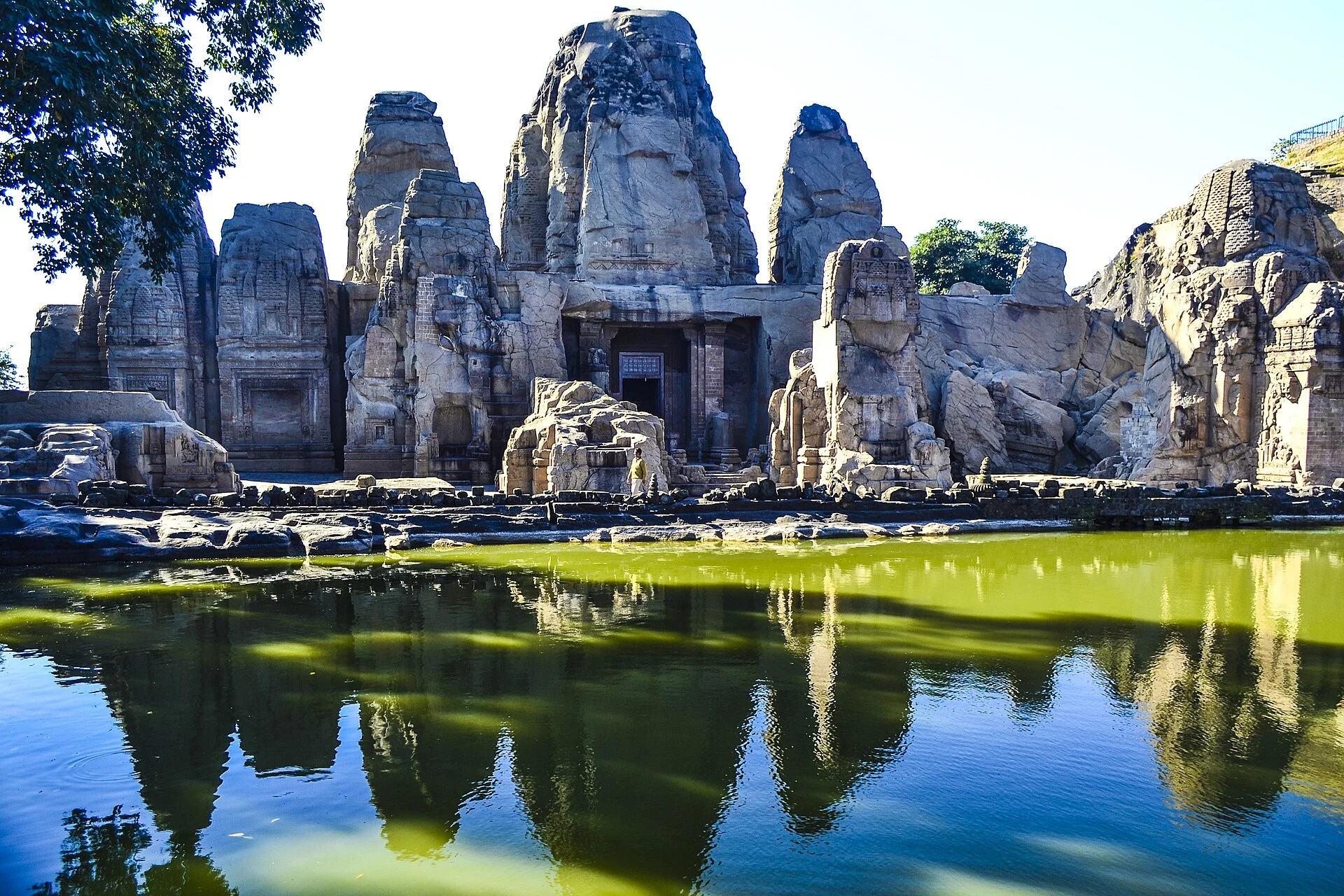
Masroor: a temple carved out of a hill, facing the Dhauladhar
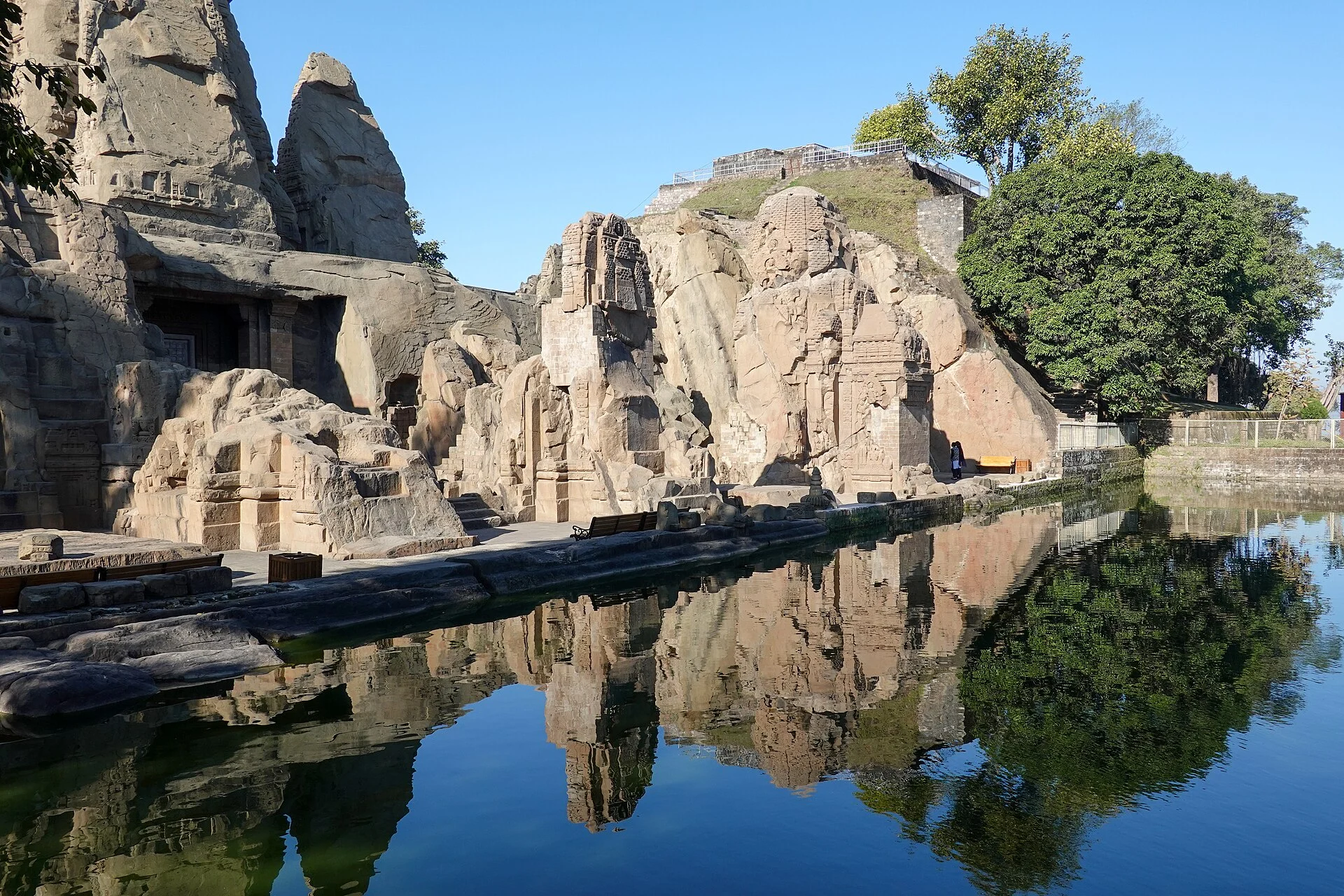
A rare group of monolithic, rock-cut Hindu shrines in the Kangra hills, often compared with Ellora — carved in about the 8th century from a single sandstone ridge, with a sacred tank that mirrors the snow peaks.
- ~8th c. carved
- Monolithic one sandstone ridge
- ASI protected monument
- ~40 km from Dharamshala
Photo: Akashdeep83, CC BY-SA 3.0
Updated November 2026 · HP Tourism registered travel agent · Reg. No. DTO-MND-11-243/2022 · certificates
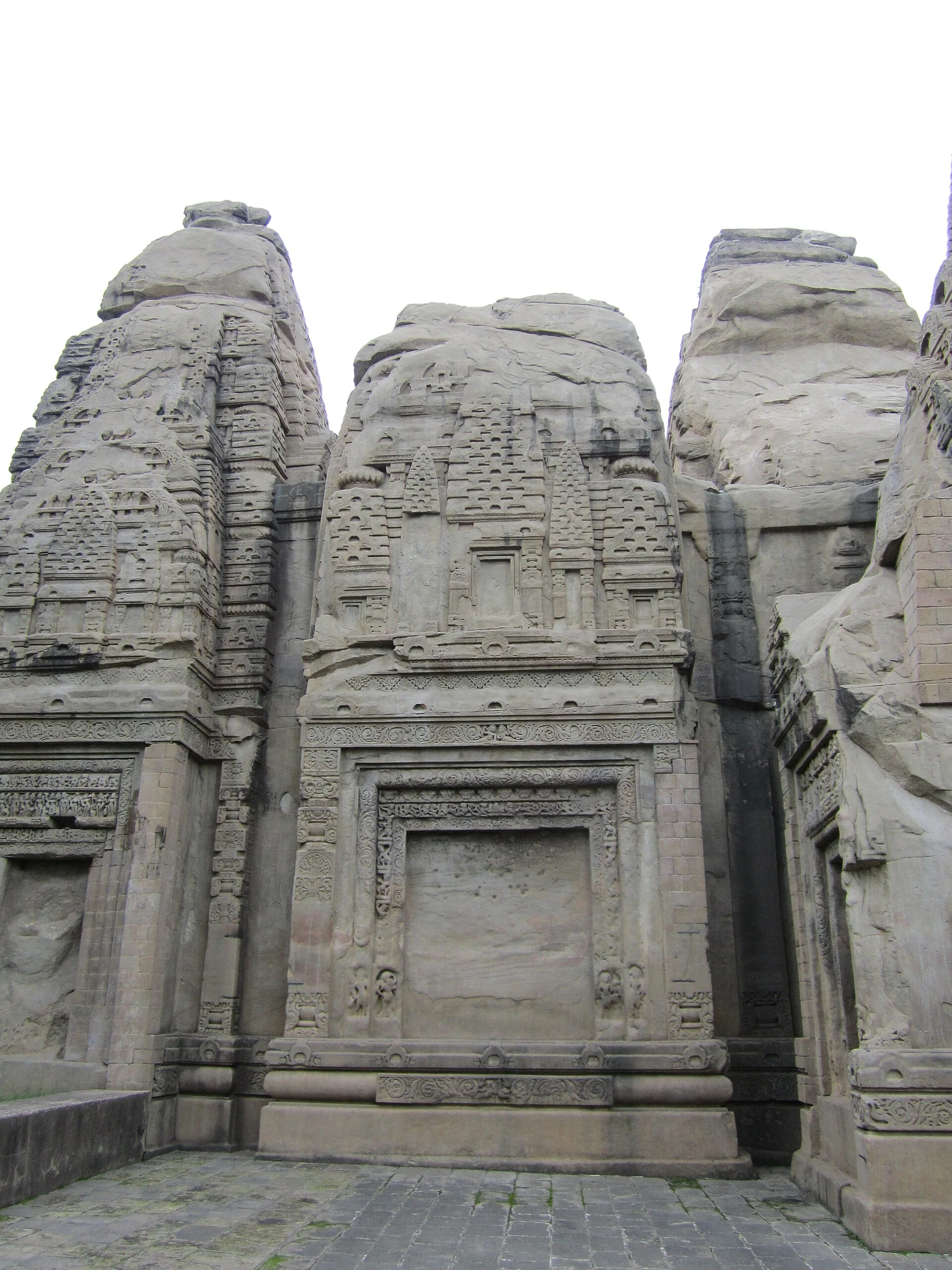
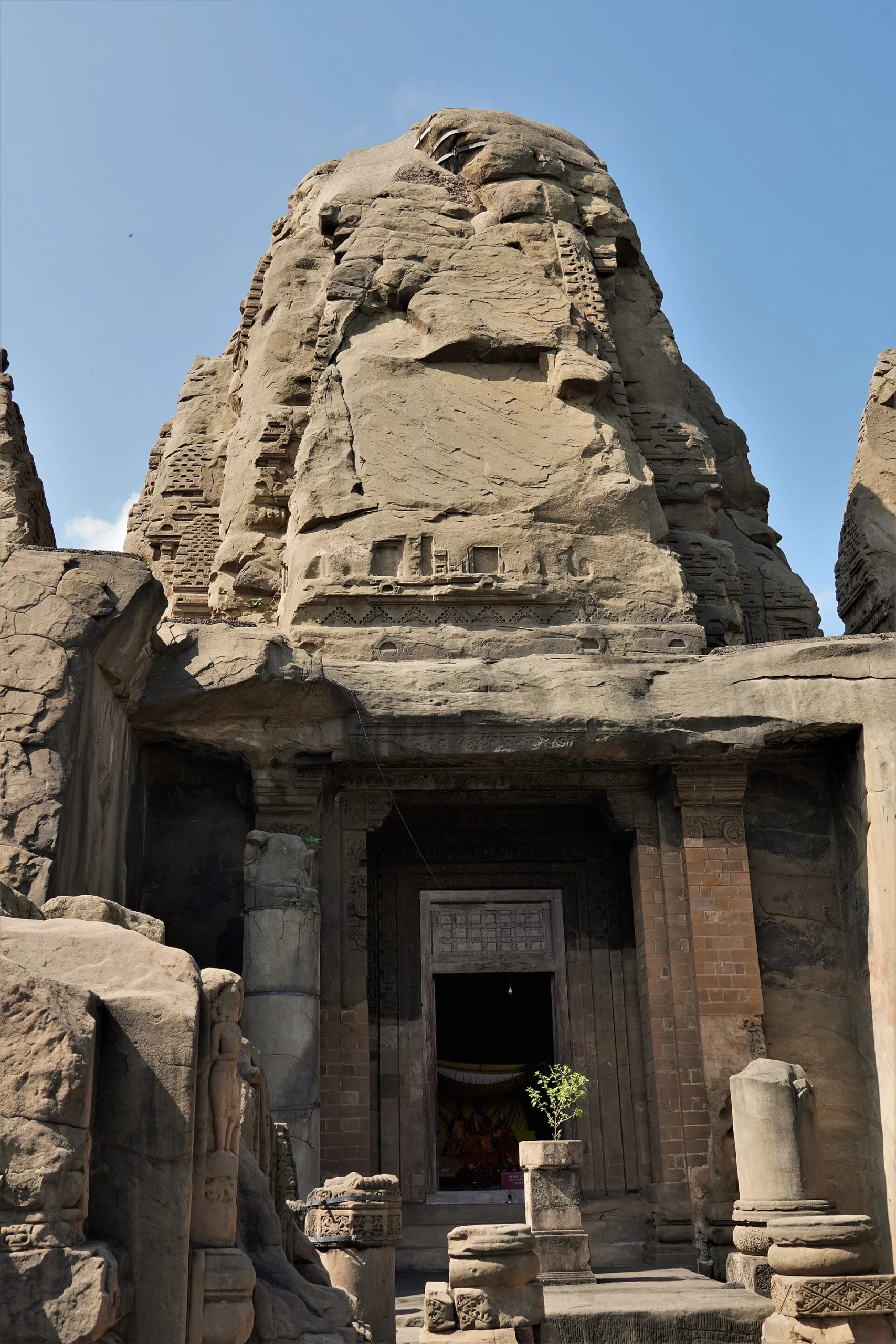
The Masroor rock-cut temples are a group of Hindu shrines carved in about the 8th century CE out of a single sandstone ridge, in the Kangra valley about 40 km south-west of Dharamshala. They are in the North Indian Nagara style, carved from the top down like the much larger Kailasa at Ellora, and face east across a rectangular water tank towards the snowy Dhauladhar. The work was never fully finished, and the 1905 Kangra earthquake damaged many of the spires and carvings. The site is protected by the Archaeological Survey of India (ASI); it is usually open from sunrise to sunset, with a small entry fee for visitors. Allow 1–2 hours, and combine it with Kangra Fort (about 35 km) in one day.
- DateAbout the 8th century CE (dates proposed vary).
- StyleNagara, monolithic — carved from a single sandstone ridge.
- Distance~40 km from Dharamshala, ~35 km from Kangra town, ~15 km from Nagrota Surian.
- TimingsUsually sunrise to sunset; small ASI entry fee — check at the gate.
- Best monthsOctober – April; the Dhauladhar is snow-capped from December.
Kangra and Dharamshala weather today
Masroor is at about 800 m in the Kangra valley — milder than Dharamshala above. Current temperature and the next days’ high, low and rain.
Forecast data: MET Norway (CC BY 4.0), refreshed about once a day — last update —.
The history of the Masroor temples
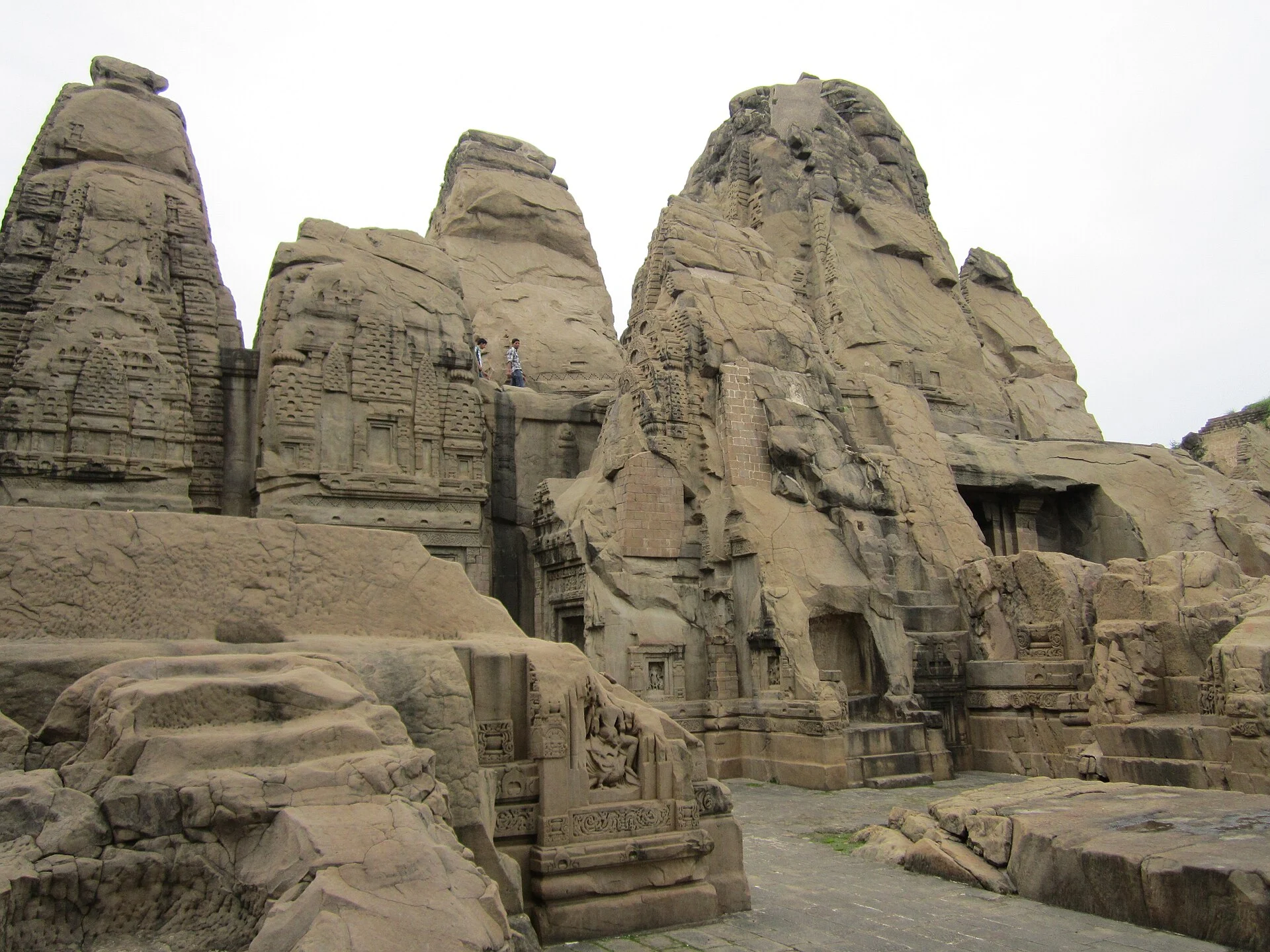
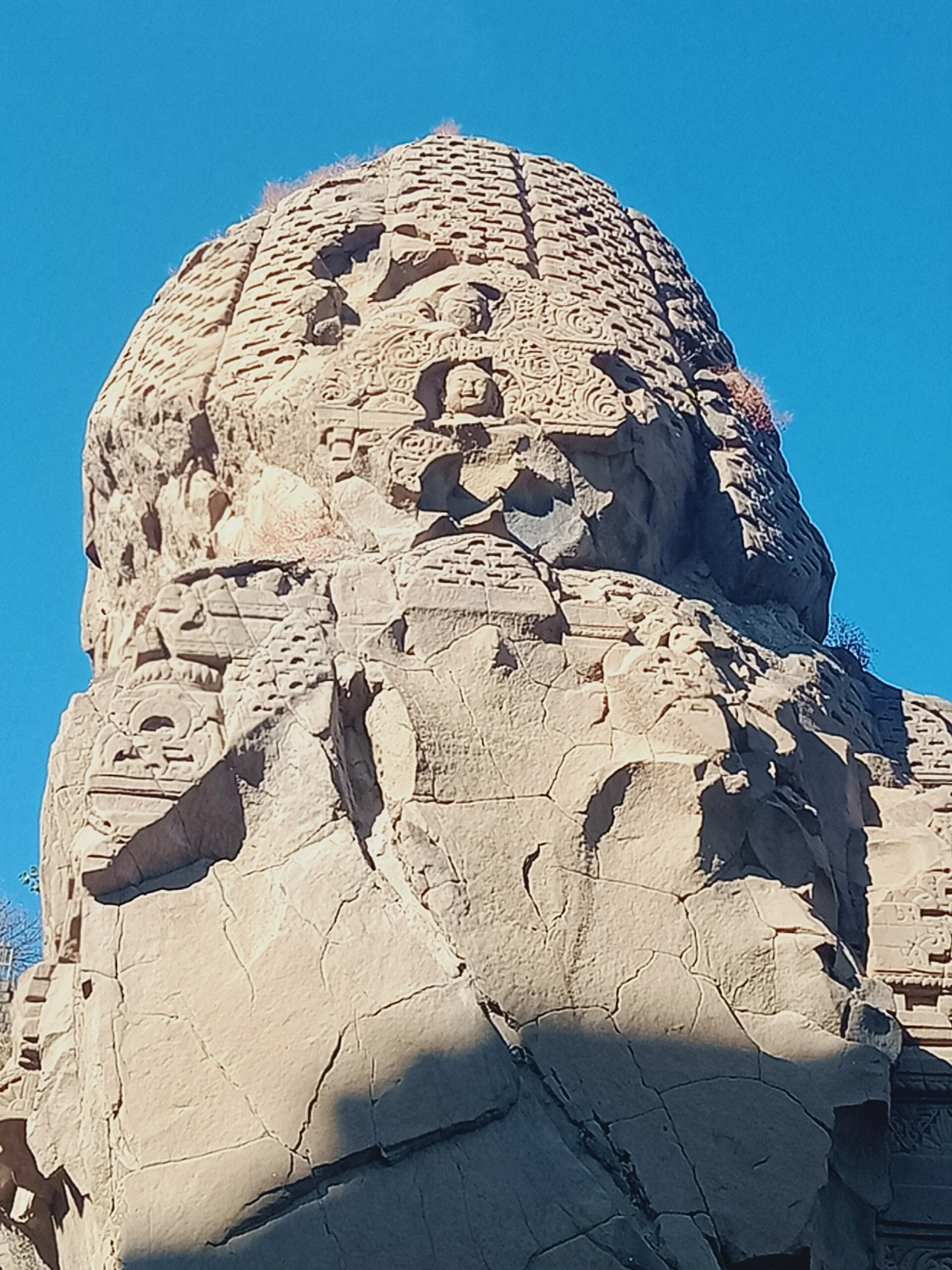
There are no inscriptions at Masroor, so its date comes from the style of the carving; most scholars place it in about the 8th century CE. The temples were carved downward from the crown of a natural sandstone ridge, so that the shrines, spires and halls are all one piece of rock — a technique known in India mainly from Ellora and a few sites in the south, and very rare in the Himalaya.
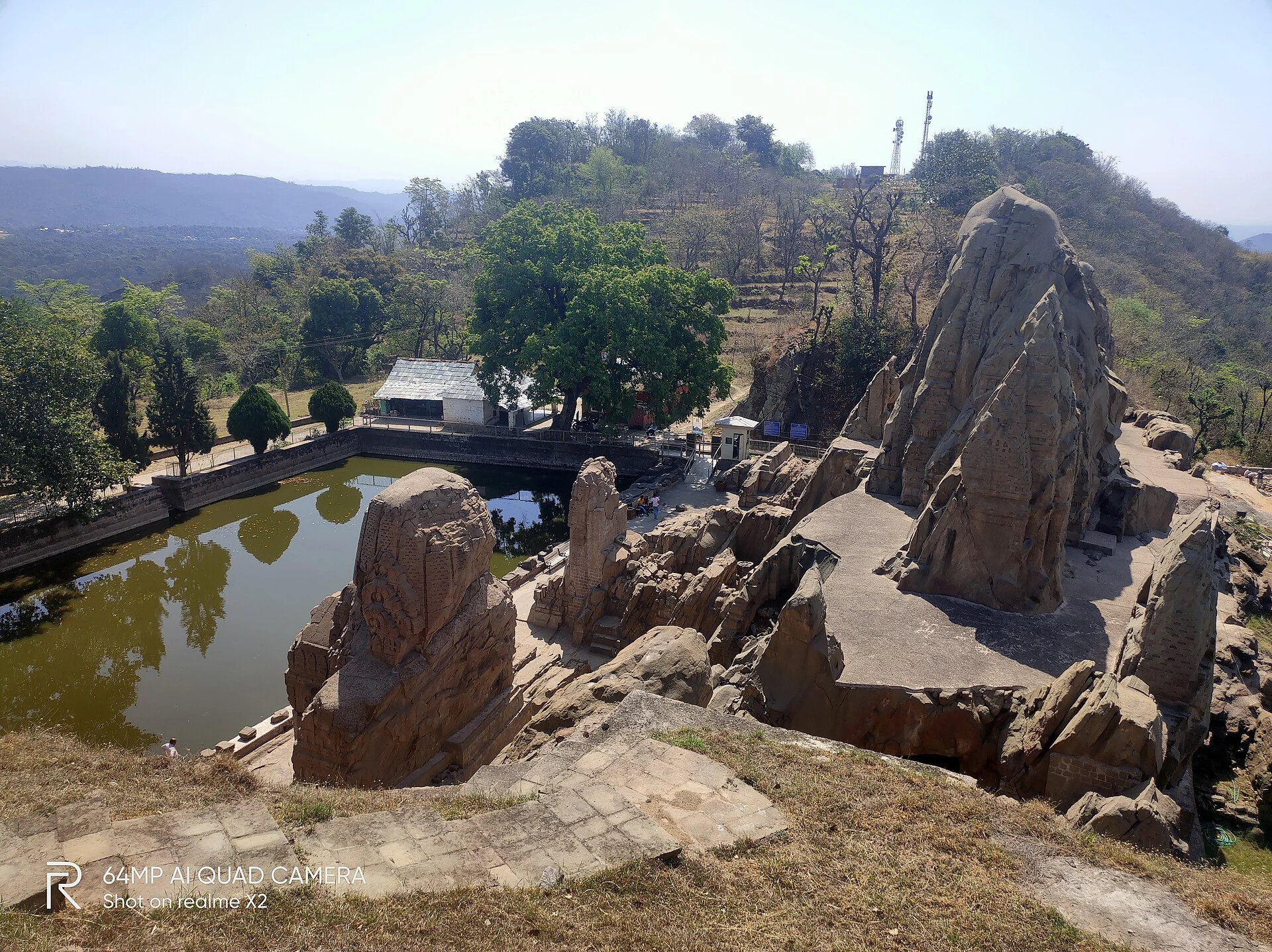
The plan seems to have been a central shrine surrounded by smaller ones in a symmetrical mandala, with a tank in front. It was left unfinished. Much of the outer carving was shaken loose in the great Kangra earthquake of 4 April 1905. The site was brought to wide attention by British surveys in the early 20th century and is now a monument of national importance under the ASI.
What to see at Masroor
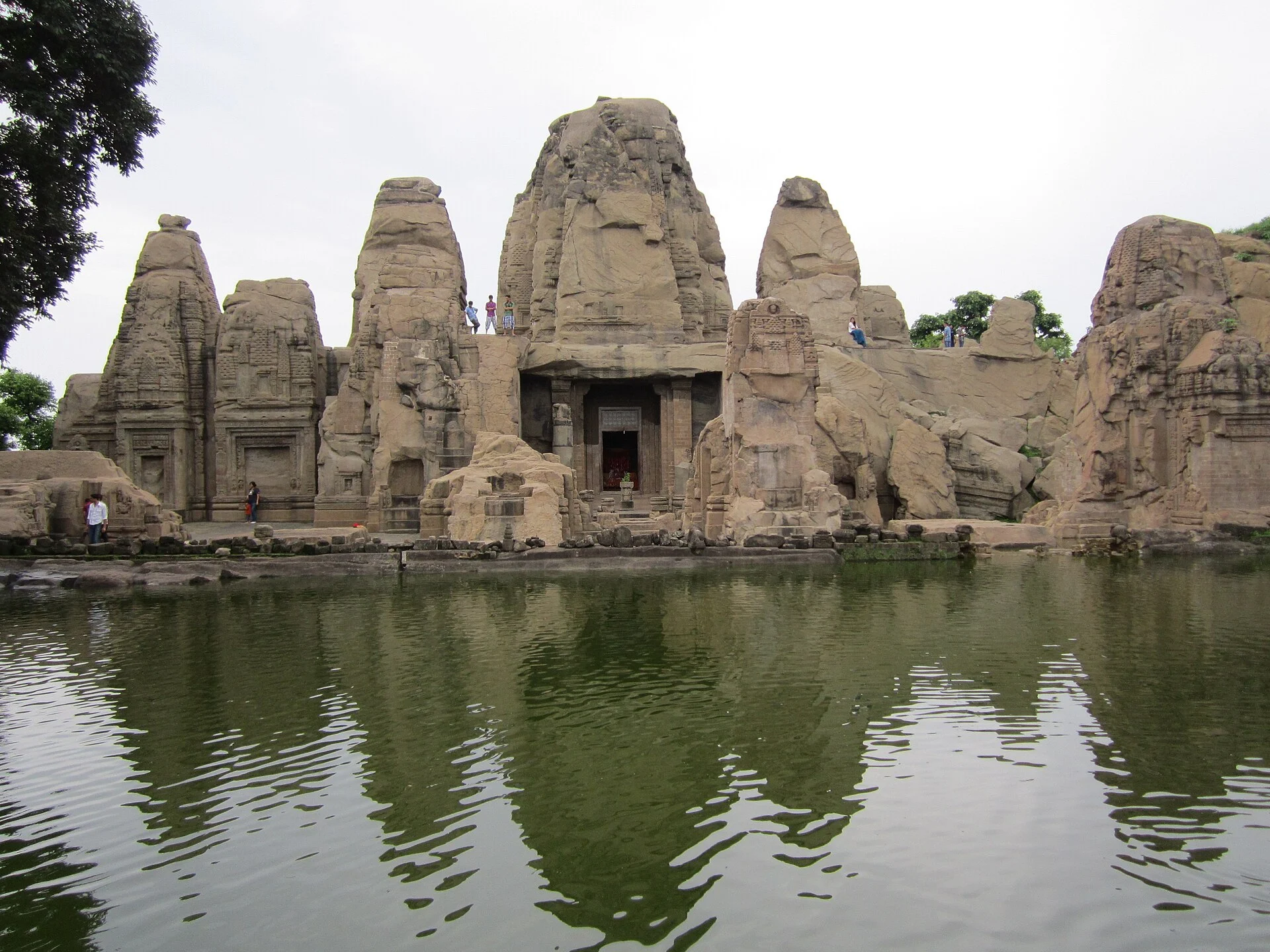
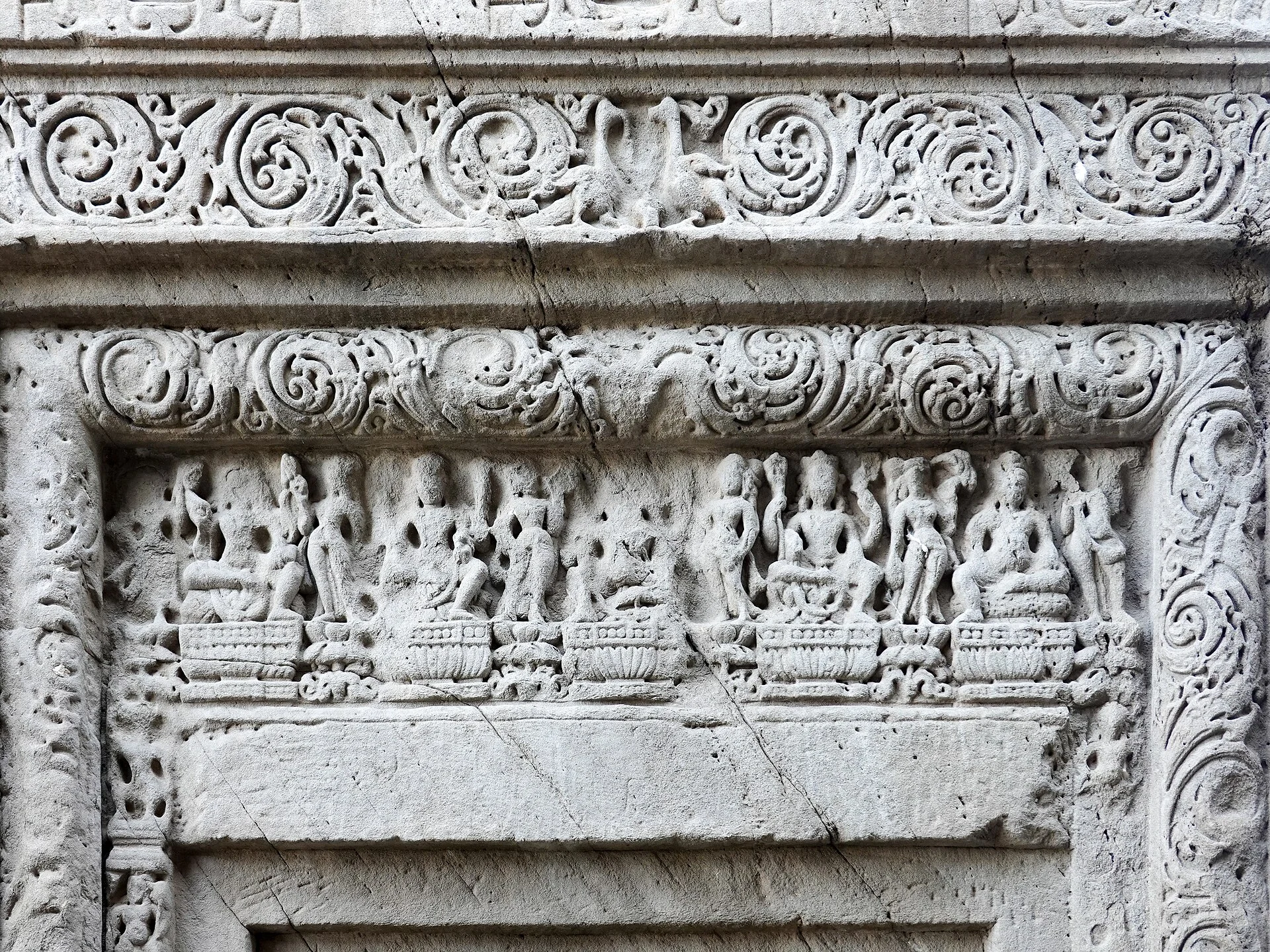
Walk round the tank first for the classic view of the temples reflected in the water with the Dhauladhar behind (best on a clear winter morning). Then climb the steps to the main shrine, which today holds images of Rama, Lakshmana and Sita, and look closely at the friezes, door frames and fallen spire pieces. A stair cut in the rock leads to the roof for a view over the valley.
| Season | What to expect |
|---|---|
| October – February | Clear skies; snow on the Dhauladhar; best photographs |
| March – June | Warm, getting hot by May–June; go early |
| July – September | Monsoon rain; green but hazy views |
How to reach Masroor
Masroor is on a side road off the Kangra–Nagrota Surian route, about 40 km from Dharamshala (about 1.5 hours by car), about 35 km from Kangra town and about 15 km from Nagrota Surian. Public buses are infrequent, so most visitors come by car. The nearest airport is Gaggal (Kangra); the nearest railhead is Nagrota Surian on the narrow-gauge Kangra Valley line, and Pathankot for broad gauge.
Most people combine Masroor with Kangra Fort on a day out from Dharamshala or McLeod Ganj. Valley weather: Kangra weather.
The Masroor temples in pictures
The temples and their tank, the carving, the friezes and the main shrine — real photographs, each credited to its photographer.
Around Kangra
Pair Masroor with these.
Our Kangra and Dharamshala trips
Hotels, meals and a private car — one written quote.
Planning Kangra and Masroor?
Tell us your dates and group. We plan a day for Kangra Fort and Masroor from Dharamshala, or a full Kangra valley trip, and send one written quote with hotel, meals and a private car. Suzu Travels is a travel agent registered with HP Tourism, based in Bilaspur, Himachal Pradesh.
Masroor temple: frequently asked questions
How old is the Masroor rock-cut temple?
It is generally dated to about the 8th century CE, from the style of its carving; there are no inscriptions.
Why is Masroor called the 'Himalayan Ellora'?
Because, like the Kailasa temple at Ellora, it was carved downward out of a single rock rather than built from blocks.
How far is Masroor from Dharamshala?
About 40 km, roughly 1.5 hours by car.
What are the Masroor temple timings?
Usually sunrise to sunset. A small ASI entry fee applies; check the current fee at the gate.
What damaged the Masroor temples?
Mainly the Kangra earthquake of 4 April 1905.
Can I visit Masroor and Kangra Fort on the same day?
Yes — they are about 35 km apart and make an easy day from Dharamshala.
Sources
- Wikipedia: Masrur Temples
- Wikipedia: 1905 Kangra earthquake
- MET Norway Locationforecast (CC BY 4.0) — live forecast data
Photo credits
Masroor temples and their tank — Photo: Akashdeep83, CC BY-SA 3.0 · The temple and the water tank — Photo: Kartik Gupta, CC BY-SA 3.0 · The temple front — Photo: Kartik Gupta, CC BY-SA 3.0 · Carving on the rock — Photo: Kartik Gupta, CC BY-SA 3.0 · The temples from the side — Photo: Timothy Gonsalves, CC BY-SA 4.0 · A carved frieze — Photo: Timothy Gonsalves, CC BY-SA 4.0 · The temple complex from above — Photo: Ranaa0096, CC BY-SA 4.0 · The main shrine — Photo: Dhruvaeng, CC BY-SA 4.0 · A carved spire — Photo: Brahmavadini, CC BY 4.0