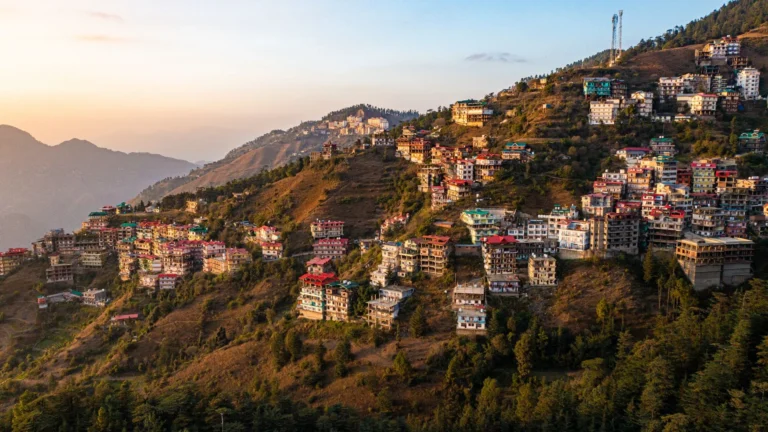
Sangla weather: today, this week and through the year
Live temperature and a five-day forecast for Sangla, Chitkul and Kalpa, month-by-month temperatures and snow, when the road to Chitkul closes, and the best time to visit the Baspa valley.
- ~2,680 m Sangla
- ~3,450 m Chitkul
- Dec–Feb heavy snow
- Live 3 places
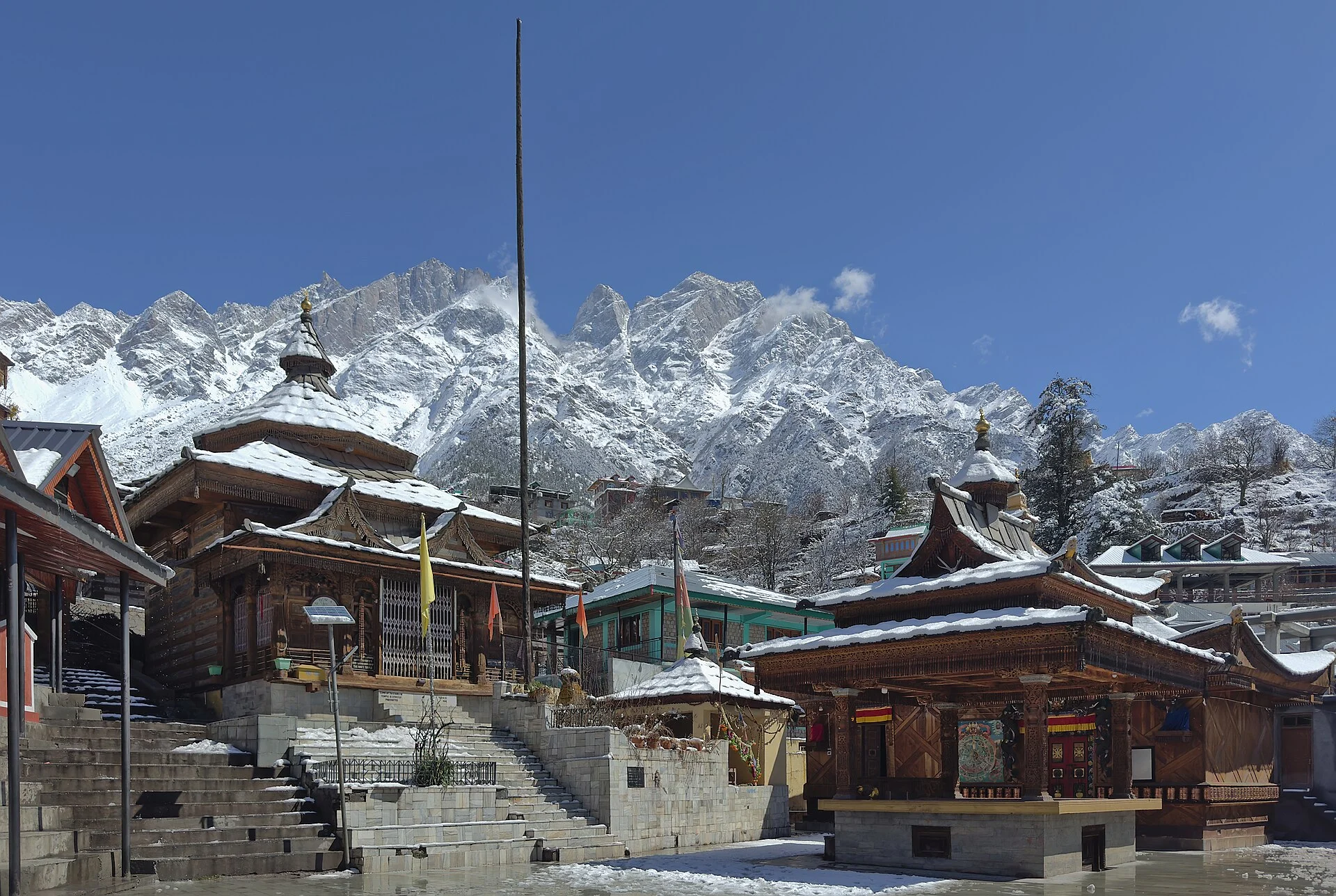
Photo: UnpetitproleX, CC BY-SA 4.0
Updated November 2026 · HP Tourism registered travel agent · Reg. No. DTO-MND-11-243/2022 · certificates
Sangla (about 2,680 m) is the main village of the Baspa valley in Kinnaur; Chitkul, about 26 km further up, is at about 3,450 m. Sangla’s weather is close to Kalpa’s: by India Meteorological Department averages for Kalpa (1991–2020), January is about 5 °C by day and −4 °C at night, and June–July about 23 °C. Snow falls from about December to February, often heavily, and the road on to Chitkul can close for days after a big fall. March is the wettest month. The best months are April–June and September–October, when the apple harvest fills the valley.
- ColdestJanuary — about 5° / −4 °C (Kalpa reference).
- WarmestJune–July — about 23° / 10–13 °C.
- SnowDecember–February; Chitkul road can close.
- Apple seasonSeptember–October.
- Best monthsApril–June, September–October.
Sangla, Chitkul and Kalpa weather today
Sangla (about 2,680 m), Chitkul (about 3,450 m) and Kalpa (about 2,960 m) — current temperature and the next days’ high, low, rain and snow.
Forecast data: MET Norway (CC BY 4.0), refreshed about once a day — last update —.
Sangla weather by month
Sangla has no published IMD averages. Kalpa, across the Sutlej at about 2,960 m, has a long India Meteorological Department record, so the table gives Kalpa’s 1991–2020 normals as the reference. Sangla is about 300 m lower and usually a degree or two milder; Chitkul, 800 m higher, is several degrees colder and snowier.
| Month | Avg max / min (Kalpa IMD) | Rain & snow | What to expect in Sangla |
|---|---|---|---|
| January | 5.2° / −3.8 °C | 95 mm | Bitter cold; snow |
| February | 6.7° / −2.9 °C | 104 mm | Snow; very cold |
| March | 11.5° / 0.4 °C | 147 mm | Wettest; late snow |
| April | 17.0° / 4.0 °C | 65 mm | Pleasant; apple blossom |
| May | 20.7° / 6.8 °C | 57 mm | Pleasant |
| June | 22.8° / 10.1 °C | 36 mm | Most comfortable |
| July | 22.8° / 12.9 °C | 52 mm | Light monsoon; rockfall on roads |
| August | 22.3° / 12.6 °C | 51 mm | Light monsoon |
| September | 21.0° / 9.2 °C | 67 mm | Apple harvest; skies clearing |
| October | 18.5° / 4.1 °C | 24 mm | Clearest; autumn colours |
| November | 14.4° / 1.2 °C | 28 mm | Dry and cold |
| December | 9.3° / −1.6 °C | 35 mm | Cold; snow begins |
Kalpa IMD normals (1991–2020) shown as a reference for Sangla. Full Kinnaur figures: Kinnaur weather.
Snow in Sangla and the road to Chitkul
Snow usually arrives in December and is heaviest in January and February, when the orchards and wooden houses of Sangla, Kamru and Batseri lie under a thick white layer. The 26 km road from Sangla to Chitkul, through Rakchham, can close for days after heavy snow; in deep winter, check before you plan Chitkul and keep a buffer day.
Sangla is reached from the main Hindustan–Tibet road at Karcham, about 18 km below the village. The Kinnaur highway itself is open most of the winter, but fresh snow and rockfall can hold up traffic for hours.
Nearby weather: Kinnaur weather (Kalpa and Chitkul) · Rampur weather · Spiti in winter.
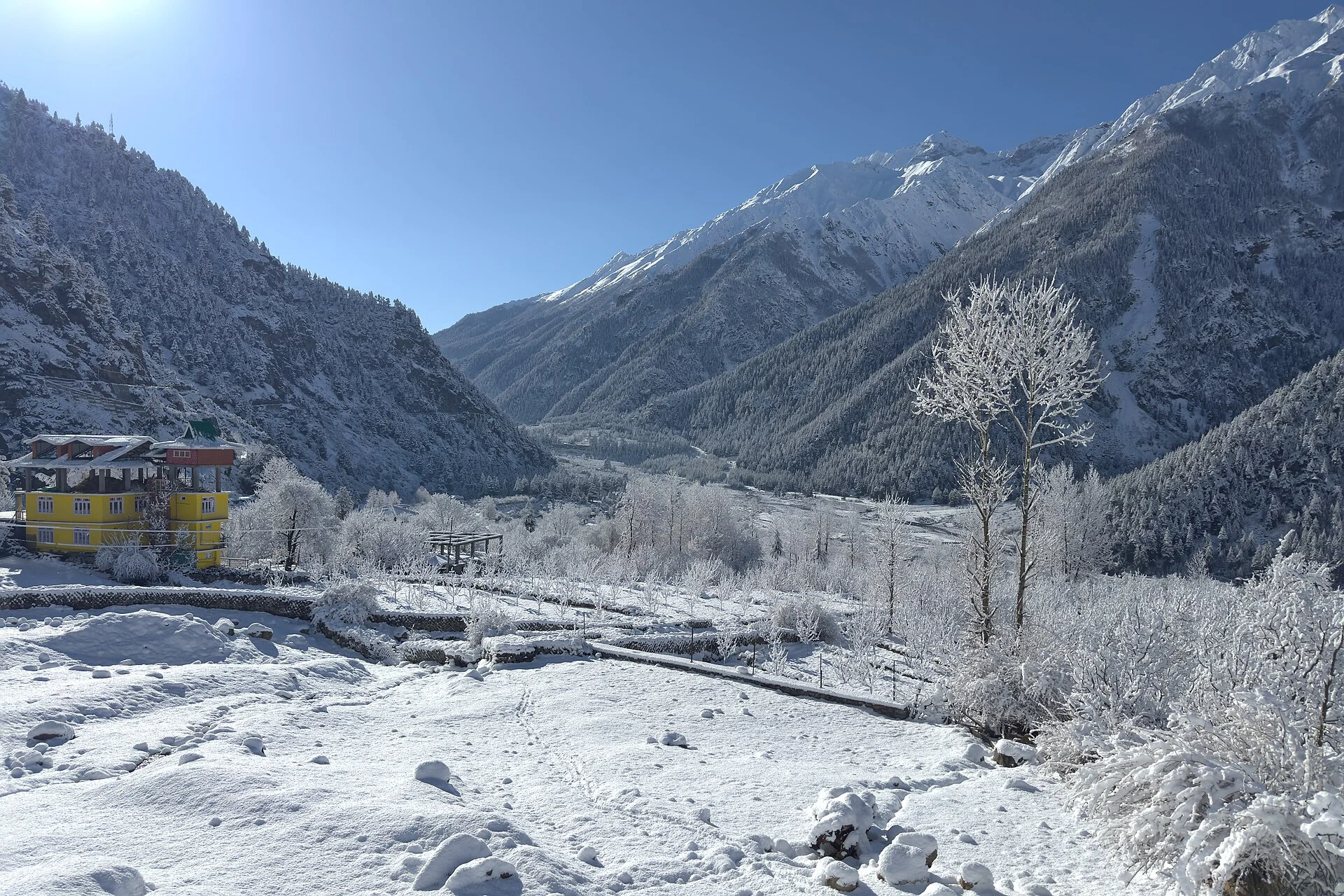
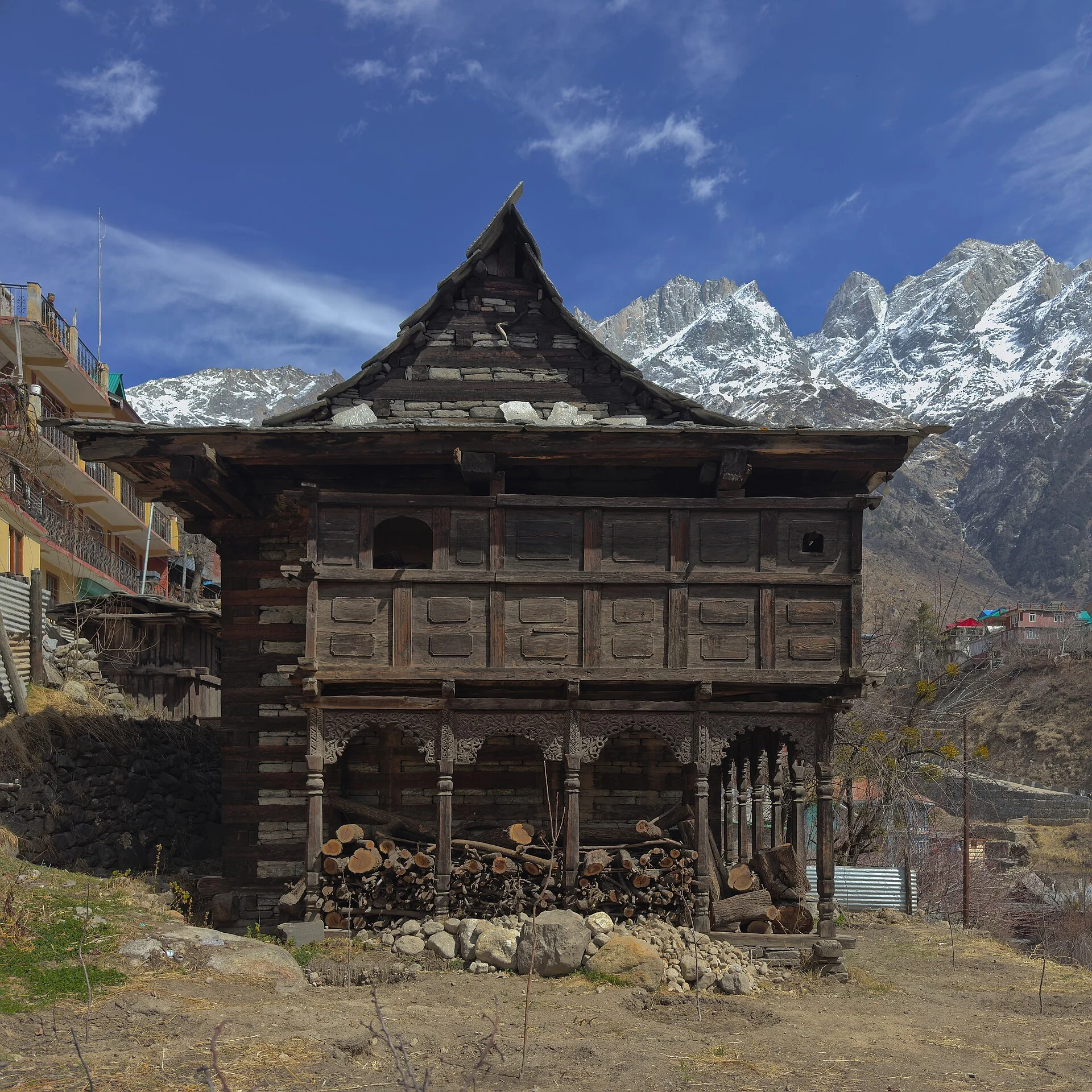
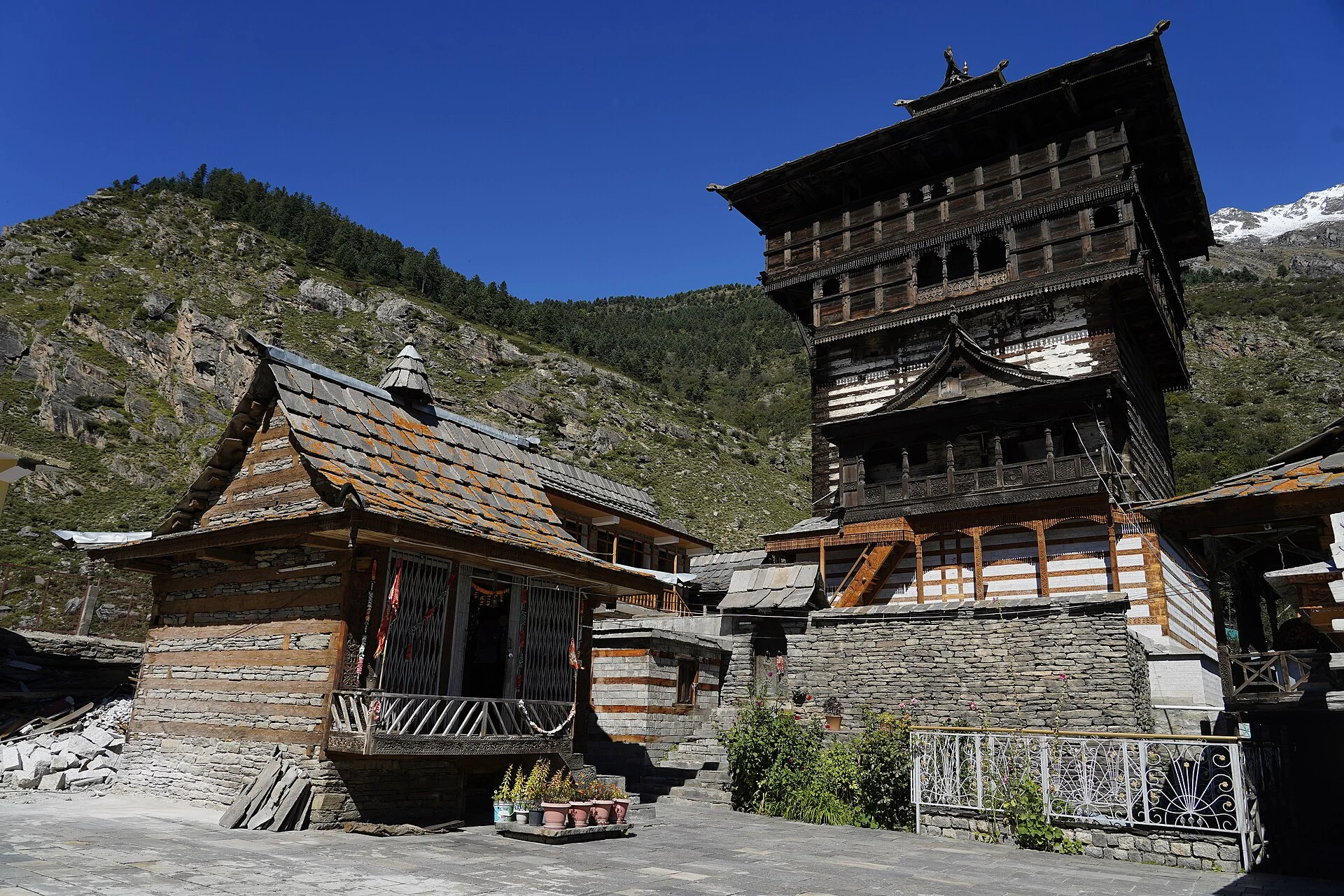
Sangla in pictures
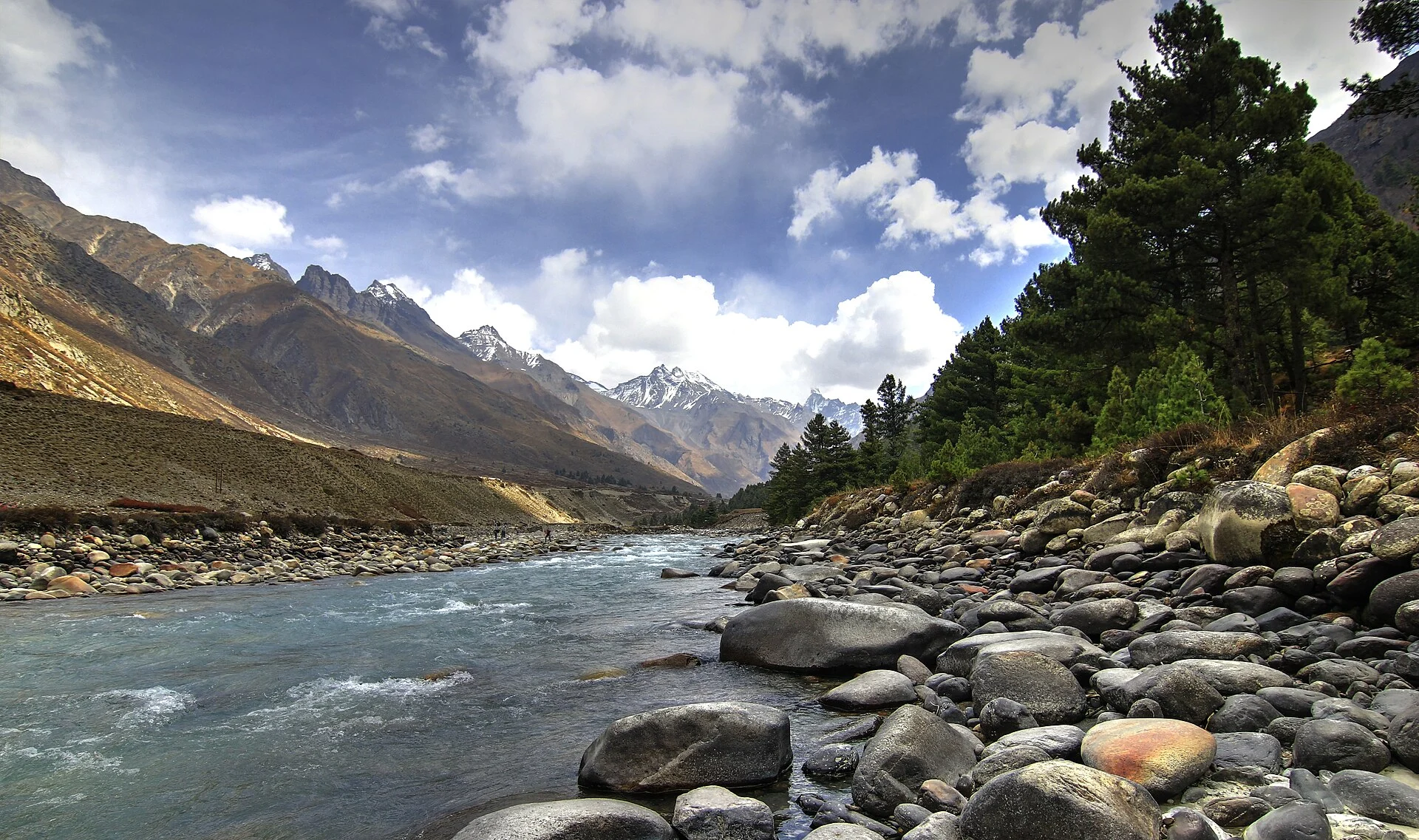
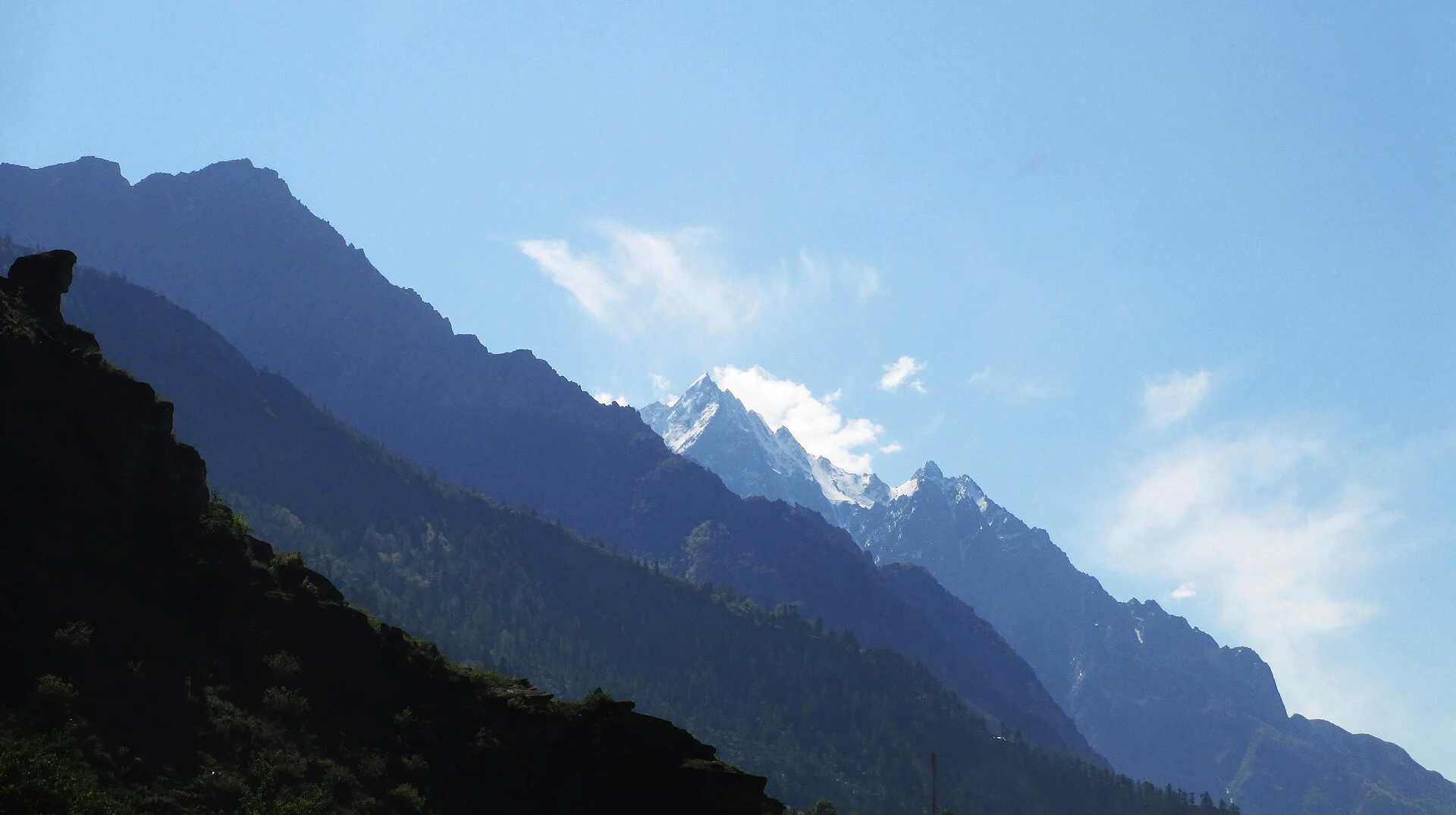
Sangla under snow, Kinnauri houses, Kamru fort, Bering Nag temple and the Baspa at Chitkul — real photographs, each credited to its photographer.


Best time to visit Sangla and Chitkul
Depending on what you are going for.
Apple harvest
Orchards full; clear skies.
Pleasant weather
Blossom in April; mild days.
Snow
Heavy snow; Chitkul road may close.
Clear mountain views
Driest months.
Chitkul trip
Road reliably open.
Take care
Rockfall on the Kinnaur road.
Sangla trip: what the weather means for you
Clothing: warm layers all year for the evenings; full winter wear from November to March; a warm jacket for Chitkul in any month.
Getting there: Sangla is about 225 km from Shimla, via Narkanda, Rampur and Karcham — a long day’s drive. In winter, start early and stop for the night at Sangla rather than pushing on to Chitkul late in the day.
Our Kinnaur trips
Hotels, meals and a private car in one quote.
Planning Sangla or Chitkul?
Tell us your dates, where you are starting from and how many of you are travelling. We check the weather and whether the Chitkul road is open, and send a written quote with stays and a private car. Suzu Travels is a travel agent registered with HP Tourism, based in Bilaspur, Himachal Pradesh.
Sangla weather: frequently asked questions
What is the weather in Sangla today?
The top of this page shows the current temperature and the next days’ forecast for Sangla, Chitkul and Kalpa (MET Norway data).
Does it snow in Sangla?
Yes — usually from December to February, often heavily.
Is the road to Chitkul open in winter?
It is open on most days, but can close for days after heavy snow. Check before you go and keep a buffer day.
How cold is Sangla in December?
About 9–11 °C by day and around −1 °C at night on average (Kalpa IMD reference); colder after snow.
When is the best time to visit Sangla?
April–June for pleasant weather and September–October for the apple harvest and clear skies; December–February for snow.
How far is Chitkul from Sangla?
About 26 km, via Rakchham.
Sources
- MET Norway Locationforecast (CC BY 4.0) — live forecast data
- India Meteorological Department — Kalpa normals 1991–2020 (reference)
- Wikipedia: Sangla
Photo credits
A snowy morning in Sangla — Photo: UnpetitproleX, CC BY-SA 4.0 · The Baspa valley at Sangla — Photo: UnpetitproleX, CC BY-SA 4.0 · Orchards in snow — Photo: UnpetitproleX, CC BY-SA 4.0 · A traditional Kinnauri house — Photo: UnpetitproleX, CC BY-SA 4.0 · Kamru fort — Photo: Amitabha Gupta, CC BY-SA 4.0 · Bering Nag temple — Photo: UnpetitproleX, CC BY-SA 4.0 · The valley towards Chitkul — Photo: Marsmux, CC BY-SA 4.0 · The Baspa at Chitkul — Photo: Sukanya Ray, CC BY-SA 4.0 · Sangla and its peaks — Photo: Sushanthunt, CC BY-SA 4.0