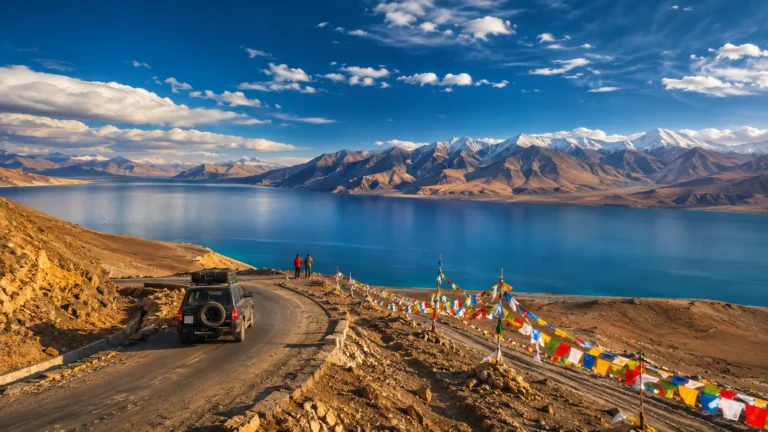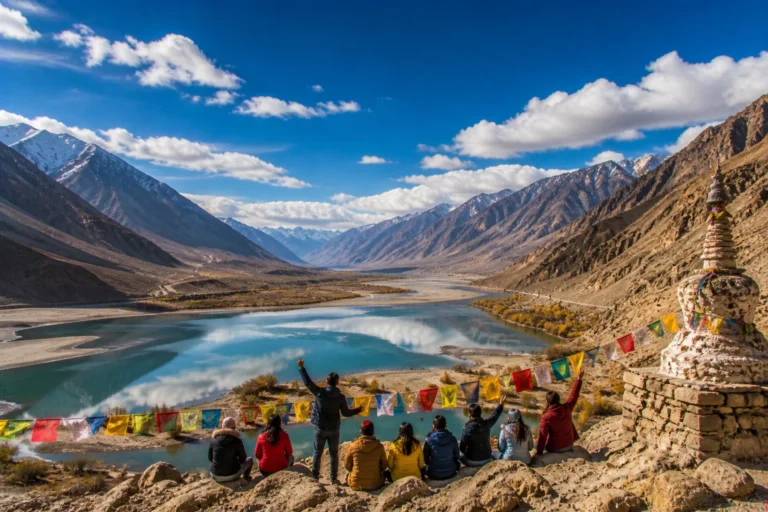

Standing at the edge of the world’s highest motorable pass, I watched a group of trekkers emerge from the mist-covered trails of Nubra Valley, faces glowing with that unmistakable post-adventure satisfaction. Minutes later, a convoy of SUVs rumbled past, their passengers snapping photos through panoramic sunroofs with wide-eyed wonder. This scene perfectly captures the eternal debate that has puzzled countless Ladakh travelers: trekking vs driving tours in Ladakh — which experience truly delivers?
I’ve spent months exploring this Trans-Himalayan wonderland, sometimes on foot and sometimes behind the wheel of a comfortable SUV. What I’ve discovered might surprise you. The answer isn’t as straightforward as most travel blogs suggest. Both options offer radically different — yet equally valid — ways to experience Ladakh’s otherworldly landscapes.
Understanding Ladakh’s Unique Geography
Before diving into the comparison, it’s essential to grasp why Ladakh presents such a fascinating choice between trekking and driving tours. The region sits at elevations ranging from 9,000 to 18,000 feet, where altitude sickness can affect even the fittest travelers. According to the CDC’s travel health guidelines, acute mountain sickness affects approximately 25% of travelers ascending above 8,000 feet rapidly.
Ladakh’s infrastructure has evolved dramatically over the past decade. The opening of the Zoji La tunnel (expected completion 2026) and improvements to the Manali-Leh Highway have transformed accessibility. Yet the fundamental question remains: should you conquer this terrain on foot or by wheel?
1. Physical Demands and Fitness Requirements
Let’s address the elephant in the room: trekking in Ladakh is not for the faint-hearted. The Markha Valley trek, one of the most popular routes, involves walking 6-8 hours daily across rocky terrain at altitudes exceeding 15,000 feet. I remember my third day on this trail — my lungs burned, every muscle ached, but the sunrise over Kang Yatse Peak made every painful step worthwhile. Before embarking on such challenges, it’s wise to review this comprehensive preparation guide for high-altitude trekking that covers everything from acclimatization schedules to gear essentials.
Driving tours, by contrast, require minimal physical exertion beyond climbing in and out of vehicles. This makes driving tours in Ladakh accessible to families with young children, older travelers, or those with mobility limitations. Suzu Travels, for instance, designs their itineraries with mandatory rest stops and acclimatization days precisely because the physical demands of high-altitude travel exist whether you’re walking or driving.
Who’s Best Suited for Each?
- Trekking ideal for: Fitness enthusiasts, adventure seekers aged 18-55, those seeking transformation experiences
- Driving tours ideal for: Families, seniors, photographers prioritizing comfort, travelers with limited time
2. Time Constraints: The Reality of Modern Travel
Here’s where driving tours win decisively for most travelers. A complete Leh-Ladakh circuit covering Pangong Tso, Nubra Valley, and Kargil by car takes 6-8 days. The same route on foot — following trails through Hemis National Park, crossing high passes like Ganda La, and camping under star-filled skies — requires a minimum of 14-18 days.
For travelers with limited PTO or those venturing to Ladakh for the first time, driving offers comprehensive geographical exposure. If you’re planning a road trip, check out this detailed guide on getting from Leh to Pangong Lake for practical transportation insights. I often advise first-timers to choose driving tours initially, then return for a dedicated trekking expedition once they’ve acclimatized to the altitude.
3. Cost Comparison: Breaking Down the Investment
Budget-conscious travelers often assume trekking is cheaper than driving tours. The reality is more nuanced:
- Self-organized trekking: INR 2,500-4,000/day (permits, camping gear rental, food, porters)
- Guided trekking packages: INR 4,500-8,000/day (includes logistics, equipment, guide)
- Comfortable driving tours: INR 6,000-12,000/day (includes SUV transport, accommodation, meals, permits)
While driving tours appear more expensive upfront, consider that they include reliable accommodation, meals, and zero equipment investment. Trekking costs can escalate rapidly with gear purchases or unexpected logistics challenges.
4. Scenic Experiences: Different Vantages, Different Magic
This is where the comparison becomes genuinely interesting. Trekking offers intimate landscape encounters that driving simply cannot match. Walking through the surreal moonscape of Hemis National Park, watching blue-throated barbets flutter past ancient chortens, hearing the silence of Snow Leopard habitat — these experiences happen at walking pace.
However, driving tours provide sweeping panoramas that showcase Ladakh’s scale. The ascent to Khardung La (18,380 feet) rewards drivers with views extending hundreds of kilometers. The winding descent into Nubra Valley reveals the confluence of Shyok and Nubra rivers in a way no trekking trail quite captures. According to research published in Nature, the psychological benefits of awe-inspiring natural vistas are significant — driving tours deliver these efficiently.
Photography Considerations
Wildlife photographers and nature enthusiasts generally prefer trekking for the proximity to subjects. Landscape photographers often favor driving tours for reaching iconic viewpoints at optimal lighting times without camp logistics.
5. Safety and Emergency Protocols
Ladakh demands respect, regardless of your chosen mode of exploration. Both trekking and driving tours carry inherent risks: altitude sickness, sudden weather changes, and remote location challenges.
Here’s my honest assessment based on experience: organized driving tours with reputable operators offer superior safety infrastructure. Vehicles equipped with supplemental oxygen, GPS tracking, and communication systems provide crucial safety margins. If you experience altitude sickness while driving, you can immediately descend. If symptoms strike on a remote trail, evacuation becomes complicated.
Safety should never be compromised for adventure. Suzu Travels implements mandatory acclimatization protocols and equips every vehicle with medical oxygen — a non-negotiable standard at these altitudes.
6. Cultural Immersion: Connecting with Local Communities
Some travelers believe trekking offers deeper cultural connections. In my experience, this isn’t universally true. Village homestays are equally available on organized driving itineraries, and the Thiksey Monastery Festival visited by car can be just as transformative as a remote hamlet encounter on foot.
The key differentiator is interaction quality, not transportation mode. A two-hour conversation with a Ladakhi homestay family in village of Chilling offers richer cultural exchange than a rushed monastery visit regardless of how you arrived.
7. Weather Dependency and Seasonal Considerations
Driving tours in Ladakh operate primarily from June through September when mountain passes remain snow-free. Trekking season mirrors this window, though some hardy expedition trekkers attempt routes in shoulder seasons.
The Manali-Leh Highway and Srinagar-Leh Highway both close seasonally due to snowfall, typically from November through April. Landslide risks during monsoon (brief in Ladakh compared to the rest of India) can affect both road and trail conditions. Flexibility in scheduling benefits travelers pursuing either option.
8. Comfort and Luxury: The Trade-offs
I’ll be candid: driving tours offer superior comfort. After a long day at 15,000 feet, returning to a comfortable hotel with hot showers, proper bedding, and hot meals transforms the experience. Trekking means sleeping in tents, eating expedition food, and accepting the constant presence of dust, cold, and physical discomfort.
For travelers over 40, or those with chronic health conditions, comfort considerations often seal the decision. There’s no shame in choosing comfort — Ladakh’s magic reveals itself regardless of whether you experience it from a tent or an SUV’s panoramic window.
9. Environmental Impact: A Responsible Traveler’s Dilemma
Environmentally conscious travelers often assume trekking is inherently more sustainable. While reduced fuel consumption is true, trekking’s environmental footprint includes campsite degradation, human waste management challenges, and increased pressure on fragile alpine ecosystems from dispersed camping.
Organized driving tours, particularly those using newer vehicles with better emissions standards, concentrate environmental impact along established roads. Many tour operators, including Suzu Travels, participate in carbon offset programs and employ leave-no-trace protocols for all excursions.
10. The Verdict: Making Your Choice
After years of exploration across Ladakh’s dramatic landscapes, my conclusion is this: neither trekking nor driving tours is universally superior. The right choice depends entirely on your circumstances, priorities, and what kind of memories you want to create.
Choose trekking if you crave physical challenge, have extended time available, prioritize intimate nature encounters, and possess solid fitness levels. The Markha Valley, Stok Kangri, and Tso Moriri trails reward determined walkers with experiences that transform perspectives.
Choose driving tours if time is limited, you’re traveling with family or less active companions, prioritize photography access, or simply want to absorb Ladakh’s magnificence from comfortable vantage points. For first-time visitors, driving tours offer comprehensive exposure that builds foundation for future trekking adventures.
The Hybrid Approach
One option gaining popularity among seasoned Ladakh travelers: combine both experiences. Start with a driving tour to understand the region’s geography and acclimatize properly, then return for a dedicated multi-day trek. This approach maximizes varied experiences while managing altitude adaptation thoughtfully.
Final Recommendations
Regardless of your choice, prioritize proper acclimatization — altitude sickness doesn’t care about your mode of transport. Book with experienced operators who understand high-altitude safety protocols. Pack intelligently: layers for temperature swings, quality sunglasses, and sunscreen rated for extreme UV exposure at altitude.
For those seeking Glimpses of Ladakh tour packages that balance comprehensive sightseeing with comfort and safety, several boutique operators specialize in curated experiences that maximize your Ladakh adventure while minimizing logistical stress.
Ladakh rewards every traveler willing to respect its power. Whether you arrive by boot or by wheel, the Buddhist monasteries perched impossibly on cliff faces, the turquoise lakes reflecting snow-capped peaks, and the warm hospitality of mountain communities will leave permanent marks on your soul. Choose the approach that aligns with your reality — fitness level, time, budget, and travel companions — and commit fully. Both paths lead to transformation.
Suzu Travels provides professionally curated Ladakh tours that prioritize safety and comfort for your high-altitude mountain adventure.