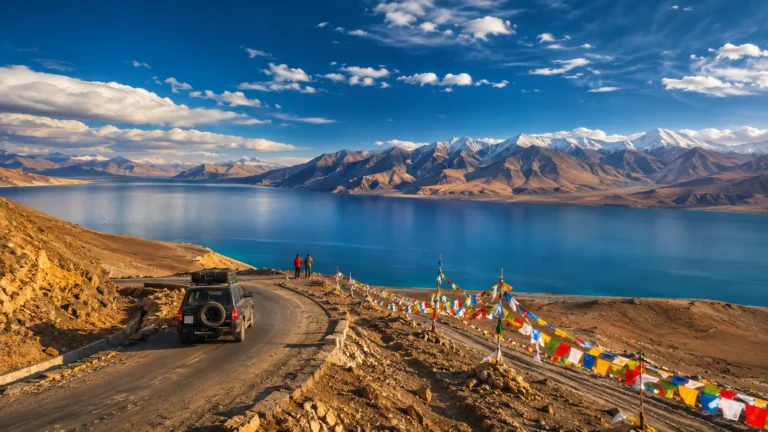

Every year, thousands of travelers make the pilgrimage to Leh Ladakh seeking the thrill of the Himalayas. Yet most find themselves following the same overcrowded paths—chasing the same photographs at Pangong Tso, the same sunrise at Nubra Valley. But here’s what most travel blogs won’t tell you: just beyond these famous landmarks lies a network of hidden trekking trails near Leh Ladakh that remain virtually untouched by mainstream tourism.
I discovered this secret network during my third expedition to Ladakh, when a local guide named Tashi took me off the beaten path and into valleys I’d never seen mentioned in any guidebook. The silence there—the kind that wraps around you like a heavy blanket—was unlike anything I’d experienced in years of mountain travel. Those trails became my obsession, and I’ve spent the years since mapping, exploring, and understanding what makes each one unique.
If you’re ready to trade crowded viewpoints for genuine solitude, these hidden gems deserve a place on your Ladakh itinerary.
1. The Chadar Trek: Walking on Frozen Dreams
While technically not a “hidden” trail anymore, the Chadar Trek remains one of the most extraordinary experiences in Ladakh that most travelers simply overlook due to its challenging nature. This ancient Zanskari trade route transforms into a frozen highway along the Zanskar River during winter months, when temperatures plummet to -30°C.
Trail Details:
- Duration: 8-9 days
- Difficulty: Extreme
- Best Season: January to February
- Altitude: 3,500 to 4,500 meters
The experience of walking on ice that crackles beneath your boots, surrounded by towering canyon walls draped in frost, is genuinely surreal. I remember one morning when our group woke to find the river had shifted overnight—the ice had cracked and reformed, forcing our local guide to reroute us through narrow side passages. That adaptability is precisely why this trail demands experienced guidance.
Expert Insight: The Chadar Trek requires at least one prior high-altitude experience. Never attempt this alone—weather conditions can change within hours, and rescue operations in the Zanskar gorge are extremely limited.
2. Markha Valley Trek: The Trail of Ancient Monasteries
Often overshadowed by more famous routes, the Markha Valley Trek weaves through some of the most culturally rich terrain in Ladakh. This hidden gem near Leh Ladakh connects remote villages where life continues much as it has for centuries, with prayer flags fluttering over terraced fields and ancient monasteries perched on impossible cliff faces.
Trail Details:
- Duration: 6-8 days
- Difficulty: Moderate to challenging
- Best Season: June to September
- Altitude: 3,600 to 5,200 meters (Kangmaru Pass)
What makes this trail special is the human element. You’ll pass through villages where villagers still offer butter tea to passing travelers—a tradition that harks back to the area’s days as a crucial stop on Silk Road trade routes. The highlight for me was reaching Hankar village, where a 70-year-old grandmother served us authentic thukpa while explaining the area’s astronomical significance to her ancestors.
For those seeking comfort without sacrificing authenticity, local operators like Suzu Travels have begun offering curated versions of this trail that include village homestays with modern amenities, making the remote experience accessible to a broader range of adventurers.
3. Rumtse to Tso Moriri: Crossing the High Desert
The Rumtse to Tso Moriri route stands as one of Ladakh’s best-kept secrets—a traverse that takes you through landscapes so stark and beautiful they feel borrowed from another planet. This hidden trekking trail near Leh Ladakh crosses the remote Raki and Mebse La passes, dropping into valleys where blue sheep outnumber humans by a significant margin.
Trail Details:
- Duration: 7-9 days
- Difficulty: Moderate
- Best Season: July to September
- Altitude: 4,000 to 5,100 meters
The route passes through the Kyon Tsoyak wetlands—an area birdwatchers consider paradise. During my trek, I counted over thirty species of birds in a single afternoon, including the rare Black-necked Crane, which migrates to these wetlands during summer months. The trail ends at Tso Moriri, a high-altitude lake so pristine that authorities have designated the entire area a protected wetlands zone.
4. Stok Kangri Summit: Conquering Ladakh’s Highest Peak
For experienced trekkers seeking altitude and bragging rights, Stok Kangri represents the ultimate challenge among Ladakh’s hidden trails. At 6,153 meters, this non-technical peak offers climbers the chance to stand atop a summit with views stretching into the Karakoram range.
Trail Details:
- Duration: 5-7 days
- Difficulty: Challenging (technical portions)
- Best Season: July to August
- Altitude: 6,153 meters summit
I summited Stok Kangri during a full moon expedition, and the experience fundamentally changed how I understand mountain environments. The final ascent involves a glacier crossing and moderate scrambling—no technical climbing equipment necessary, but previous high-altitude experience is essential. Acclimatization days aren’t optional here; they’re survival prerequisites.
5. Lamayuru to Alchi: The Ancient Monastery Circuit
This section of the ancient Ladakh trail network connects two of the region’s most significant Buddhist sites while passing through landscapes that shift dramatically from barren moonscape to lush river valleys. The Lamayuru to Alchi route showcases Ladakh’s geographical diversity better than almost any other path.
Trail Details:
- Duration: 5-6 days
- Difficulty: Moderate
- Best Season: June to September
- Altitude: 3,500 to 4,800 meters
The trail descends from Lamayuru Monastery—built on an ancient lake bed, its dramatic setting has earned it the nickname “Moonland”—through villages that have cultivated almonds and apricots for generations. I found the cultural contrast between these fertile valleys and the surrounding desert absolutely captivating.
6. Dahanu to Shingra Koma: The Nubra Valley Backdoor
Most visitors to Nubra Valley take the standard tourist circuit between Diskit and Hunder. But the Dahanu to Shingra Koma trail opens a different world entirely—a high-altitude traverse connecting remote villages that see perhaps a dozen foreign visitors per year.
Trail Details:
- Duration: 8-10 days
- Difficulty: Challenging
- Best Season: July to September
- Altitude: 4,000 to 5,400 meters
This route passes through some of Ladakh’s most dramatic terrain—narrow gorges, wide plateaus dotted with nomadic settlements, and passes that offer unobstructed views of the Siachen Glacier region. The trail requires wilderness camping skills and a high degree of self-sufficiency.
7. Hemis to Thagstonpo: Following the Snow Leopard Trail
For wildlife enthusiasts, the Hemis to Thagstonpo route offers perhaps the best opportunity to spot snow leopards in their natural habitat. Conservation efforts in the Hemis National Park have helped establish corridors that this trail specifically traverses.
Trail Details:
- Duration: 7-8 days
- Difficulty: Moderate to challenging
- Best Season: December to March (for snow leopard sighting)
- Altitude: 3,800 to 5,000 meters
I spent three winters tracking with local wildlife guides in this area, and while I never spotted the elusive snow leopard myself, the evidence of their presence—paw prints in fresh snow, the alarm calls of blue sheep—all contributed to an unforgettable atmosphere of wilderness.
8. Phyang to Sasoma: The Unexplored Western Route
Western Ladakh remains remarkably unexplored by trekking tourism, and the Phyang to Sasoma route exemplifies why this region deserves more attention. Remote villages, pristine rivers, and terrain that cycles through every geological formation Ladakh has to offer.
Trail Details:
- Duration: 6-7 days
- Difficulty: Moderate
- Best Season: July to September
- Altitude: 3,200 to 4,600 meters
The villages along this route maintain centuries-old traditions with minimal outside influence. I recall staying in Sasoma, where the village elder organized an impromptu archery competition—a traditional sport in Ladakh that tourists rarely get to witness. These unplanned cultural encounters make this trail special.
9. Shakpacho to Stok: The Village Hopping Experience
For those seeking a gentler introduction to Ladakh’s hidden trails, the Shakpacho to Stok route offers manageable distances between villages, making it ideal for families or trekkers new to high-altitude environments.
Trail Details:
- Duration: 4-5 days
- Difficulty: Easy to moderate
- Best Season: May to October
- Altitude: 3,400 to 4,200 meters
Each village offers basic guest houses and homestays, eliminating the need for camping equipment while providing authentic cultural immersion. The trail connects to the Stok Palace area, where you can explore the region’s royal heritage before or after your trek.
10. Zingchen to Rupsho: The Ghost Valley Extension
Named for its haunting emptiness, the Rupsho Valley represents Ladakh’s most remote trekking territory—a landscape of salt flats, wild donkeys, and ancient burial grounds that archaeologists are only beginning to understand.
Trail Details:
- Duration: 5-6 days
- Difficulty: Moderate
- Best Season: June to September
- Altitude: 4,000 to 4,800 meters
The spiritual significance of this area cannot be overstated. Ancient Buddhist caves line the valley walls, and nomadic families still perform seasonal rituals at sites that predate recorded history. This is trekking as archaeology—an opportunity to walk through layers of human presence spanning millennia.
Essential Planning Tips for Hidden Trekking Trails Near Leh Ladakh
Permits and Regulations
Most trails in Ladakh require Inner Line Permits, obtainable through registered tour operators or the Leh DC office. Wildlife area permits are mandatory for routes touching Hemis National Park. Always carry multiple passport-sized photographs and copies of your passport—checkpoint officials are thorough. If you’re wondering about the consequences of venturing onto Ladakh’s trails without proper documentation, it’s worth reviewing what can go wrong when trekking without the right permits.
Acclimatization: The Non-Negotiable Foundation
Altitude sickness affects even experienced mountaineers. The standard protocol involves spending 2-3 days in Leh (3,500m) before beginning any trek, ascending no more than 500m per day above 4,000m, and maintaining aggressive hydration. I cannot stress this enough—every serious emergency I’ve witnessed in Ladakh resulted from inadequate acclimatization.
Suzu Travels builds mandatory rest days into their itineraries specifically for this reason, recognizing that a delayed schedule beats a rescue operation any day.
Physical Preparation
These hidden trails demand strong cardiovascular fitness and hiking experience. Train at altitude if possible—otherwise, commit to 3-4 months of preparation including stair climbing, long-distance hiking with loaded weights, and endurance-focused cardio workouts.
Equipment Essentials
- Quality down sleeping bag rated to -20°C minimum
- UV-protective sunglasses with side shields
- High-SPF sunscreen (the UV index here reaches extreme levels)
- Water purification tablets or filter
- Emergency satellite communication device
- First aid kit including altitude medication (Diamox)
When to Visit These Hidden Trekking Trails
Timing your Ladakh trekking adventure significantly impacts your experience. Summer months (July-August) offer the most stable weather and accessible passes, but also the busiest period—even on remote trails, you may encounter other groups.
Shoulder seasons (June, September-October) provide thinner crowds and dramatic autumn colors, though weather becomes less predictable. Winter treks like Chadar offer unparalleled solitude but require serious cold-weather experience and specialized equipment.
Final Thoughts on Discovering Ladakh’s Secret Trails
The hidden trekking trails near Leh Ladakh represent something increasingly rare in modern travel: genuine discovery. These routes offer not just physical challenge and natural beauty, but authentic cultural encounters that mainstream tourism simply cannot provide. The villages remain villages, the monasteries remain active spiritual centers, and the landscapes remain mostly unmarred by development.
But with this privilege comes responsibility. These communities have preserved their traditions precisely because tourism hasn’t overwhelmed them. Travel gently, support local economies, and leave no trace beyond your footprints. The next adventurer who follows your path deserves to experience Ladakh as you found it.
Whether you’re planning your first high-altitude trek or seeking to expand beyond Ladakh’s famous circuits, these hidden trails reward the effort required to reach them. If organizing logistics for independent exploration feels overwhelming, consider exploring Glimpses of Ladakh tour packages that combine professional safety protocols with opportunities to explore these lesser-known routes. Suzu Travels provides professionally curated Ladakh tours that prioritize safety and comfort for your high-altitude mountain adventure.