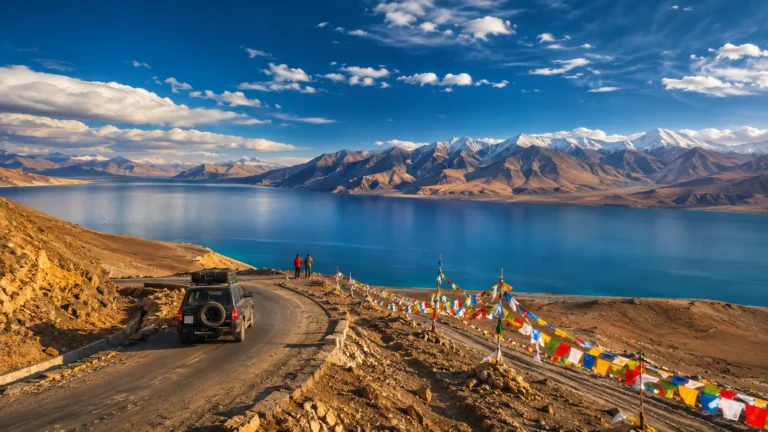

My hands were shaking so badly I couldn’t operate my camera. At 18,380 feet above sea level, standing at the frozen Pangong Tso shoreline with temperatures plummeting to minus 25°C, I realized my expensive down jacket—rated for European winters—had failed me completely. The down clumps had lost all loft, and frostbite was creeping toward my fingertips. That night, huddled in a local homestay with a Sherpa friend teaching me to warm my core before my extremities, I learned the most expensive lesson of my mountaineering career: Ladakh demands respect, preparation, and the right equipment.
If you’re planning a high-altitude expedition to Ladakh, that story isn’t meant to scare you—it’s meant to prepare you. For a thorough breakdown of what you need to know before your trip, check out our complete high-altitude preparation guide. The Trans-Himalayan region presents challenges that even seasoned travelers underestimate. Altitude sickness, unpredictable weather, and remote terrain mean your gear list isn’t just about comfort; it’s about survival. This comprehensive guide draws from over a decade of high-altitude expeditions across Ladakh, Zanskar, and the Karakoram ranges to ensure you return home with photographs, not hospital bills.
Understanding Ladakh’s Extreme Environment Before You Pack
Most travelers research routes but forget that Ladakh’s geography creates microclimates unlike anywhere else on Earth. The region sits at an average elevation of 10,000 feet, with passes like Khardung La reaching 17,582 feet and Chang La touching 17,590 feet. According to the National Geographic Society’s documentation on high-altitude physiology, the oxygen level at these elevations drops to approximately 40-50% of sea-level concentrations, which fundamentally changes how your body functions and how your equipment performs.
When I first arrived in Leh in 2011, I made the rookie mistake of trusting manufacturer temperature ratings without understanding Ladakh’s wind chill factor. The combination of altitude, humidity, and persistent winds creates conditions 10-15°C colder than thermometer readings suggest. I watched fellow travelers from tropical countries suffer hypothermia in supposedly “cold-weather” gear because they hadn’t accounted for these localized conditions.
The Altitude Physiology Factor
Your body undergoes significant physiological changes above 10,000 feet, regardless of fitness level. Blood oxygen saturation can drop from normal sea-level readings of 95-100% to concerning levels of 70-80% at high passes. This affects everything from your mental clarity to your hands’ dexterity. When choosing gear, you need items that won’t stiffen in cold, that you can operate with numbing fingers, and that won’t restrict blood flow to your extremities.
Professional mountaineers from the Indian Mountaineering Foundation emphasize that proper acclimatization—the process your body uses to adjust to reduced oxygen—takes 2-3 days at Leh’s elevation alone. This is why operators like Suzu Travels include mandatory acclimatization days in their itineraries, not as luxury rest periods, but as essential safety protocols that allow your body to physiologically adapt before pushing higher.
Essential Gear Categories for Ladakh Expeditions
1. Insulating Layer System: The Foundation of Survival
Forget the single heavy coat approach. High-altitude experts now recommend a versatile layering system that adapts to activity levels and temperature fluctuations throughout the day. Your insulation strategy should include:
- Base Layer: Mer wool or synthetic moisture-wicking materials. Avoid cotton entirely—it retains moisture and accelerates heat loss. Quality base layers from brands like Icebreaker or Smartwool cost $60-120 but perform exponentially better than fast-fashion alternatives at altitude.
- Mid Layer: Fleece or lightweight down for active insulation. I prefer 100-weight fleece for walking and a lightweight 650-fill down jacket that compresses into its pocket for passes where you’re stationary in cold wind.
- Outer Shell: Waterproof-breathable jacket with hood. Gore-Tex or equivalent membranes are essential—Ladakh’s brief afternoon thunderstorms can drench unprepared travelers in minutes.
The critical insight many travelers miss: your insulating layers must maintain functionality even when wet. In my experience, synthetic puffy jackets from brands like Patagonia and The North Face retain approximately 80% of their insulation when damp, whereas untreated down becomes nearly useless. Given Ladakh’s unpredictable weather, this distinction could determine whether you develop hypothermia.
2. Lower Body Insulation: Beyond Standard Hiking Pants
Your legs generate significant heat during hiking, but become extremely vulnerable during rest stops, vehicle transfers, or emergencies. For Ladakh expeditions, I recommend packing:
- Quick-dry hiking pants (2 pairs minimum)
- Thermal underwear base layers
- Insulated hiking pants or softshell trousers
- Waterproof shell pants for crossing streams or unexpected rain
- Heavyweight down pants or pants with 700+ fill down for extreme cold or vehicle breakdowns at high altitude
During my 2015 Zanskar traverse, our vehicle developed mechanical issues at 16,000 feet during a blizzard. We waited three hours for rescue, and the two travelers without proper lower body insulation developed symptoms of cold exposure despite being relatively fit. The difference between their experience and mine came down to carrying heavyweight down pants that compressed into my daypack.
3. Footwear: The Most Consequential Decision
Footwear failures account for a significant percentage of Ladakh rescue operations, according to data from the Ladakh Autonomous Hill Development Council’s tourism safety reports. Your feet’s circulation already struggles at altitude, and inadequate boots compound the problem severely.
Primary Hiking Boots
Look for boots meeting these specifications:
- Rated to -20°C minimum for thermal protection
- Waterproof membrane (Gore-Tex or similar) with sealed construction
- Crampon-compatible if you plan Nubra Valley or high-pass crossings
- Mid-to-high ankle support for uneven terrain
- Rigidity to support load-carrying on steep inclines
Brands like Salomon, Lowa, Scarpa, and Hanwag produce reliable expedition-rated boots ranging from $200-500. In my experience, spending less results in cold feet, premature sole separation, or inadequate ankle support on Ladakh’s rocky trails.
Camp Shoes and Backup Footwear
Never rely on a single footwear option. Pack:
- Insulated camp boots or down booties for cold nights at campsites
- Lightweightcamp shoes for guesthouse comfort
- Quality wool hiking socks (4-5 pairs minimum)
- Thin liner socks to prevent blisters
Key Takeaway: Your feet are your expedition’s foundation. Invest $300-600 in quality footwear and sock systems—it’s far cheaper than emergency evacuation or frostbite treatment.
4. Hand Protection: Layers for Dexterity and Warmth
Opening zippers, adjusting camera settings, handling trekking poles, and emergency signaling all require hand dexterity. Yet cold hands quickly lose function. The solution isn’t one pair of heavy mittens but a graduated system:
- Light liner gloves: For photography, phone use, and light trekking in mild conditions
- Softshell gloves: Insulated but allowing touchscreen use and fine motor tasks
- Insulated mittens: Heavy protection for extreme cold, breaks, or summits
- Over mitts: Waterproof shell worn over insulated gloves for precipitation or extreme wind
During my Everest Base Camp approach, a mountaineering guide taught me to carry hand warmers in jacket pockets rather than inside gloves—the radiant heat helps maintain core temperature, which improves circulation to extremities. This counterintuitive technique has served me well across numerous Ladakh expeditions.
5. Head and Face Protection: Preventing Heat Loss
Your head radiates significant body heat, and Ladakh’s persistent winds create wind chill factors that accelerate exposure risk. Essential headgear includes:
- Sun hat or baseball cap: With neck drape for lower altitude sun protection
- Warm beanie: Wool or synthetic, fitting under helmet if applicable
- Buff or neck gaiter: Versatile protection for face, neck, and head
- Balaclava: Full face coverage for extreme conditions or motorbike travel
- Quality glacier glasses: UV400 protection with side shields—snow blindness at altitude is excruciating and preventable
For those planning motorbike rentals—a popular Ladakh activity—full-face helmets with thermal linings become essential. Standard motorcycle helmets inadequately protect against Ladakh’s cold, and I’ve treated tourists for frostbitten ears and cheeks after inadequate helmet selection.
6. Sleeping Systems: Recharging for Tomorrow
Quality sleep at altitude determines your body’s recovery and acclimatization success. Ladakh’s guesthouses and campsites often have inconsistent heating, making personal sleeping systems critical.
Sleeping Bags
Choose sleeping bags with these specifications:
- Temperature rating to -15°C or lower (comfort rating, not survival rating)
- Down fill: 650+ fill power for warmth-to-weight ratio, though synthetic bags offer better performance when damp
- Draft collar and hood drawcord to seal warmth
- Waterproof breathable shell to protect down fill
Even if operators provide blankets—many Leh guesthouses do—carry a sleeping bag rated for extreme cold. During my 2018 winter expedition to Tso Moriri, our guesthouse heating failed during a power outage. Temperatures inside dropped to -10°C, and only those with proper sleeping bags slept comfortably.
Sleeping Pads
Insulation from the ground is often overlooked but critically important. Ground temperature at altitude penetrates sleeping bags efficiently without adequate padding. Carry sleeping pads with:
- R-value of 4+ for effective ground insulation
- Closed-cell foam: More durable and reliable than inflatable pads at altitude
- Closed-cell foam combined with inflatable: Maximum insulation for extreme conditions
7. Navigation and Communication: Your Safety Lifelines
Ladakh’s cellular coverage is limited, and GPS accuracy can vary. Every expedition member should carry:
- Offline GPS maps: Maps.me, Gaia GPS, or specialized Garmin devices with downloaded Ladakh region maps
- Physical maps: As backup when electronics fail
- Satellite communication device: Garmin inReach, SPOT device, or similar for emergency contact
- Headlamp: With spare batteries—essential for early starts, late finishes, and emergencies
- Power bank: High-capacity (20,000mAh+) for multi-day remote travel
- Universal power adapter: Indian electrical outlets differ from Western standards
When I guided a photography expedition through the Markha Valley, one team member’s smartphone died, and without offline maps or backup navigation, we spent two hours locating our campsite in fading light. Now I mandate satellite communicators for all my Ladakh expeditions—it’s non-negotiable safety equipment, not optional luxury.
8. Hydration and Nutrition Systems: Fueling at Altitude
Altitude suppresses appetite while accelerating dehydration, creating a dangerous combination. Your body requires more water at elevation—typically 3-4 liters daily for moderate activity—and dehydration accelerates altitude sickness onset.
Carry these essentials:
- Insulated water bottles: 2-3 liter capacity total, with insulation to prevent freezing
- Water purification: Purification tablets, filter, or UV sterilizer for remote water sources
- Electrolyte supplements: Altitude demands sodium and potassium replacement beyond normal levels
- High-calorie snacks: Nuts, energy bars, nut butter packets for maintaining caloric intake when appetite fails
- Thermos: For hot beverages during long vehicle transfers or cold camps
Key Takeaway: Drink before feeling thirsty. By the time your brain registers thirst, you’re already mildly dehydrated. Set reminders to drink 200ml every 30 minutes during activity.
9. First Aid and Personal Medication: Preparing for the Unforeseen
Every expedition member should carry personal medications and a comprehensive first aid kit. For Ladakh specifically, include:
- Altitude medication: Diamox (acetazolamide)—consult your physician about proper dosing for prophylaxis
- Pain relief: Ibuprofen for headaches and altitude-related discomfort
- Anti-nausea medication: For altitude sickness symptoms
- Personal prescription medications: With doctor’s note for customs purposes
- Wound care: Antiseptic, bandages, medical tape, blister treatment
- Sunscreen: SPF 50+—altitude UV intensity is 40-50% higher than sea level
- Lip balm: With SPF protection
- Rehydration salts: For treating early dehydration or diarrhea
Consult a travel medicine specialist 4-6 weeks before departure for personalized advice based on your health history and specific itinerary.
What Most Ladakh Packing Lists Get Wrong
Through years of guiding and observing fellow travelers, I’ve identified systematic omissions in typical Ladakh gear lists:
Underestimating Wind Protection
Visitors from Himalayan trekking destinations like Nepal often assume Ladakh requires similar gear. This assumption is dangerous. Ladakh’s continental climate creates persistent winds with minimal humidity to buffer heat loss. A 20mph wind at -5°C creates a -20°C wind chill—a difference your body absolutely notices. Every piece of outerwear should be wind-resistant, and wind-stopping accessories become survival tools rather than comfort items.
Ignoring Sun Protection Strategy
Cloud cover is minimal in Ladakh’s arid climate, and UV radiation intensity increases approximately 10% for every 1,000 meters of elevation gain. At Leh’s 11,500 feet, you’re receiving 15% more UV than sea level—at Pangong at 14,270 feet, that increases to over 40% more radiation exposure. If you’re planning to visit Pangong Lake, our detailed transportation guide covers everything you need to know about the journey from Leh. Pack SPF 50+ sunscreen, reapply frequently, and cover exposed skin. Snow and water reflection compound the exposure during lake visits.
Neglecting Vehicle Travel Comfort
Most Ladakh sightseeing occurs from vehicles navigating mountain passes. Long days in dusty, bumpy SUVs expose travelers to cold during high-pass crossings and significant sun exposure through windows. Pack a buff for dust, keep your insulated layers accessible for pass crossings, and apply sunscreen before vehicle departures—don’t rely on morning application lasting through a 10-hour transfer.
Forgetting Digital Equipment Protection
Camera batteries drain rapidly in cold, and LCD screens become sluggish or fail in extreme temperatures. Carry spare batteries in inner jacket pockets—body heat maintains their function. Memory cards and storage media also become brittle at temperature extremes. Protect camera gear in padded cases when not actively shooting, and avoid leaving equipment in vehicles overnight.
Organizing Your Gear: Practical Systems
Having the right gear means nothing if you can’t access it efficiently. Develop an organizational system:
- Layer by activity: Store gear in sequences matching your daily routine—base layers together, insulation together
- Waterproof secondary containers: Zip-lock bags or compression sacks protect against the single biggest gear destroyer: water
- Daypack essentials: Keep rain shell, water, snacks, sunscreen, and medications in your daypack for daily access
- Camera kit organization: Protect fragile equipment in padded cases with silica gel packets against condensation
Before any expedition, test your gear system during a local day hike with a weighted pack. Discover what works, what chafes, what you actually reach for—and adjust accordingly. No amount of online research substitutes for physical testing.
Final Gear Thoughts: Beyond the List
Gear is only as effective as the knowledge operating it. Before your Ladakh expedition, understand:
- How to layer and delayer efficiently without excessive sweating
- Signs of altitude sickness and appropriate responses
- Emergency shelter construction if stranded
- Basic first aid for cold injuries
- Communication protocols with your group and operator
For those planning organized tours, I’d recommend checking out Glimpses of Ladakh tour packages—their safety-first approach with mandatory acclimatization days and oxygen-equipped vehicles provides a professional framework that allows you to focus on the expedition rather than logistics. Local operators who understand Ladakh’s unique challenges make significant differences in both safety and experience quality.
Suzu Travels provides professionally curated Ladakh tours that prioritize safety and comfort for your high-altitude mountain adventure. Whether you’re a first-time visitor or returning for deeper exploration, the difference between adequate preparation and exceptional experience often comes down to thoughtful gear selection and operational support.
Pack intelligently, respect the altitude, and Ladakh’s surreal landscapes—crystalline high-altitude lakes, ancient monasteries perched on cliffs, and endless mountain horizons—will reward you with memories lasting far longer than any discomfort from packing correctly. The Trans-Himalayan frontier awaits those who approach it prepared.