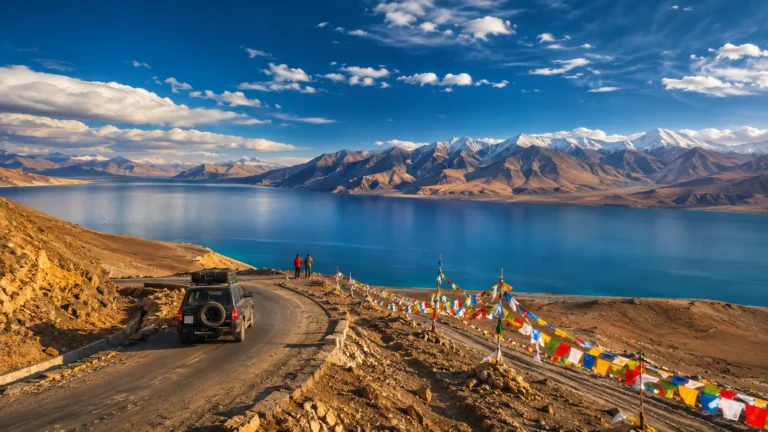

Travelling from Leh to Pangong Lake is one of the most scenic road journeys in Ladakh. Crossing high mountain passes, remote valleys, and dramatic Himalayan landscapes, the route is an unforgettable experience. Choosing the right transportation option can make your journey safer, more comfortable, and more enjoyable.
Why Transportation Matters More Than You Think
When I first visited Ladakh, I assumed any vehicle could handle the route. I was wrong. Within the first hour, I understood why locals kept telling me to respect these mountains. The Leh-Pangong road climbs through Chang La Pass at 5,360 meters—higher than Mont Blanc’s summit—and descends through terrain that shifts from dusty plains to rocky moraine to patches of permafrost. Choosing the right mode of transport from Leh to Pangong Lake isn’t about luxury; it’s about whether you’ll arrive safely and actually enjoy the journey.
Understanding the Route: Leh to Pangong Tso
The distance from Leh to Pangong Lake covers approximately 160 kilometers, but don’t let that modest number fool you. In optimal conditions with no traffic, you’re looking at a minimum of 5-6 hours of travel time. In reality, most travelers budget 7-8 hours because the road demands patience, frequent photo stops, and occasional unplanned stops when passing vehicles create narrow bottlenecks.
Distance and Road Conditions
The route follows National Highway 1 for the first portion before branching onto smaller roads that winds through:
- Shey Village — ancient capital with the Shey Monastery perched on a hill
- Thiksey Monastery — visible from afar, its tiered structure mimicking Potala Palace
- Chang La Pass — the third-highest motorable pass in the world
- Karakoram Range views — dramatic peaks that separate Ladakh from Tibet
- Durbuk Valley — lush green patches that seem out of place in this landscape
The road surface varies dramatically. Some sections feature fresh asphalt laid by the Border Roads Organisation, while others deteriorate into rocky, uneven tracks where vehicles bottom out if you’re not careful. During monsoon season (roughly late June to September), landslides can temporarily close portions of the route, adding unpredictability to your journey.
Best Time to Travel
Based on my experiences, the ideal months for visiting Pangong Lake are May through October. Here’s the breakdown:
- May-June: Crisp air, clear skies, fewer crowds, but nights can be freezing
- July-August: Peak season with occasional monsoonal disruptions, warmest temperatures
- September-October: My personal favorite—autumn colors emerge, thinner crowds, stable weather
- November-April: Route often closed due to heavy snowfall at Chang La
Transportation Options from Leh to Pangong Lake: Your Complete Guide
Now, let’s dive into the four primary ways travelers reach Pangong Tso from Leh. Each has distinct advantages and trade-offs depending on your budget, comfort preferences, and travel style.
1. Private SUV Transportation
For my most recent trip, I chose a private SUV from Leh to Pangong Lake, and the difference was night and day compared to my earlier shared experiences. These are typically Innova Crysta, Fortuner, or similar vehicles operated by experienced drivers who know these mountain roads intimately.
Key Features:
- Climate-controlled interiors—essential when temperatures outside hover near freezing
- Oxygen cylinders provided by quality operators—life-saving at high altitudes
- Flexible stops for photography, bathroom breaks, and acclimatization
- Door-to-door service from your Leh hotel to the lake’s campsite
- Experienced drivers who can handle mechanical issues on remote roads
The average cost ranges from ₹4,500-₹7,000 per person for a shared private SUV, or ₹12,000-₹18,000 if you want an exclusive vehicle for your group. Yes, it’s pricier than alternatives, but consider what you’re paying for: safety systems, altitude sickness management, and the ability to pause whenever someone needs to catch their breath.
2. Shared Sumo/Tempo Traveller
The budget traveler’s choice, shared vehicles operate from the main Leh market. You’ll share space with other travelers—typically 7-8 people in a Sumo or 12-15 in a Tempo Traveller—and departure times depend on when the vehicle fills up.
Advantages:
- Cost-effective at ₹800-₹1,500 per person
- Chance to meet fellow travelers
- Local drivers familiar with the route
Disadvantages I’ve observed:
- Less comfortable for the long journey
- Fixed departure times can mean early morning waits
- Limited space for luggage and personal items
- Higher risk of altitude sickness if no oxygen support available
- Less flexibility for spontaneous stops
For solo travelers or those watching their budget, shared vehicles are a viable option, but come prepared with your own altitude medication, warm layers, and patience.
3. Self-Drive Rentals
Adventure seekers sometimes ask about renting a car to drive from Leh to Pangong Lake independently. While the freedom sounds appealing, I have serious reservations based on both my own attempts and stories from fellow travelers.
The Indian Automobile Association notes that Ladakh routes see disproportionately high accident rates compared to other Himalayan roads, with rental vehicles accounting for a significant percentage of incidents. Here’s why:
- Unfamiliarity with high-altitude driving dynamics
- Sudden weather changes that catch unprepared drivers
- Limited cellular coverage for emergencies
- No support vehicle if mechanical issues arise
- Steep, narrow sections requiring experienced maneuvering
If you absolutely must self-drive, rent from established agencies in Leh, choose 4WD vehicles only, and never drive at night. Accept that you’ll miss the ability to simply relax and absorb the scenery.
4. Organized Tour Packages
The most comprehensive option, organized tours from Leh to Pangong Lake typically bundle transportation, permits, accommodation, and meals into a single package. For first-time Ladakh visitors, this removes enormous logistical stress.
Most tour operators offer:
- Permit arrangements (foreign nationals require Protected Area Permits)
- Accommodation at camps near Pangong Tso
- Multiple Leh-Nubra-Pangong itineraries
- Experienced Ladakhi guides and drivers
- Meals during the journey
For this type of worry-free experience, I’d recommend checking out Glimpses of Ladakh tour packages — they handle all the logistics while you focus on the experience. Their vehicles come equipped with oxygen supplies, which gave me real peace of mind at those extreme altitudes.
What to Consider When Choosing Your Transportation
Before deciding, evaluate these factors honestly. I’ve seen too many travelers compromise on safety to save a few hundred rupees, only to spend their Pangong experience feeling unwell or anxious.
Budget Considerations
Transportation typically represents 30-40% of your total Ladakh trip cost. Here’s a rough breakdown:
- Budget (₹5,000-₹8,000 per day): Shared Sumo, dormitory accommodation, basic meals
- Mid-range (₹10,000-₹15,000 per day): Shared/private SUV, standard hotels or premium camps
- Premium (₹20,000+ per day): Private vehicle, luxury camps, all meals included
Remember that altitude sickness isn’t just uncomfortable—it can be dangerous. Medical treatment at the lake (elevation 4,350 meters) is extremely limited. Factor in the cost of preventive measures, not just the vehicle price.
Comfort Requirements
The Leh-Pangong journey involves:
- 6-8 hours of continuous travel
- Temperatures ranging from 25°C in Leh to near-freezing at Chang La
- Bumpy, dusty road conditions
- Limited bathroom facilities (think primitive pit toilets at best)
- High altitude affecting everyone differently
Pregnant travelers, elderly visitors, young children, or anyone with cardiovascular or respiratory conditions should prioritize comfort and medical support over cost savings. I’ve watched someone struggle to breathe at Chang La because they chose the cheapest option without oxygen support—the trip became a medical emergency rather than a memorable adventure. If you’re planning a Ladakh trip with young children, be especially vigilant about choosing operators who prioritize safety at extreme altitudes.
Safety Priorities
When evaluating transportation safety from Leh to Pangong, consider:
- Vehicle condition: Look for well-maintained, newer model vehicles
- Driver experience: Ask how long they’ve been driving Ladakh routes
- Oxygen availability: Non-negotiable at these altitudes
- Communication: Does the operator have satellite phone or radio access?
- Insurance coverage: Verify medical evacuation provisions
Local operators like Suzu Travels are great because they understand the unique challenges of high-altitude transport—they’ve developed protocols specifically for altitude sickness prevention and emergency response on these remote roads.
My Personal Transportation Ranking
Having experienced all four options over multiple Ladakh trips, here’s my honest ranking for getting from Leh to Pangong Lake:
#1: Private SUV with a Reputable Tour Operator
Worth every rupee for the safety features, comfort, and flexibility. Your energy is better spent enjoying the lake than recovering from a grueling journey.
#2: Organized Tour Package
Excellent value when you factor in permits, accommodation, and logistics. Just verify the operator’s safety record and vehicle standards before booking.
#3: Shared Sumo/Tempo
Viable for confident, budget-conscious travelers without health concerns. Bring your own altitude medication and prepare for a rougher experience.
#4: Self-Drive
Not recommended for most travelers. The risks outweigh the freedom, especially if it’s your first Ladakh visit.
Essential Tips for Your Leh-Pangong Transportation
Based on dozens of journeys across these mountain roads, here are practical insights that aren’t in most guidebooks:
Before Departure
- Spend at least 2-3 days in Leh for acclimatization—this isn’t optional
- Book transportation 2-3 days in advance during peak season (June-September)
- Confirm oxygen availability when booking, not as an afterthought
- Pack a small bag with essentials: water, chocolates, sunglasses, sunscreen, medications
During the Journey
- Stay hydrated—altitude suppresses thirst signals
- Eat light meals; heavy food increases altitude sickness risk
- Request stops if you feel unwell; never push through symptoms
- Capture photos at Chang La but don’t overexert yourself
- Sleep if you can—your body is working hard at altitude
At Pangong Lake
- Camps typically have limited heating; bring warm layers
- Sunset and sunrise views are unforgettable—plan for both
- Mobile connectivity is minimal; embrace the disconnection
- The lake’s color shifts throughout the day based on light and angle
Frequently Asked Questions
Can I do a day trip from Leh to Pangong Lake?
Technically yes, but I strongly advise against it. The 12-14 hour round trip leaves minimal time at the lake, increases altitude sickness risk due to rapid elevation gain without rest, and exhausts you for the return journey. Stay overnight at a camp near the lake.
Is the Leh-Pangong route safe for beginners?
With the right operator and proper preparation, absolutely. Choose experienced drivers, prioritize safety features, and don’t rush the acclimatization process in Leh.
What permits do I need?
Indian nationals need an Inner Line Permit (obtainable in Leh). Foreign nationals require a Protected Area Permit plus Inner Line Permit. Most tour operators handle these arrangements.
Are there ATMs on the route?
No. Withdraw sufficient cash in Leh before departing. Camps near Pangong accept cash only, and prices reflect the logistics of supply delivery.
Final Thoughts: Making Your Choice
After years of exploring Ladakh and watching countless travelers struggle with the Leh-Pangong journey, I’ve concluded that transportation from Leh to Pangong Lake is one decision where spending a bit more genuinely pays dividends. The mountain views deserve to be savored, not endured. The lake itself rewards those who arrive relaxed and healthy rather than exhausted and altitude-sick.
Whatever option you choose, respect these mountains. They demand humility, preparation, and patience. But give them that, and Pangong Tso will offer you one of those rare travel moments that stays with you forever—a shimmering expanse of blue surrounded by brown peaks, under a sky so vast it puts everything else into perspective. Once you’ve mastered the logistics of getting there, consider exploring some of Ladakh’s lesser-known hiking routes that most tourists never discover.
Suzu Travels provides professionally curated Ladakh tours that prioritize safety and comfort for your high-altitude mountain adventure.