
The first time I glimpsed that ghost-like silhouette against the snow-dusted mountains of Spiti Valley, my breath caught in my throat. There, barely 200 meters away, a magnificent snow leopard—locally called the “grey ghost of the mountains”—moved with impossible grace across the frozen landscape. In that moment, I understood why entire economies are now pivoting around protecting this elusive apex predator.
What I witnessed wasn’t just a wildlife encounter; it was the visual proof of one of India’s most remarkable conservation success stories. Over the past five years, Snow Leopard Conservation in Spiti & Lahaul has transformed from a fringe environmental concern into the driving force behind an unprecedented eco-tourism boom that is reshaping entire communities.
1. Understanding the Snow Leopard Population in Spiti Valley
The question I hear most from fellow travelers is: “How many snow leopards are in Spiti Valley?”
According to the Snow Leopard Population Assessment in India (SPAI) report released by the Wildlife Institute of India, Himachal Pradesh is home to an estimated 50 to 75 individuals, with the majority residing in the high-altitude regions of Spiti Valley and Lahaul. These numbers, while modest, represent a significant recovery from previous decades when retaliatory killings by herders had pushed populations to alarming lows.
The Kibber Wildlife Sanctuary stands as the crown jewel of snow leopard habitat, consistently offering the highest sighting probabilities globally. Nearby Pin Valley National Park serves as a critical buffer zone, providing additional protected corridors for these elusive cats to hunt and breed.
2. The Economic Transformation: From Herding to Homestays
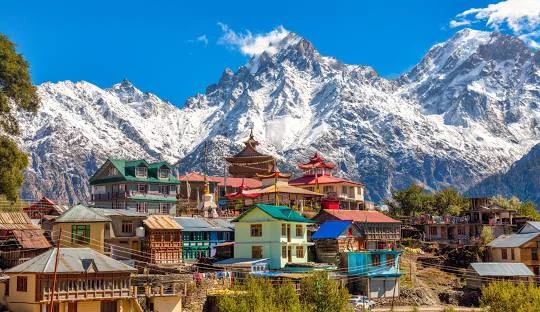
Before 2018, families in villages like Kibber, Langza, and Komic relied primarily on pastoralism—raising pashmina goats and sheep that often fell prey to snow leopards. Today, the economic landscape has fundamentally shifted, with communities increasingly embracing sustainable tourism practices that are transforming rural mountain economies.
The Himalayan Homestays Program reports indicate that local families now generate 60–80% of their annual income from winter wildlife tourism between January and March. A single successful snow leopard sighting can now mean more economic value alive than any livestock could ever provide.
This transformation has been nothing short of revolutionary for conservation outcomes. As the Nature Conservation Foundation (NCF) documents, retaliatory killings of snow leopards have dropped to near zero in major tourism hotspots—a stark contrast to the retaliatory poisoning incidents that plagued the region just a decade ago.
3. The “Grey Ghost” Premium: Understanding Expedition Costs
For those wondering how much a snow leopard expedition costs, the answer reveals the premium nature of this experience. High-end snow leopard expeditions in Spiti typically range from $3,000 to $5,000 per person for a 10–12 day tour. This price includes:
- Expert local guides with decades of tracking experience
- Acclimatization support for high-altitude conditions
- Transportation in 4×4 vehicles equipped for extreme cold
- Quality accommodation in village homestays
- Cold-weather gear and safety equipment
The revenue from these expeditions flows directly to local guides, porters, homestay operators, and food suppliers—creating an economic ecosystem where every community member has a financial stake in leopard protection.
4. The “Guardian” Shift: Changing Human-Leopard Relationships
Dr. Charudutt Mishra, a leading global expert on snow leopards and Science Director at the Nature Conservation Foundation, describes the transformation beautifully: “The shift from viewing leopards as threats to livestock to seeing them as ‘cash cows’ has fundamentally altered the relationship between local communities and these predators.”
Yet this expert cautions that “tourism must remain subservient to conservation.” His research emphasizes that unregulated, noisy, or intrusive photography tours could disrupt the mating or hunting patterns of these naturally secretive cats.
In Kibber village, I met Tenzin, a former shepherd who has become one of the region’s most sought-after wildlife trackers. His journey from protecting livestock to guiding photographers represents the human face of this conservation revolution. Today, he earns more in one successful expedition week than he previously made in an entire grazing season.
5. Best Time to Spot Snow Leopards: The Winter Window
The optimal period for snow leopard sightings spans mid-January to mid-March. During these months, several factors converge:
- Altitudinal Movement: Harsh winters force leopards to descend from their typical 3,500-5,500 meter habitats to lower elevations in search of prey
- Track Visibility: Fresh snow makes following leopard tracks significantly easier for experienced trackers
- Behavioral Changes: Prey animals become more concentrated, increasing hunting activity near human settlements
- Extended Daylight: More hours of usable daylight for tracking and observation
I found that patience is absolutely essential. During my expedition, we spent four days scanning ridges before that magical first sighting. The key is establishing relationships with local trackers who understand the subtle signs of leopard activity—scrapes on snow, territorial markers, and the behavior of prey species.
6. Ethical Tourism: Following “No-Trace” Principles
The question of is snow leopard tourism ethical deserves serious consideration. The answer, when done correctly, is a resounding yes—but only when operators and visitors commit to specific principles:
- Minimum Impact Approach: Small group sizes (maximum 4-6 visitors per guide)
- Distance Discipline: Maintaining at least 300 meters from any spotted leopard
- Sound Awareness: Avoiding loud conversations, engine noise, or sudden movements
- Community Benefits: Ensuring operators employ exclusively local guides and use village homestays
- Permit Compliance: Obtaining proper Inner Line Permits (ILP) for Indian nationals and border region documentation for foreigners
The Himalayan Homestays initiative provides an excellent framework for ethical engagement, guaranteeing that tourism revenue stays within the community and that local families actively participate in conservation efforts.
7. The Technology Gap: Camera Traps vs. Human Eyes
Modern conservation combines traditional tracking knowledge with cutting-edge technology. The Nature Conservation Foundation has deployed numerous camera traps throughout the region, capturing thousands of images annually.
AI-driven image analysis now enables researchers to identify individual leopards by their unique spot patterns—much like human fingerprints. The famous “Kibber Queen”, an elderly female leopard with distinctive markings, has been tracked through camera trap data for over eight years, providing invaluable insights into longevity and territory use in high-altitude environments.
However, local trackers remain irreplaceable. Their intimate knowledge of terrain, prey behavior, and leopard movement patterns cannot be replicated by technology. The most successful expeditions combine both approaches—using camera trap data to identify probable locations and human expertise to navigate the final approach.
8. Climate Change Impact: Adapting to Unpredictable Winters
Climate change is creating unexpected challenges for both leopards and tourism operators in Lahaul. Traditional snowfall patterns are becoming increasingly erratic, with shorter winters and shifting snowlines affecting both prey availability and leopard movement patterns.
Local herders report that ibex and blue sheep populations—which snow leopards prey upon—are now found at different altitudes than even five years ago. This forces leopards to travel longer distances and adapt their hunting strategies, potentially bringing them into closer contact with human settlements.
For tourism operators, this unpredictability demands flexibility. Expedition itineraries must account for rapidly changing road conditions, particularly on routes connecting Lahaul to Spiti through passes like Rohtang and Kunzum.
9. Understanding the Terrain: Physical Challenges
For those asking how dangerous is the terrain, honesty is essential. The region presents serious physical challenges, which is why proper preparation for high-altitude expeditions is absolutely critical:
- Altitude Sickness: The primary risk. Altitudes routinely exceed 4,500 meters where oxygen levels are approximately 60% of sea level
- Temperature Extremes: Conditions can drop to -20°C to -30°C during winter nights
- Remote Locations: Nearest major medical facilities are hours away in Manali or Shimla
- Terrain Hazards: Icy trails, frozen streams, and avalanche-prone slopes require careful navigation
Proper acclimatization—spending 2-3 days at moderate altitudes before ascending—is non-negotiable. I learned this lesson the hard way during my first visit, when altitude sickness nearly ended my expedition before it properly began.
10. The First Leopard Capital: Kibber’s Emerging Status
While Ladakh often receives recognition as India’s primary snow leopard destination, Kibber village in Spiti Valley is rapidly establishing itself as the country’s most reliable leopard viewing location—effectively becoming India’s first leopard capital in terms of consistent sighting success.
The village of approximately 700 residents now hosts multiple trained wildlife guides, several comfortable homestays, and a conservation committee that actively manages tourism impacts. The community has collectively embraced its role as stewards of one of the world’s most endangered big cats.
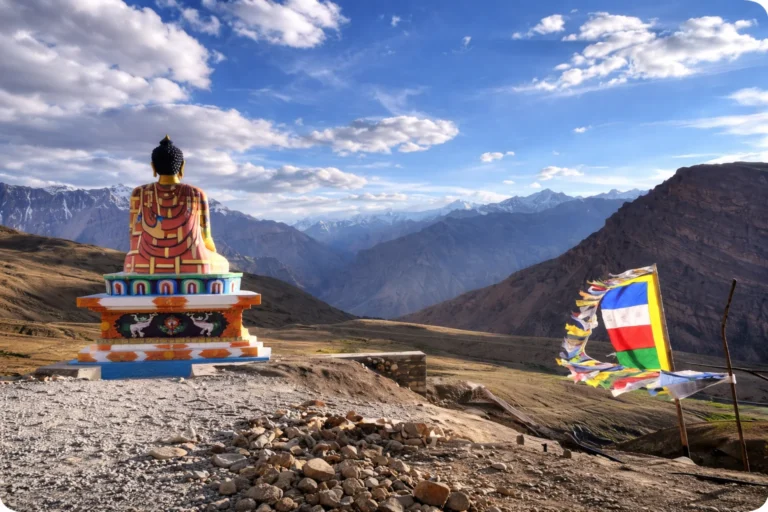
Local Buddhist philosophy, which emphasizes living in harmony with nature, provides a cultural foundation for these conservation efforts. Ancient monastery teachings about respecting all living beings have created fertile ground for modern wildlife protection initiatives.
Infrastructure Dilemma: Roads and Conservation Balance
The Border Roads Organization (BRO) faces an ongoing dilemma: improved accessibility through projects like the Shinku La tunnel expansion brings economic benefits but risks fragmenting critical wildlife corridors.
Tourism boards are carefully navigating this tension, promoting controlled, low-impact tourism over mass development. The challenge is ensuring that the economic benefits of better roads don’t come at the cost of the very wildlife that makes the region valuable.
Conservation groups are working with infrastructure planners to establish underpasses and wildlife crossing points along new road segments, attempting to maintain connectivity while improving human access.
Conclusion: Your Role in Snow Leopard Conservation
The transformation of Spiti and Lahaul from conflict zones to conservation showcases demonstrates what’s possible when local communities gain genuine economic stakes in wildlife protection. Every snow leopard expedition you take directly funds anti-poaching efforts, supports families who once viewed leopards as threats, and provides scientific data through guide observations and camera trap collaboration.
Book with ethical operators who prioritize community benefits, spend adequate time acclimatizing, respect distance protocols, and commit to the principle that your presence serves conservation first and personal achievement second. The grey ghost of the mountains has survived millennia against formidable odds—your responsible participation in this conservation story can help ensure it survives for generations to come.